Beautiful Bordeaux, in France’s south west, is a city that’s easy to enjoy without much effort. It’s elegant but relaxed, compact enough to explore on foot, and well connected for day trips for world-famous vineyards and jaw-dropping natural wonders.
This guide to the best things to do in Bordeaux will take you through the top sights, plus some amazing day trip suggestions outside the city.
While Bordeaux is best known for its namesake wine, you don’t need to be a wine expert to enjoy the city. Bordeaux itself is beautiful and very walkable, with grand architecture, lively squares, and long riverside paths. And if you do want to learn a bit more about wine, there are lots of ways to bring out your inner sommelier.
Contents
1. Wander the historic centre
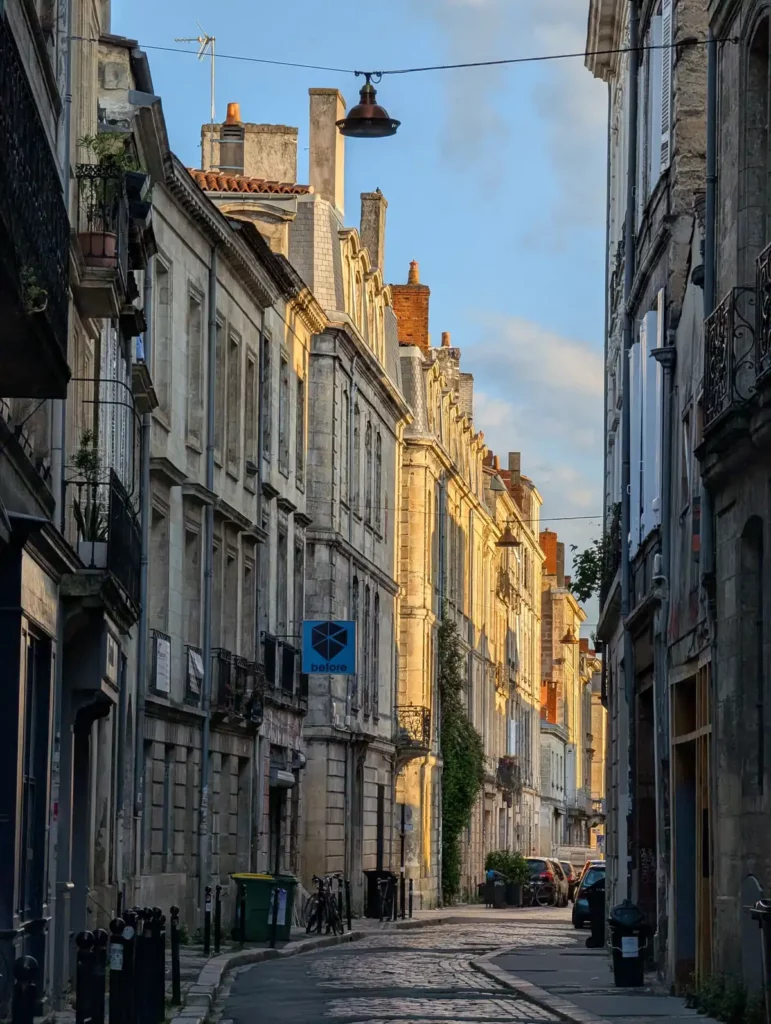
Bordeaux’s historic centre is one of the largest urban areas in the world to be protected by UNESCO. The pale yellow limestone buildings make the city feel a bit like a sun-soaked, laid-back Paris.
Much of Bordeaux was rebuilt in the 18th century after the medieval city walls were removed (luckily, they decided to keep the fairytale city gates). At the time, Bordeaux was one of France’s richest ports, benefiting from trade along the Garonne and overseas commerce.
City planners took the opportunity to open up the cramped medieval layout, replacing the city walls with wide streets, uniform stone façades and large squares designed to reflect Bordeaux’s prosperity and importance.
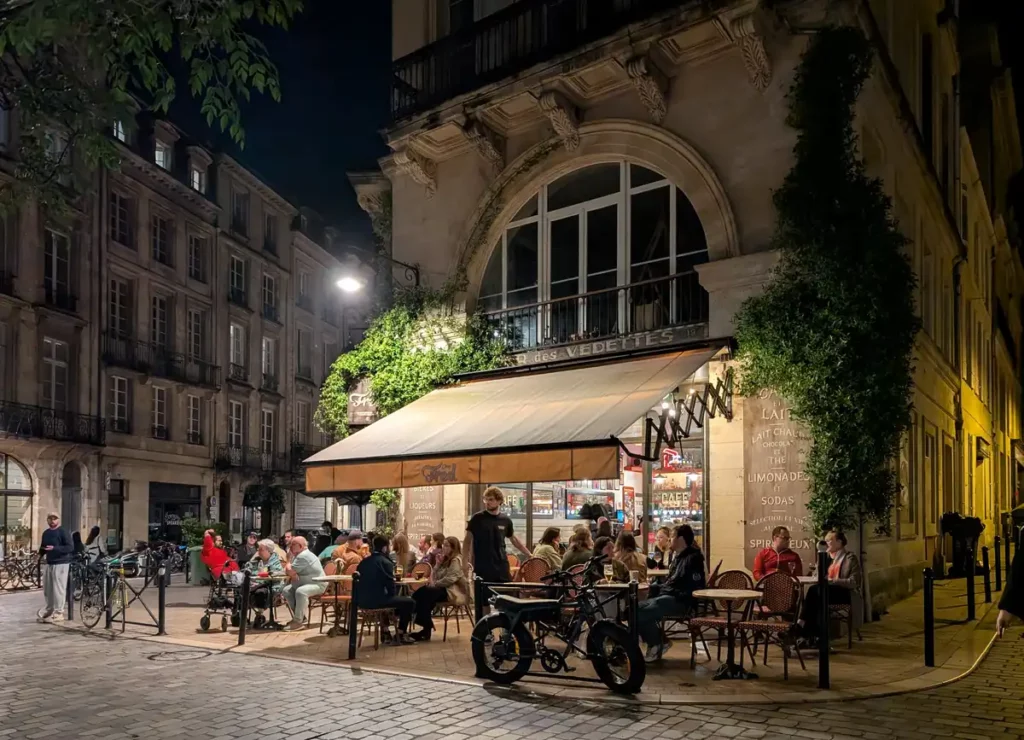
I found that the best way to explore the historic centre is to just wander. Streets open out into elegant squares, then narrow again into alleyways, and you’re never far from a café or wine bar.
2. See Place de la Bourse and the Miroir d’Eau
Place de la Bourse is one of Bordeaux’s most recognisable landmarks. The buildings are some of the most grand in the city, looking out onto the Garonne river that brought Bordeaux so much wealth and power.
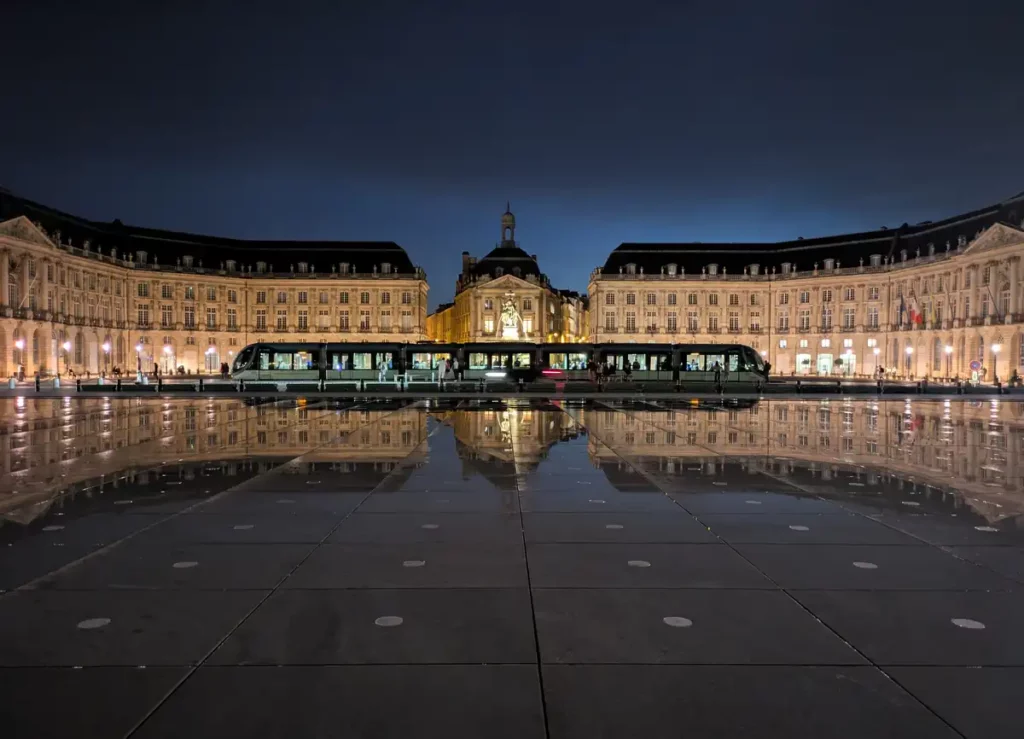
Directly in front of the Place de la Bourse is the Miroir d’Eau, a huge, shallow reflecting pool that alternates between a mirror-like surface and drifting mist and perfectly mirrors the beautifully symmetrical buildings of the Place de la Bourse. It operates between April and October and is particularly lovely at night, but it’s worth passing by at different times of day to see how the light reflects.
If you visit in the evening, there’s a stretch of bars between here and Porte Cailhau with excellent happy hour offers.
3. Walk along the Garonne riverfront
The riverfront runs for several kilometres and is one of the nicest places in Bordeaux for exploring. Wide, flat paths give open views across the Garonne.
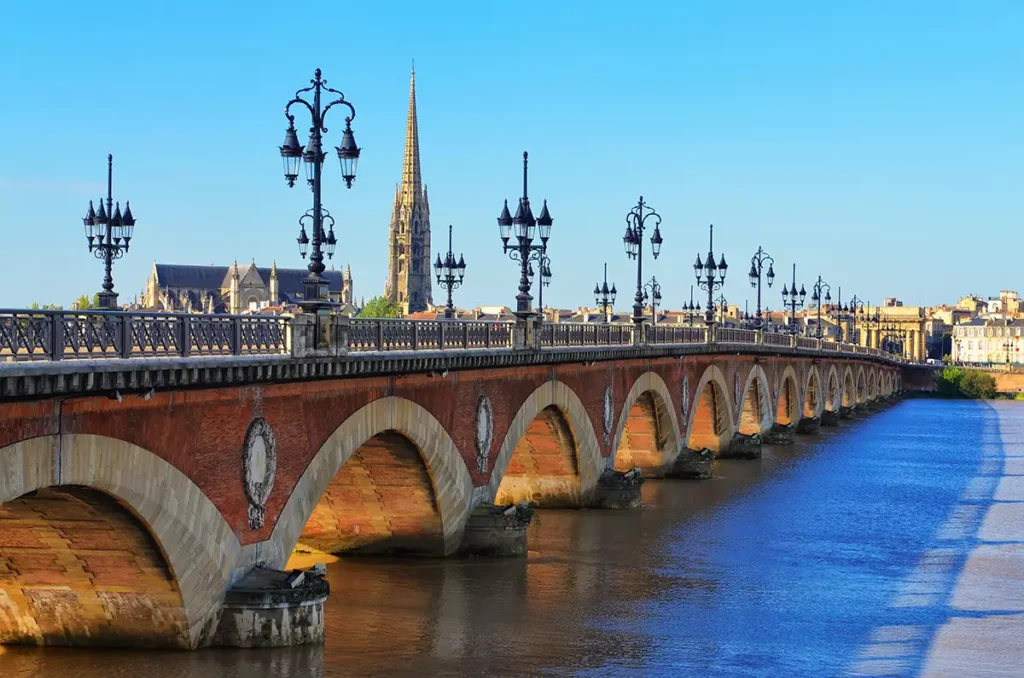
If you like, you can walk from the historic centre all the way along the river through the leafy Chartrons district, past the Pont Jacques Chaban Delmas, which lifts up to let passing ships underneath, all the way to the Cité du Vin. On the way you’ll pass the CAPC museum of contemporary art, the Cap Sciences science museum, and the old port and warehouses, now sensitively restored as a riverside shopping centre.
You can also choose to take a short river cruise, which gives a different perspective on Bordeaux’s architecture from the water. It’s an easy and relaxing way to see the city while resting your feet after all that exploring in the historic centre!
4. See Bordeaux’s city gates
While the city walls were demolished in the mid-1800s, Bordeaux still has several lovely city gates, all different and many with truly fairytale charm.
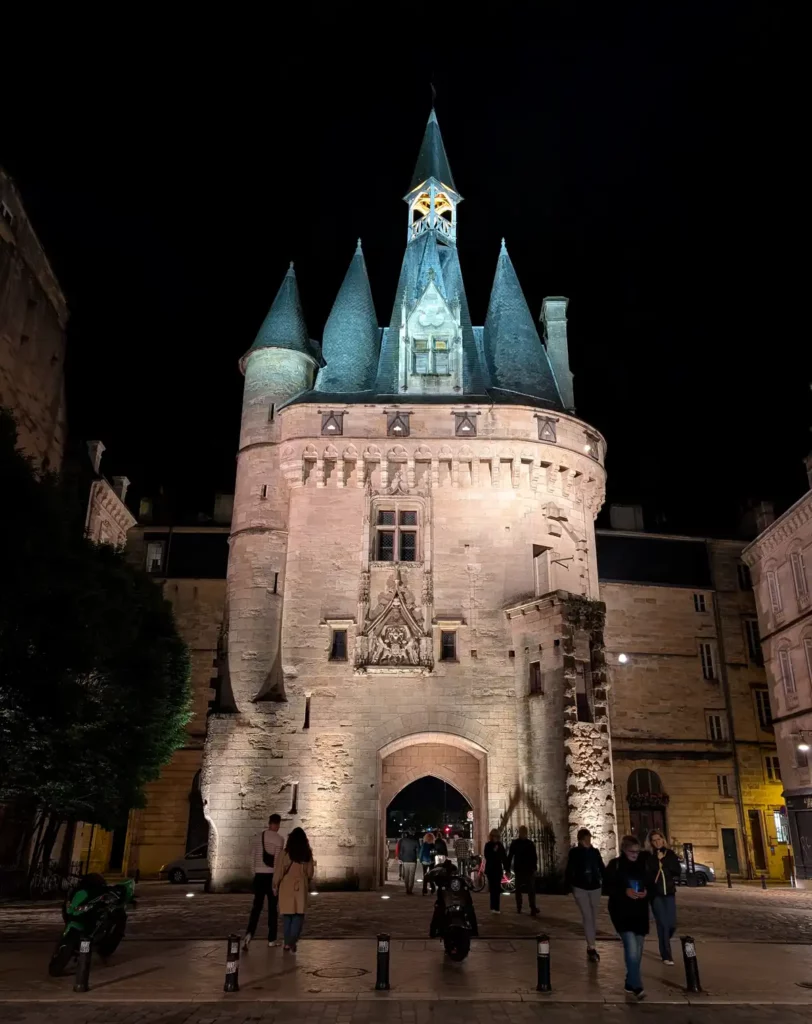
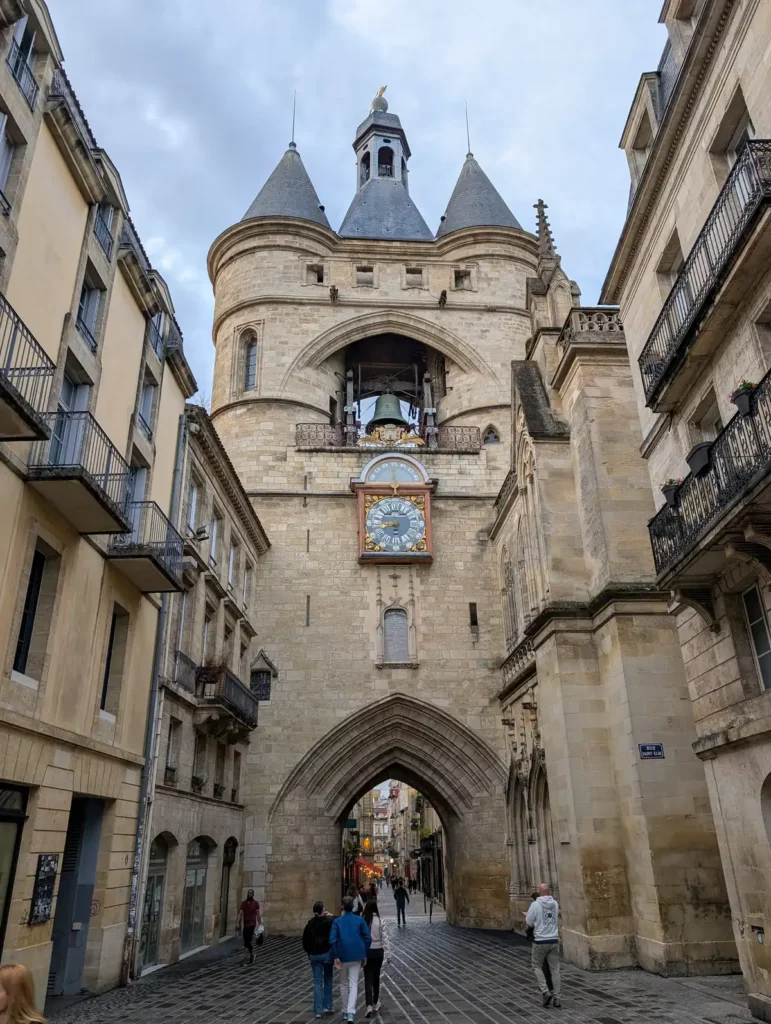
One of the most beautiful city gates in Bordeaux is the Grosse Cloche, a large bell tower that once formed part of the city walls. This gate was the quickest route into the historic centre from my hotel so I got to see it at all times of day.
Another impressive example is the Porte Cailhau, a fairytale-like gate near the river that dates back to the 15th century and which I did come across by accident! If you squint (or if you’ve indulged in a bit too much Bordeaux wine), you might confuse it with a Disney castle.
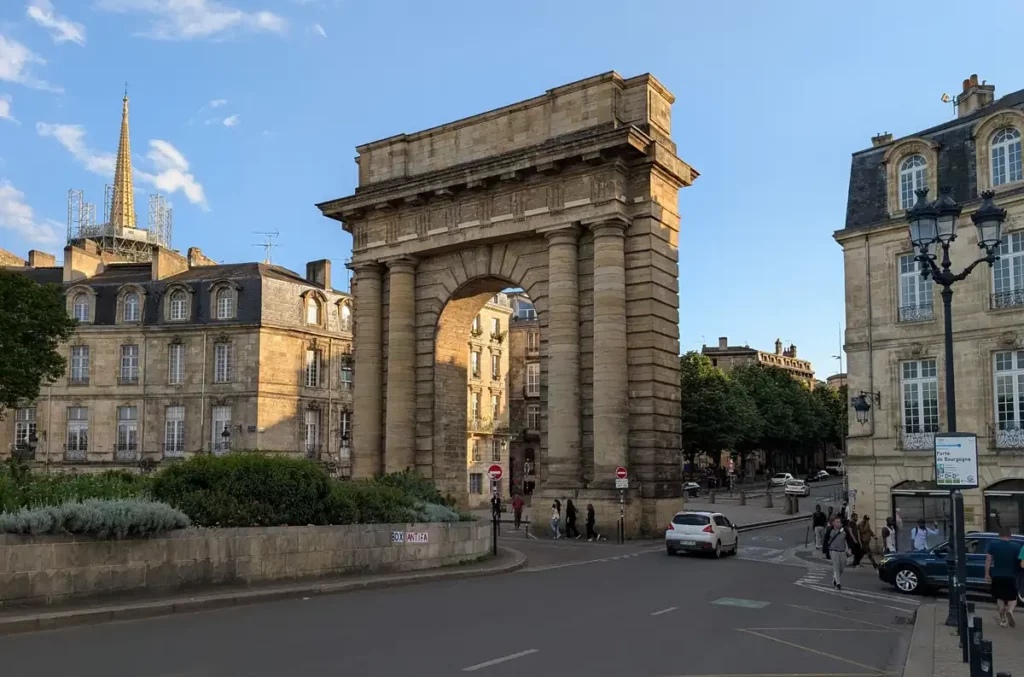
The Porte de Bourgogne marks the eastern entrance to the old city and is another one you might pass by chance while exploring, while the Porte d’Aquitaine is more modern but might be mistaken for a Roman ruin.
5. Visit Bordeaux Cathedral and Pey-Berland Tower
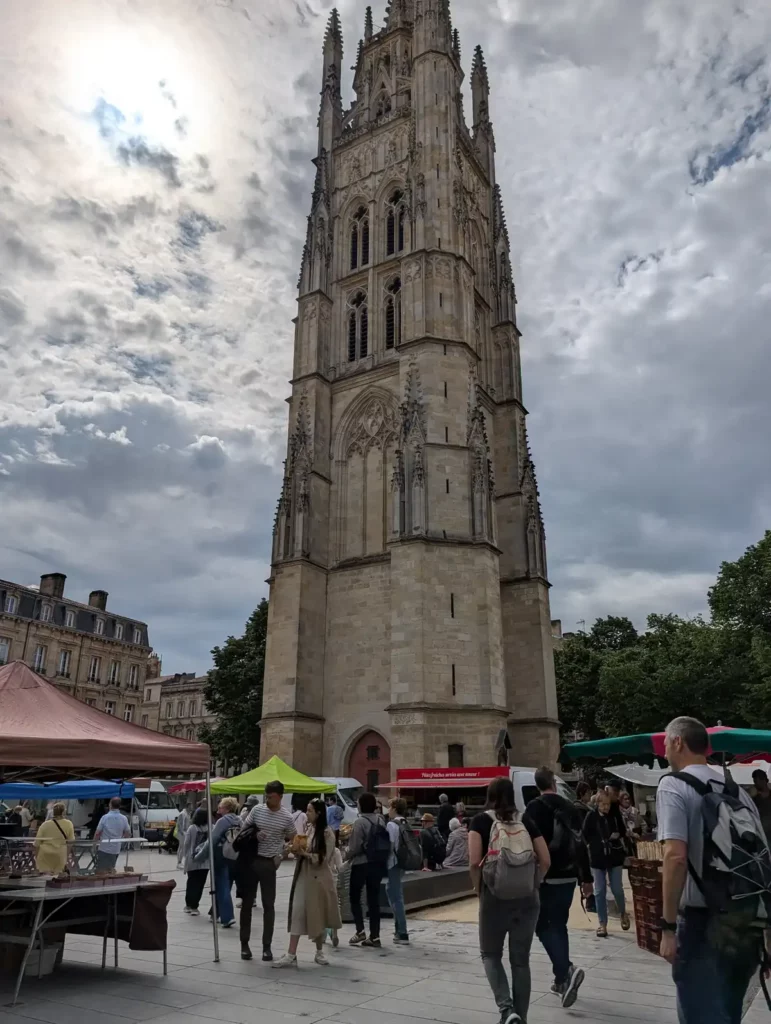
Bordeaux Cathedral, also known as Cathédrale Saint-André, is one of the city’s most important buildings. Construction began in the 12th century but continued over several centuries, which is why parts of the cathedral reflect different phases of the Gothic style.
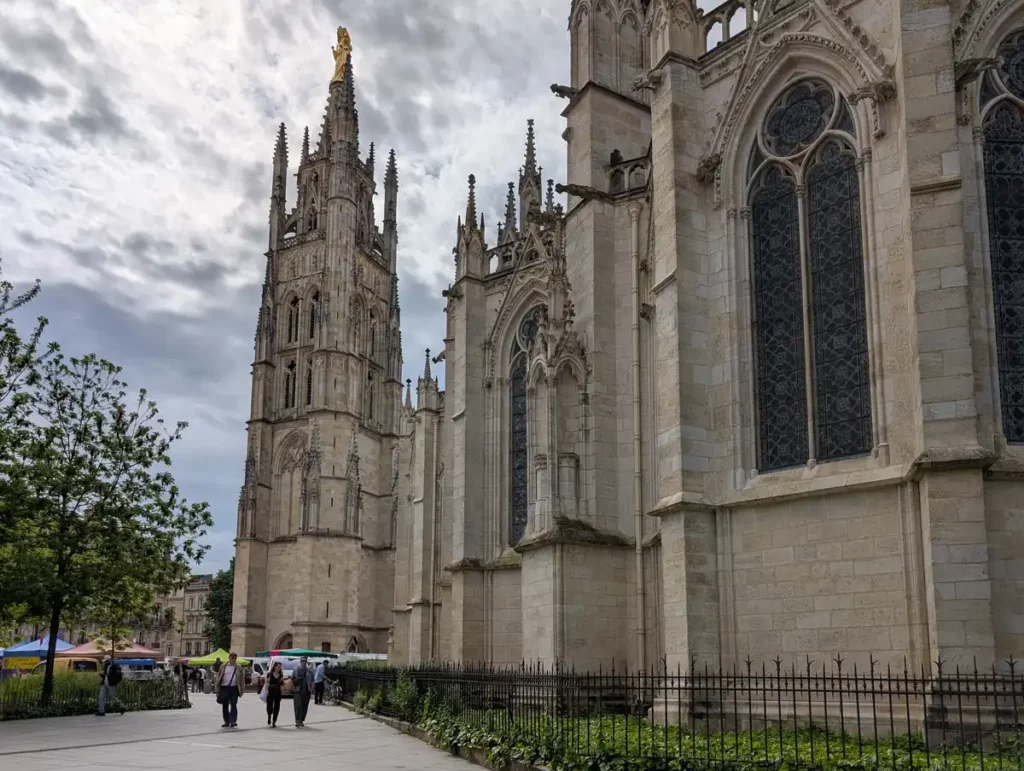
Next to it stands the Pey‑Berland Tower, a separate bell tower that you can climb for views over the city if you’re happy tackling the 229 steps to the top.
The cathedral and tower sit in a large, beautiful square. When I visited on a Sunday morning there was a small farmers’ market going on outside.
6. Explore Bordeaux’s squares and streets
Bordeaux has lots of beautiful squares, from pretty, village-like corners full of buzzy cafes to grand, formal squares.
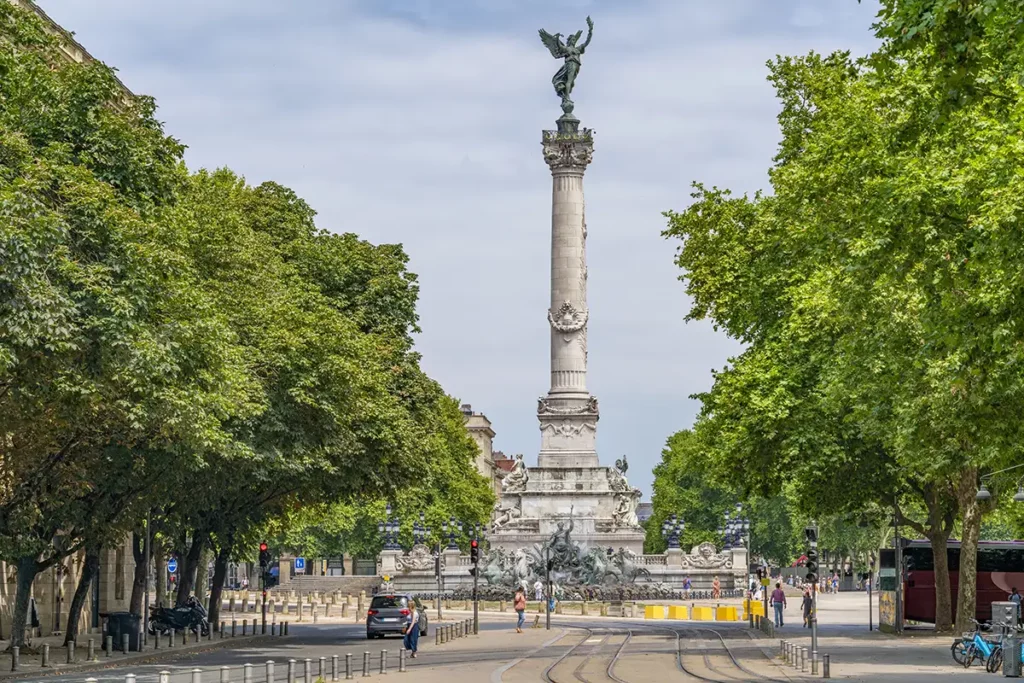
Place des Quinconces is one of the largest public squares in Europe. It hosts big events like the spring and autumn Foire aux Plaisirs funfair and Bordeaux’s Christmas markets. Place du Palais, by contrast, is smaller and more intimate, lined with cafés and restaurants and with the Porte Cailhau forming one end.
I passed through Place Fernand Lafargue a lot during my trip to Bordeaux and it ended up being one of my favourites; you’re bound to find one that appeals to you too.
It’s also worth walking along Rue Sainte-Catherine, one of Europe’s longest pedestrian shopping streets.
7. Visit the Cité du Vin
The Cité du Vin is Bordeaux’s modern wine museum and one of the top things to do in Bordeaux. It’s housed in a striking silver building by the river which is meant to evoke wine swirling in a glass and the movement of the river. It opened in 2016 and focuses on wine culture around the world rather than just Bordeaux wines.
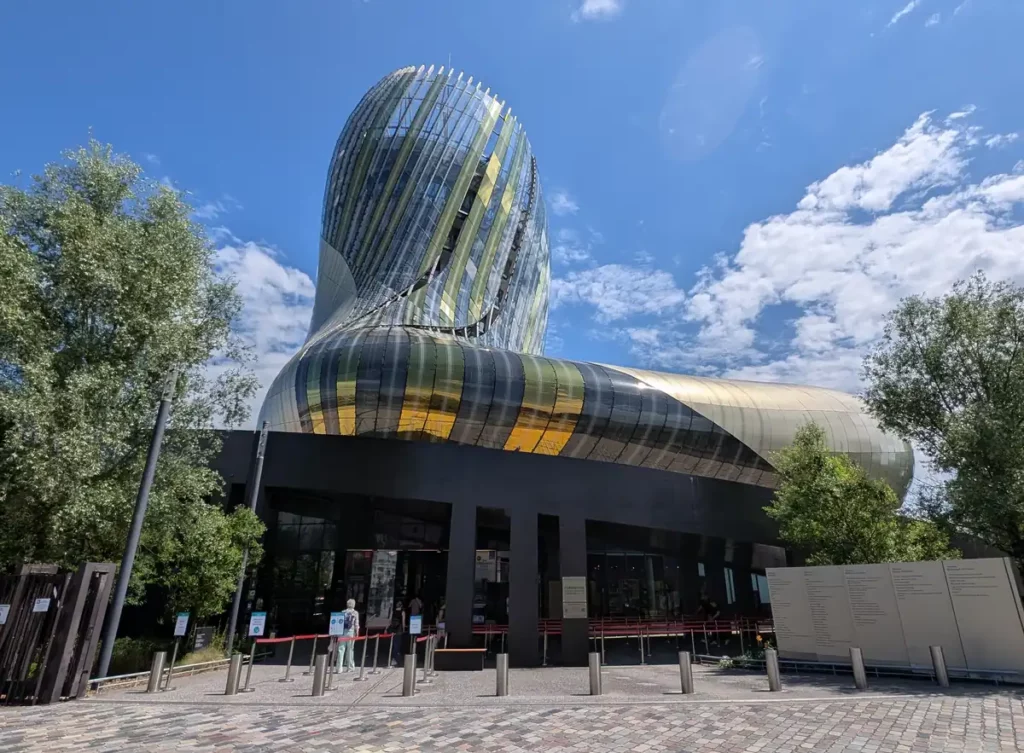
You work your way up the museum learning about the history of wine, how grapes are grown, and the wine-making process. It’s all very interactive, with lots of things to touch, smell and experience. At the end of the self-guided audio tour you go up to the top floor, where you can choose a glass of wine to enjoy on the balcony overlooking the river.
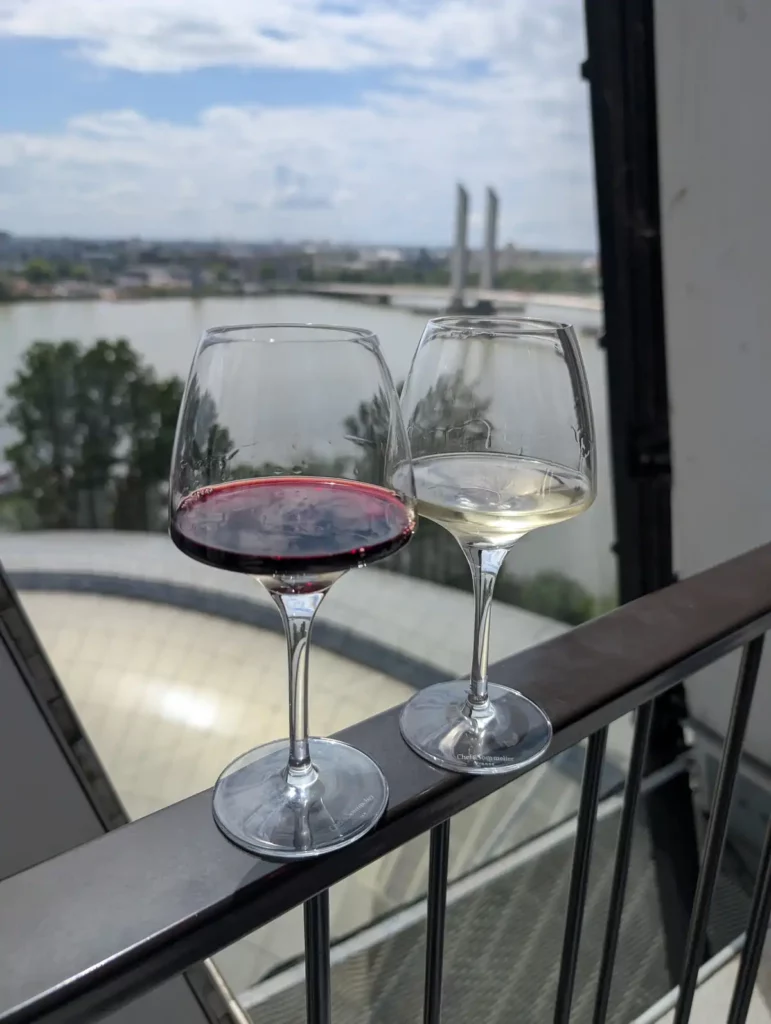
The Cité du Vin is Bordeaux’s biggest recent attraction, so it’s on a lot of lists of the best things to do in Bordeaux, but in all honesty I didn’t find it all that interesting, and it is relatively pricey. If you’re really into wine, then you might prefer to spend the time on a half day or full day wine tour to Saint Emilion or Medoc.
8. Experience a light show at the World War 2 submarine base
One of my favourite things to do in Bordeaux was visiting Bassins des Lumières, an immersive light show inside the city’s former submarine base.
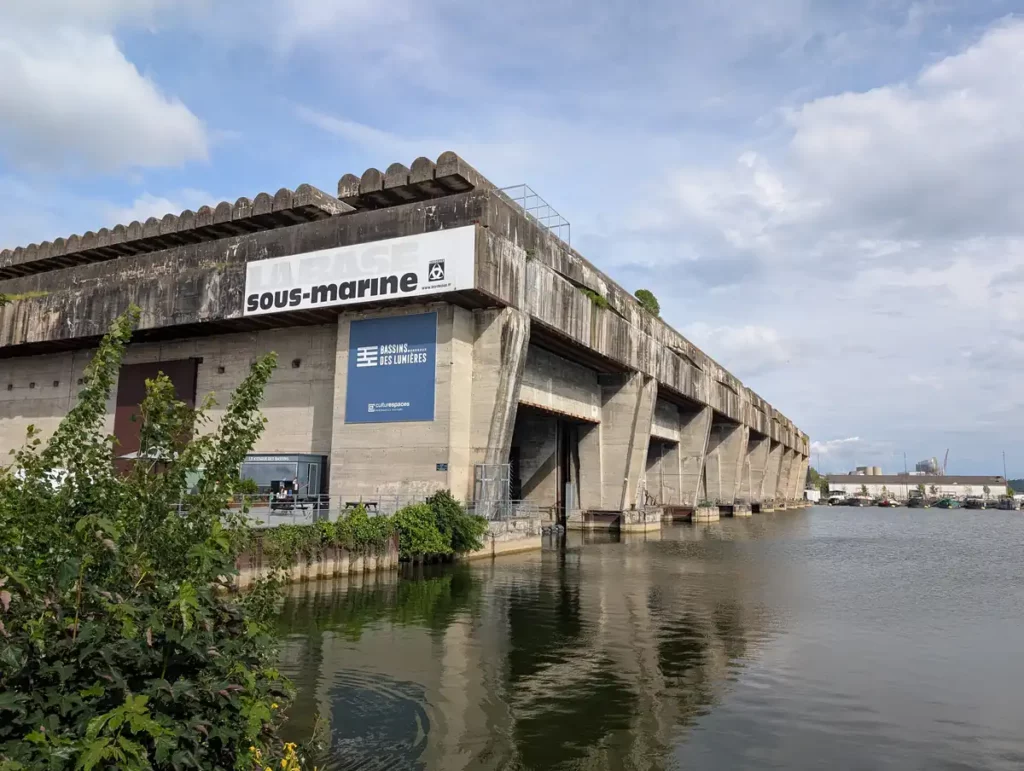
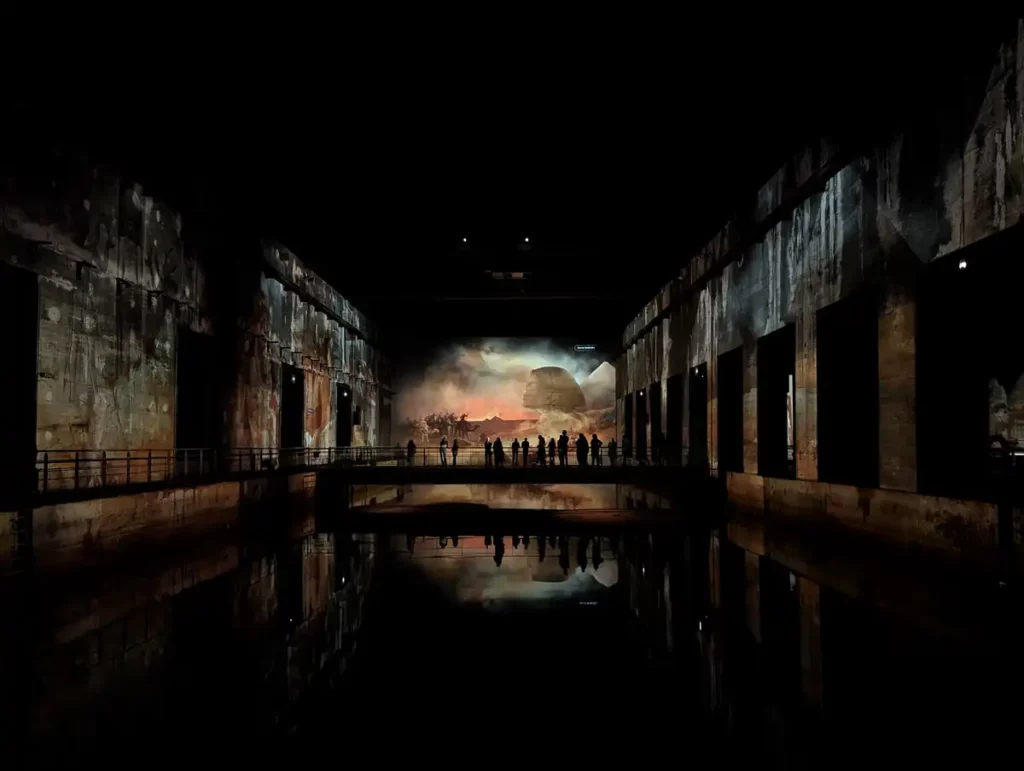
The building itself is vast, dark and atmospheric, with walkways crossing the pools where submarines used to dock. Part of the base is now used for immersive digital art exhibitions, and the scale of the space, and the reflections on the water makes the projections feel particularly dramatic.
I saw an exhibition about ancient Egypt, but the shows change regularly. I’ve visited another Lumières exhibition in Amsterdam and the artists always deliver on dramatic shows in fascinating buildings. Even if you’re not particularly interested in the show, the old submarine base building makes it well worth a visit.
9. See the Grand Théâtre de Bordeaux
The Grand Théâtre de Bordeaux is one of the city’s most impressive buildings and a highlight of the elegant Triangle d’Or area.
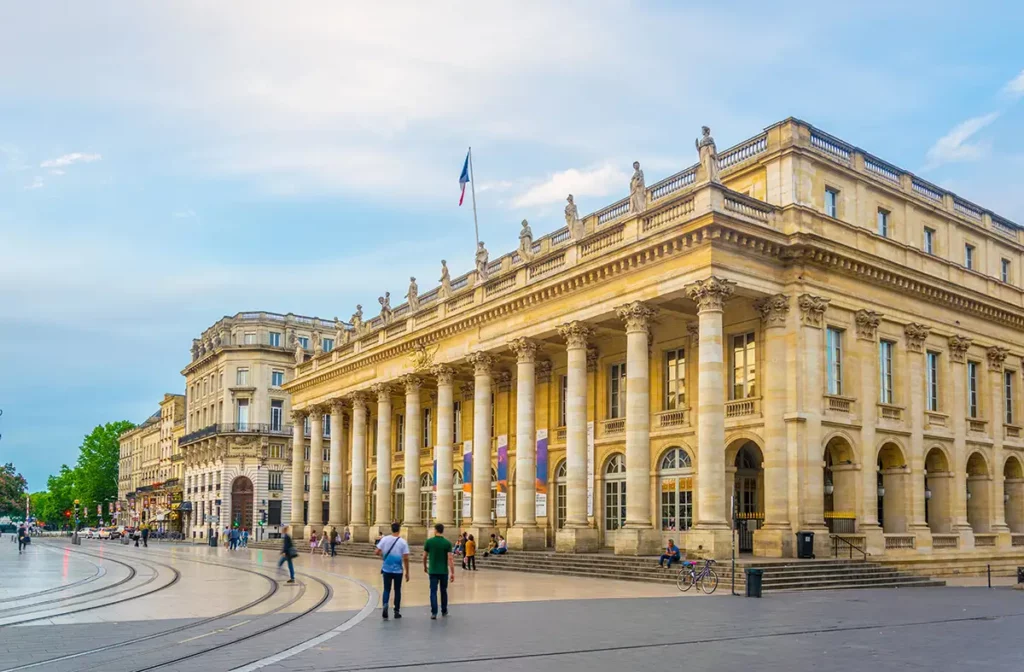
Even if you don’t go inside, it’s worth passing by to see the grand façade and columns. If you do have time, checking what’s on during your visit can be a nice way to add something cultural to your trip.
10. Explore the Chartrons district
The Chartrons district, north of the historic centre, feels like a village in the city. Historically linked to wine merchants, it’s a nice area to explore if you’re into antique and vintage shopping, independent boutiques and plenty of places to eat and drink.
Rue Notre-Dame is the village’s main street and is lined with antique shops, galleries and smaller independent stores. The octagonal Halle des Chartrons concert hall and gallery space is nearby and is surrounded by cafés, wine bars and restaurants. On the river, the old port’s warehouses (Hangars in French) have been restored as a shopping centre.
11. Indulge in the food
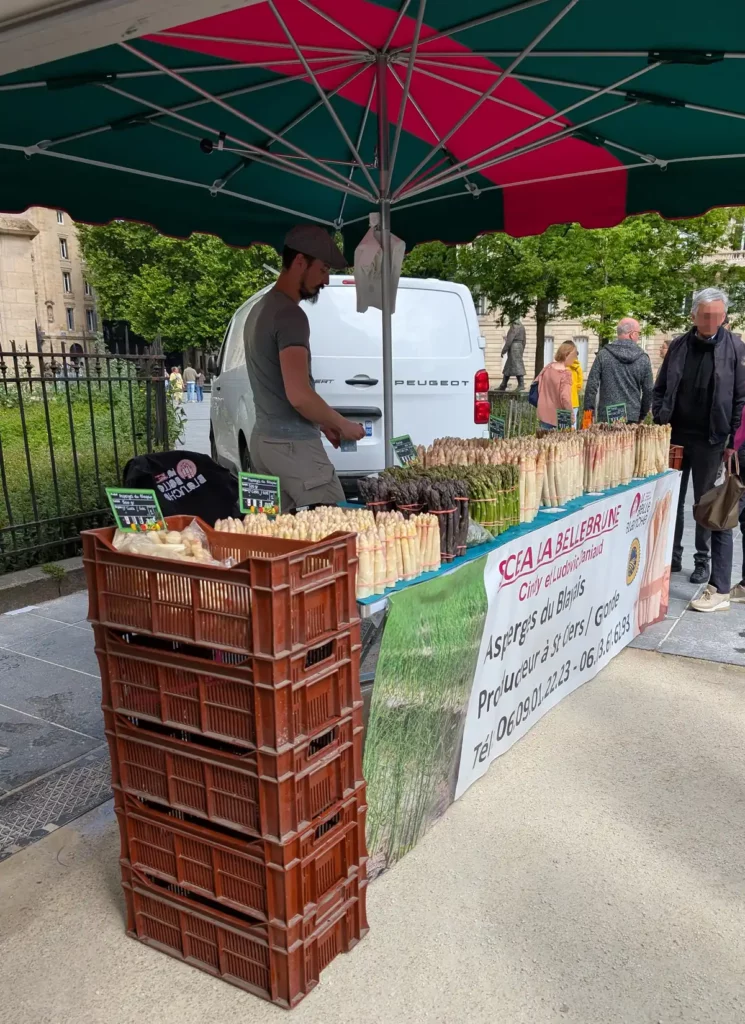
Food is a big part of daily life in Bordeaux, and you don’t need to book anything special to enjoy it. Marché des Capucins is the city’s main food market, and I came across a Sunday farmers’ market outside the cathedral.
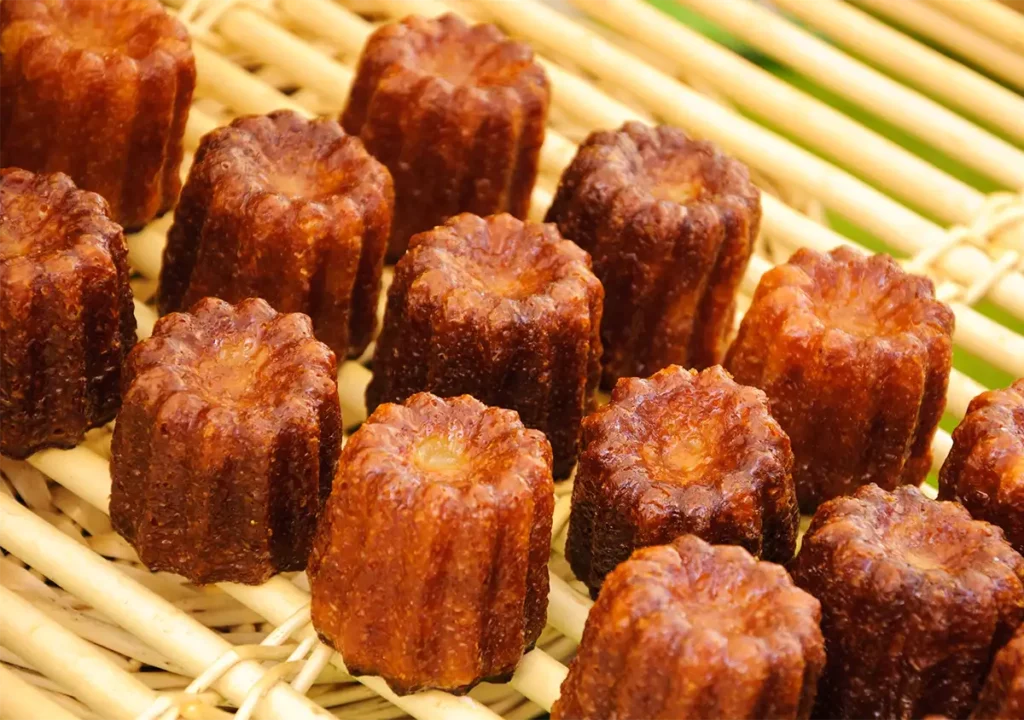
You’ll also see cannelés everywhere in Bordeaux. These small caramelised cakes with a crunchy outside and soft custard middle are a local speciality and were first created by nuns at the Couvent des Annonciades.
Wine bars are scattered throughout the centre and neighbourhoods like Chartrons, and many offer casual tastings. If you like, you can book a guided wine tasting.
Bordeaux is also full of places to enjoy different cuisines. I’m vegetarian and found a couple of great Korean restaurants near my hotel, but I had a lot of choice.
Day trips from Bordeaux
Dune du Pilat and Arcachon
A day trip to the Dune du Pilat was one of my main reasons for visiting Bordeaux, and it was absolutely worth it.
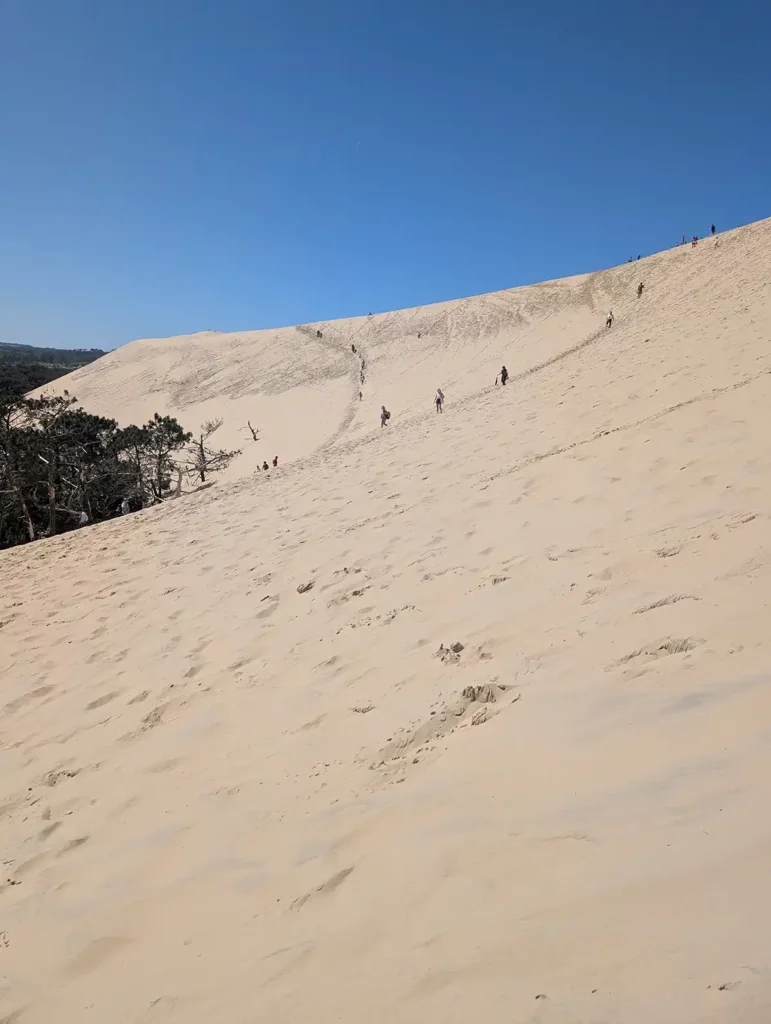
The dune is enormous and genuinely unforgettable, with sweeping views over the Atlantic on one side and pine forest on the other. It’s tiring to climb (especially if you visit when the temporary steps aren’t there!) but the scale and scenery are well worth the tired legs.
I combined a trip to the Dune du Pilat with an afternoon in Arcachon, an elegant seaside resort that’s famous for its oysters and lovely villas. The Dune du Pilat and Arcachon are an easy day trip by train from Bordeaux Saint-Jean station.
Wine-focused day trips from Bordeaux
If you’re interested in wine, Bordeaux is very well placed for day trips into surrounding vineyard areas, many of which are easy to reach by train or organised tour.
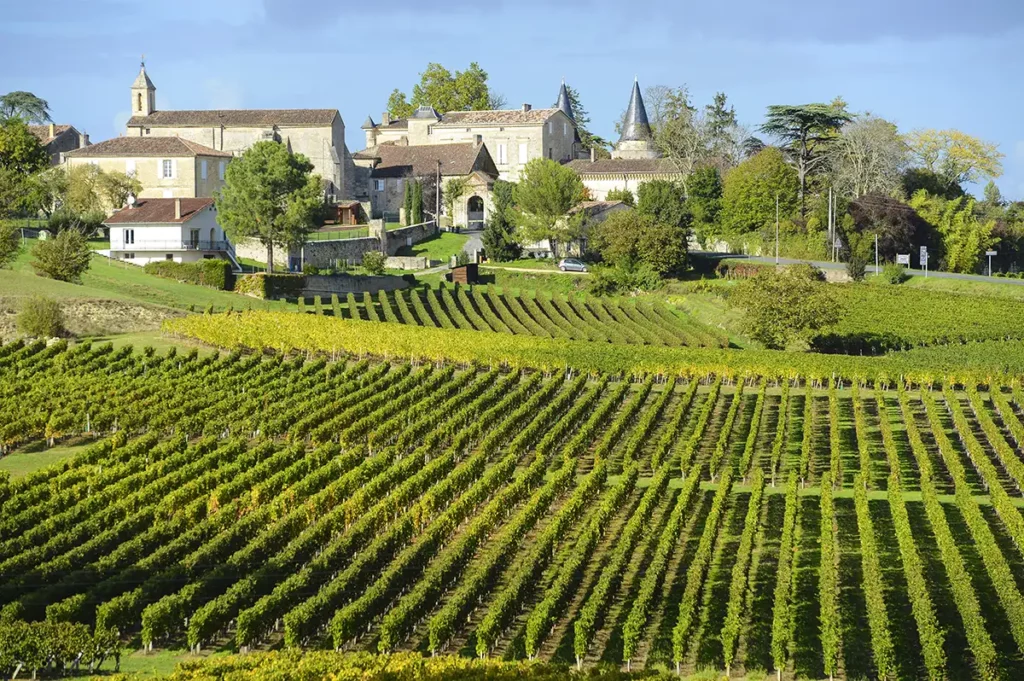
Saint‑Émilion is one of the most popular vineyard day trips from Bordeaux. The village itself is compact and attractive, with a historic centre, underground cellars and vineyards all around. You can get to the village in less than 40 minutes by train, but you might prefer an organised half day or full day trip which includes visits to vineyards and wine tastings.
The Médoc region lies to the north of Bordeaux and is home to some of the most famous châteaux in the area. Visiting independently usually requires a car, but many people opt for guided tours that handle transport and tastings.
Where to stay in Bordeaux
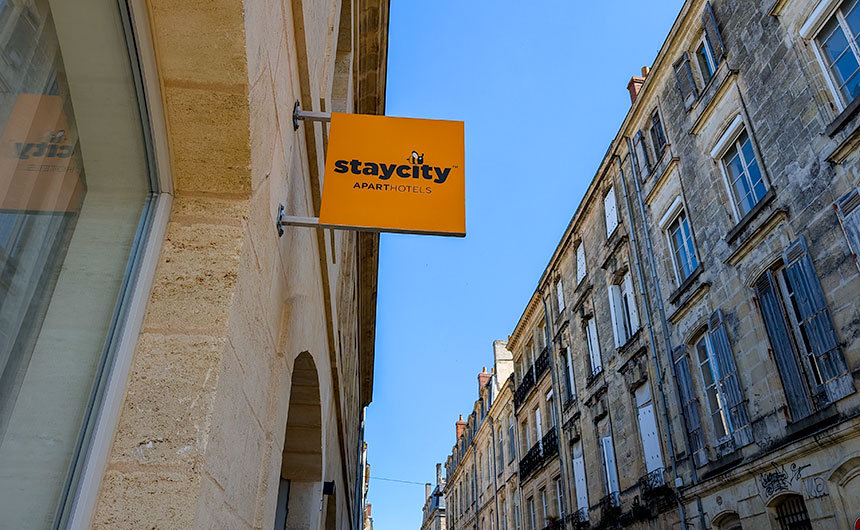
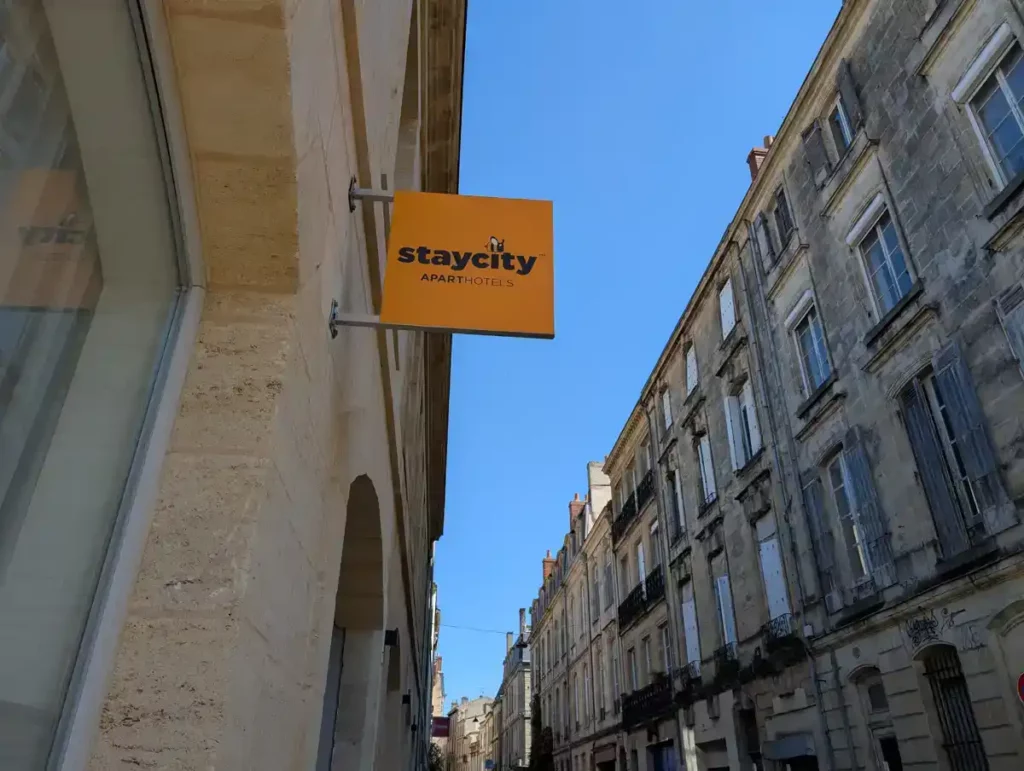
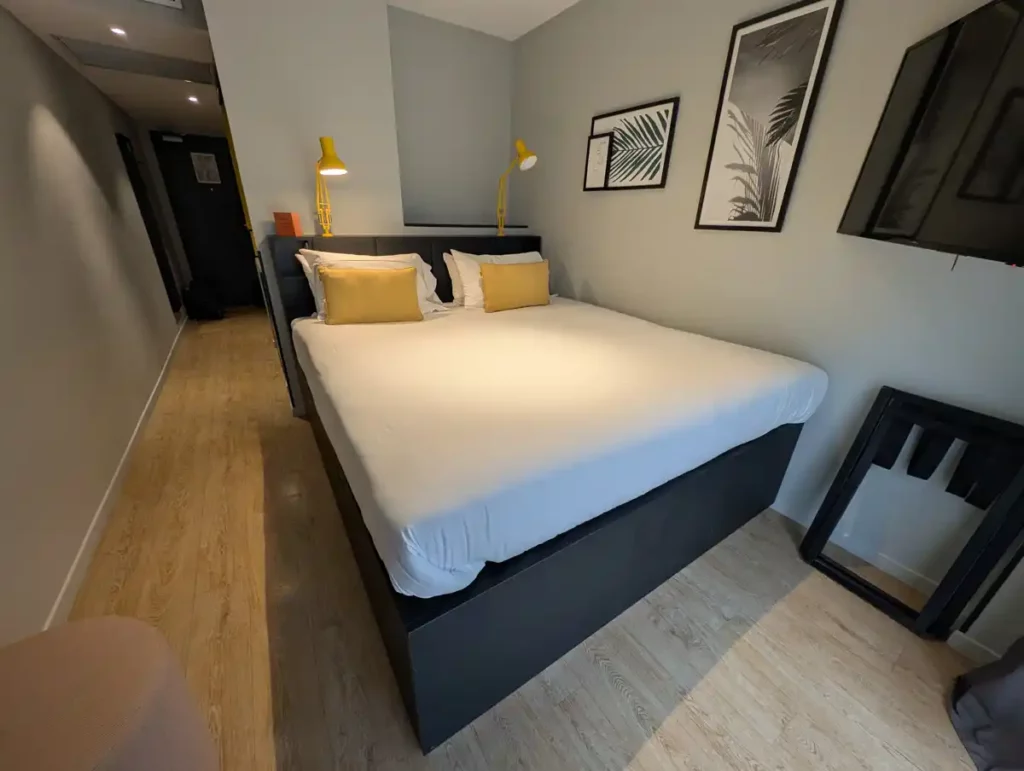
I stayed at the Staycity Aparthotels Bordeaux City Centre, which was a practical base for a short stay. It’s within walking distance of the station and very close to the Grosse Cloche city gate, which made it very convenient. My room was small but comfortable, with a kitchen and a little terrace.
The Hôtel Majestic is an airy 4-star hotel near Place des Quinconces with a convenient location between the old town and the Chartrons district. The tram stop for direct trams to the station and the Cité du Vin is just a couple of minutes’ walk away.
Mama Shelter Bordeaux has a brilliant location very close to the Cathedral and Pey-Berland Tower, and there’s a tram stop 1 minute away on foot. The roof terrace cocktail bar has views over the city.
Getting around Bordeaux
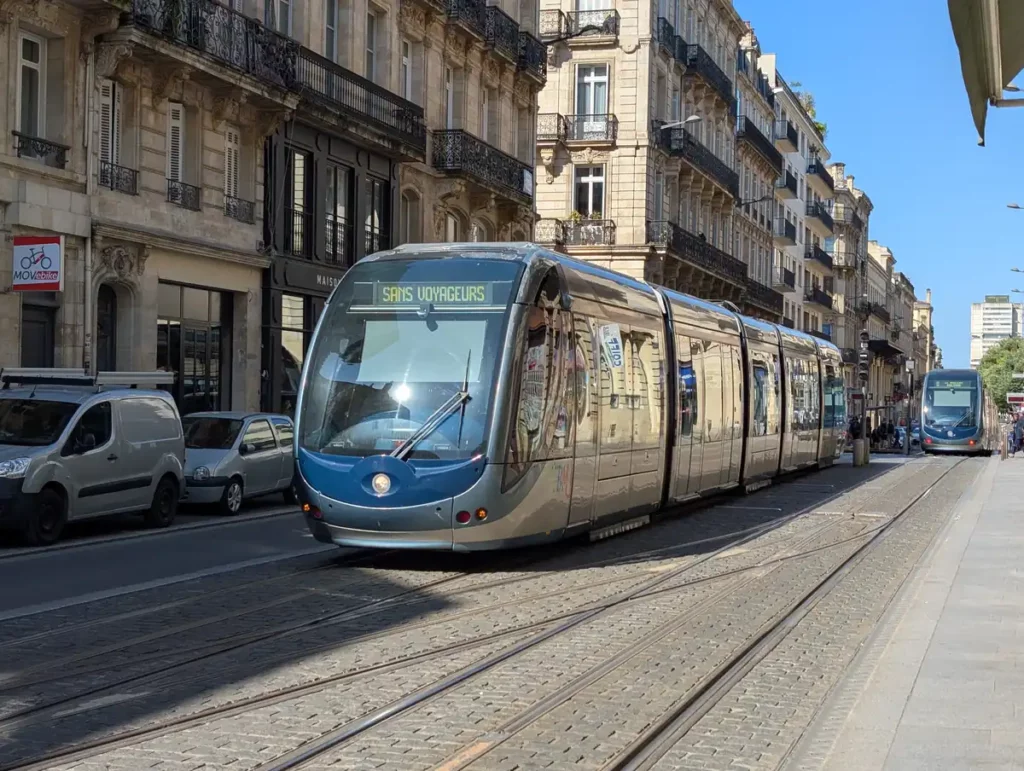
I found Bordeaux really easy to get around. Much of the centre is walkable and at least semi-pedestrianised. The tram and bus network is easy to use if you want to reach areas like the Bacalan area where you’ll find the Cité du Vin and the old submarine base. There’s a tram line direct from the city centre to the airport.
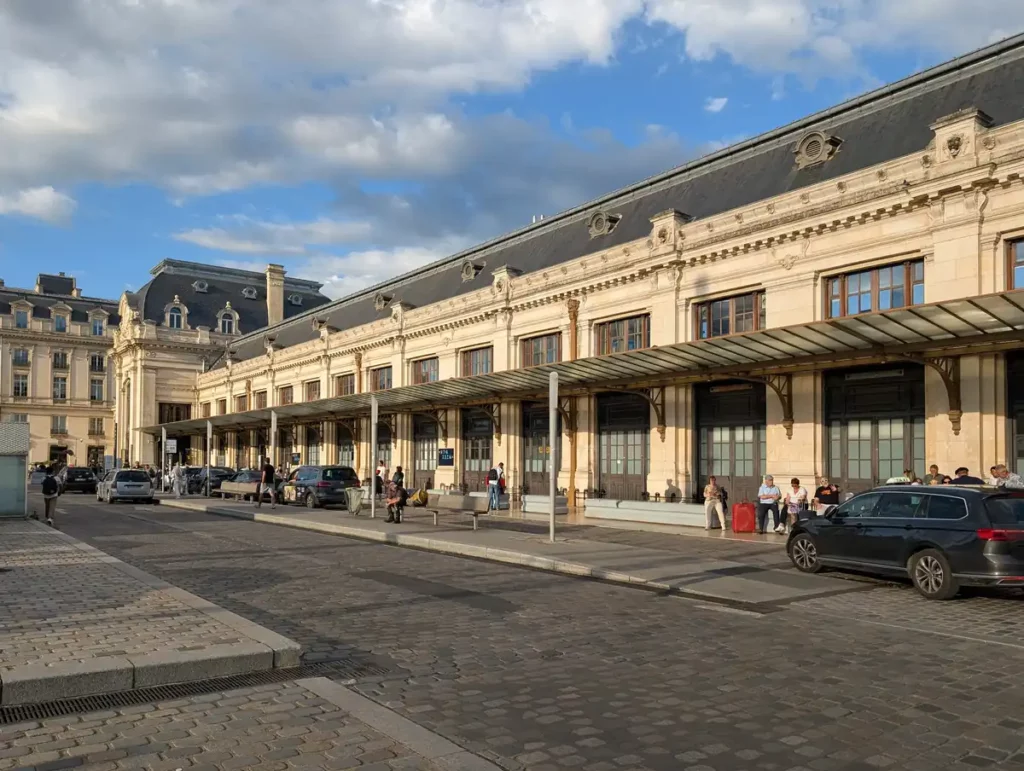
Bordeaux’s main railway station, the Gare Saint-Jean has connections across France, including high-speed TGV connections to Paris.
I arrived in Bordeaux by train from Toulouse on what was supposed to be a high speed train but was in fact a bit of a trundle, but the scenery of vineyards, rivers and villages was nice.
The Gare Saint-Jean is a really beautiful building as well, with a gorgeous old railway map and lovely waiting areas.
You don’t need a car for visiting Bordeaux itself, and many day trips, like my day trip to the Dune du Pilat can be done by train or organised tour.
The main station might be lovely, but the airport is a different matter. I flew home to Manchester with easyJet and Bordeaux Airport’s ‘streamlined’ Billi terminal for easyJet and Ryanair is pretty grim. Bring snacks, low expectations and determination!
How long to spend in Bordeaux
I spent three nights in Bordeaux. I had a day and a half in the city itself, plus another day that I spent on a day trip to the Dune du Pilat and Arcachon. It was just about enough time, but an extra day would have been nice.
I think two full days in Bordeaux would be ideal, allowing time to explore the centre, walk along the river and visit a few key sights without rushing.
Is Bordeaux worth visiting?
Absolutely yes! Bordeaux is gorgeous, walkable and relaxed. It’s grand but also lots of fun, and it had me fantasising about what it might be like to live here. The golden stone is endlessly photogenic and you’ll fall in love at every corner as you wander through the old town’s meandering streets.
Add in the chance to visit somewhere as memorable as the Dune du Pilat or explore nearby wine regions, and Bordeaux is definitely up there with my favourite city breaks.