Hong Kong is a perfect layover city because it’s compact, well-signposted in English, and has ultra-efficient transport links from the airport. I spent just over 24 hours in Hong Kong in December 2025 on my way back from Japan, and was so glad I chose to break up the long journey here.
Whether you have just a few hours or a full day between flights, with a bit of planning you can turn your connection into a mini-adventure.
Contents
What makes Hong Kong a great layover destination?
There are lots of reasons to choose a Hong Kong layover:
- Culture and wow factor: Despite its small size, Hong Kong offers a unique experience that blows bigger destinations away. You can ride the historic Star Ferry across Victoria Harbour, wander beneath enormous skyscrapers, go hiking and dine on Michelin-starred dim sum all in just a few hours.
- Compact and convenient: Hong Kong is relatively small. Most of the key attractions are packed close together on Hong Kong Island and just across Victoria Harbour in Kowloon. The public transport network (MTR subway, buses, ferries, trams) is world-class and easy to navigate, so you can cover a lot even with limited time.
- Quick access to the city: Hong Kong International Airport (HKG) has great transport links. The Airport Express train zips you from the airport to central Hong Kong in just 24 minutes, and taxis take 25 to 45 minutes depending on traffic.
- Easy entry for many nationalities: The rules for entering Hong Kong are different to those for entering China. My UK passport gave me automatic visa-free entry for up to 180 days, while US visitors get 90 days. You can check if you need a visa for your visit by checking the Hong Kong Immigration Department website and your own government’s guidance.
If you have the opportunity to break your journey in Hong Kong, don’t waste your layover sitting in the terminal. Hong Kong’s sights, food, and energy are right at your fingertips once you step off the plane.
One day in Hong Kong – my layover itinerary
This itinerary takes in some of Hong Kong’s best-known sights with time to soak up the atmosphere and take things at a relaxed pace. I arrived in Hong Kong after a very busy trip to Japan so I was really pleased to discover how easy it is to experience a lot without needing to rush about too much!
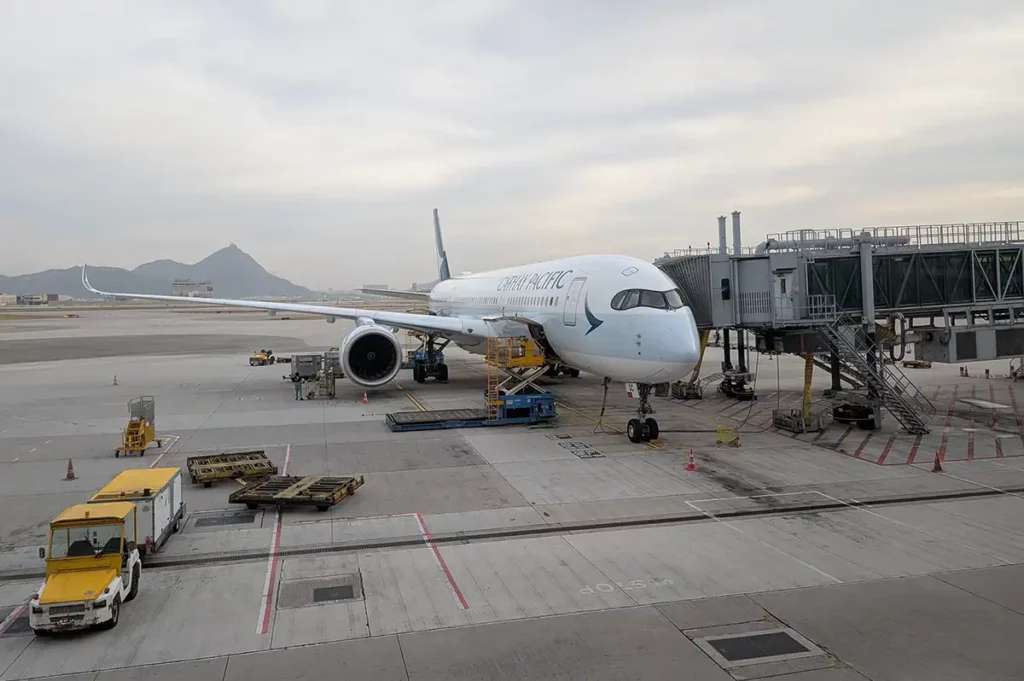
My flight from Osaka landed mid-afternoon on a Wednesday, then my flight home to Manchester was at 1am on Friday morning. I chose to book a hotel for Wednesday through to Friday; this meant that I had somewhere to sleep on Wednesday night and a comfy place to rest and have a shower on Thursday evening before my 15-hour flight back to the UK. Unfortunately I don’t recommend the hotel I stayed at, but my overall plan worked really well.
10am: Catch a ‘ding ding’ tram
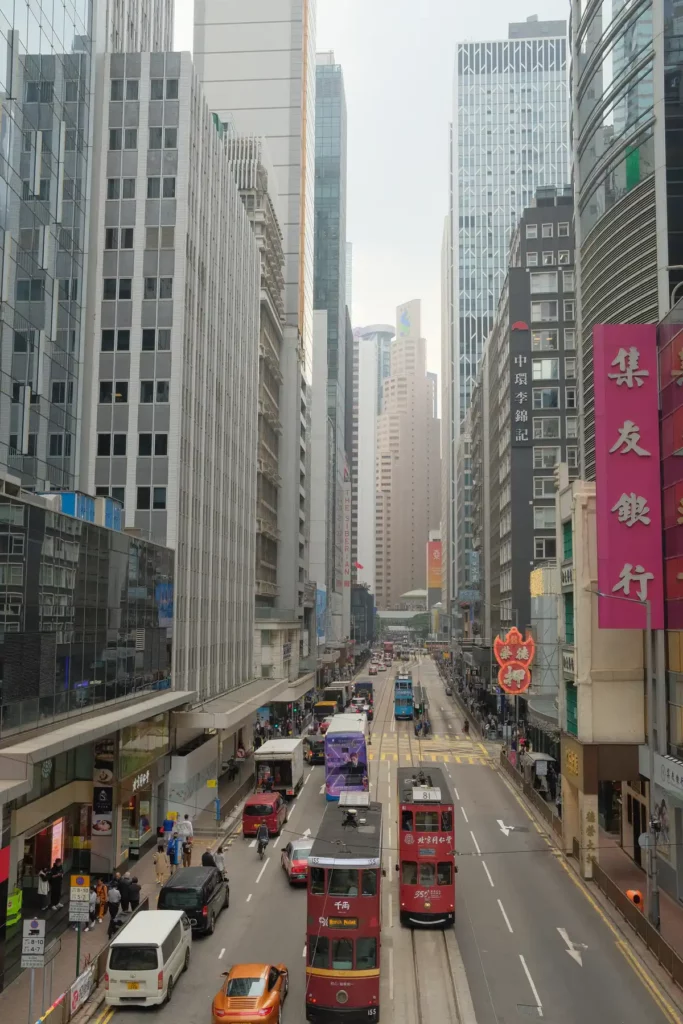
I started my day sightseeing in Hong Kong with a ride on a historic ‘ding ding’ tram from near my hotel in Wan Chai to the Pottinger Street stop near Central Market. Hong Kong’s skinny double-decker trams run slowly through the city streets close to the harbour on Hong Kong Island and get their name from the ‘ding ding’ noise they make.
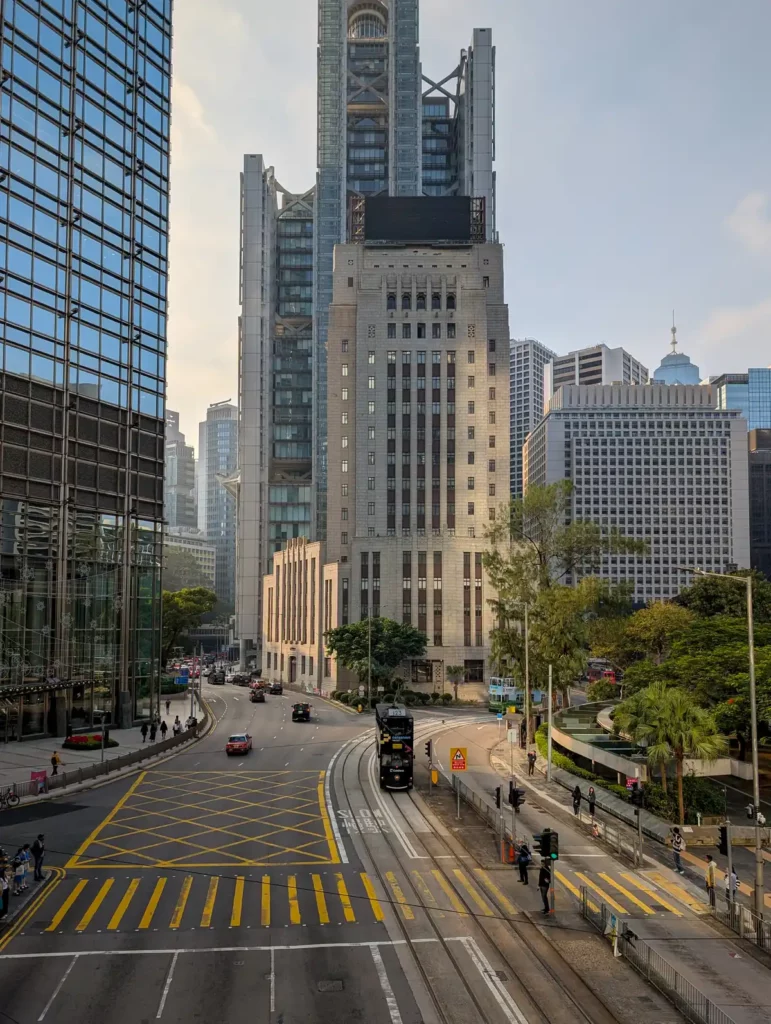
Once I got to Pottinger Street, I climbed the steps to the bridge which crosses Des Voeux Road, which has great views of the trams gliding through the canyon created by Hong Kong’s epic skyscrapers.
10.15am: Explore Central Market
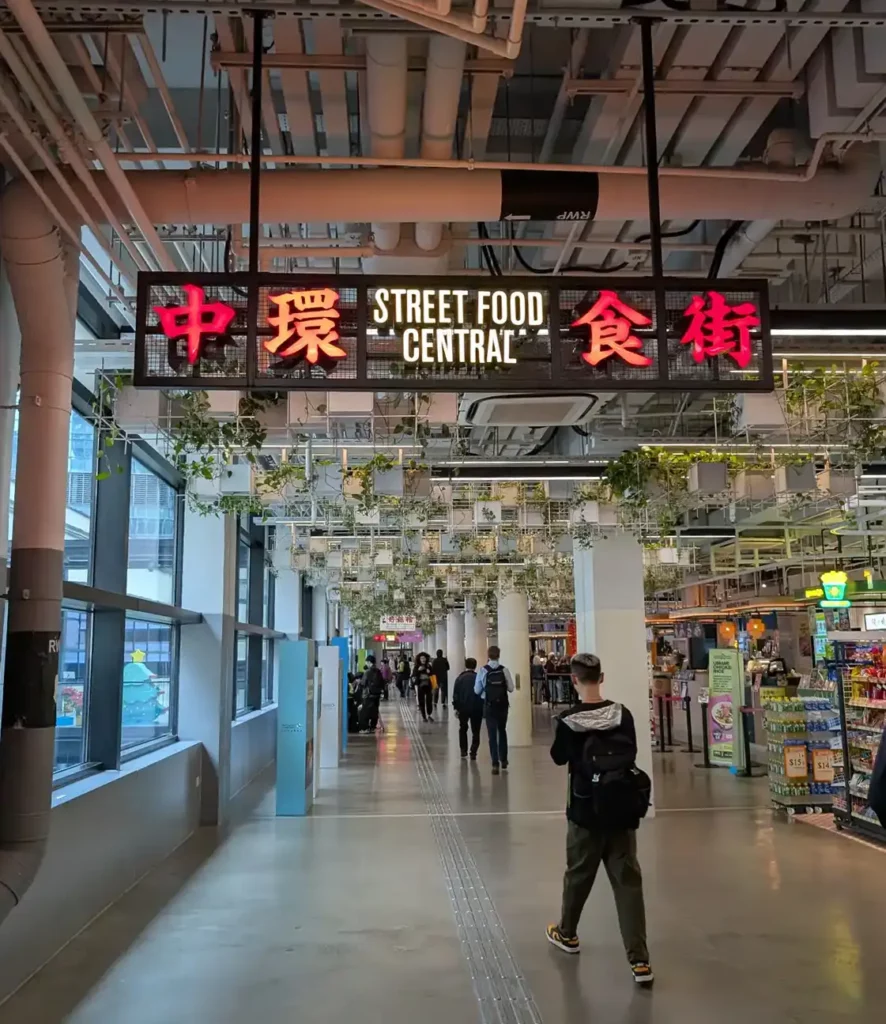
Central Market is a 1930s Bauhaus-style building that’s been sympathetically refurbished as a shopping and dining destination. It’s home to restaurants, independent boutiques, pop-ups, coffee shops and cultural spaces.
11am: Ride the Central–Mid-Levels Escalators, stopping at Tai Kwun and Bakehouse
The Central-Mid-Levels Escalators are the longest outdoor covered escalator system in the world, covering a distance of 800 m (2,600 ft) and an elevation of over 135 m (443 ft) from bottom to top. The escalators run downhill during the morning rush hour to get people to work, switching direction at 10am to go uphill. You’ll be going up, so don’t get there too early or you’ll have a long steep walk!
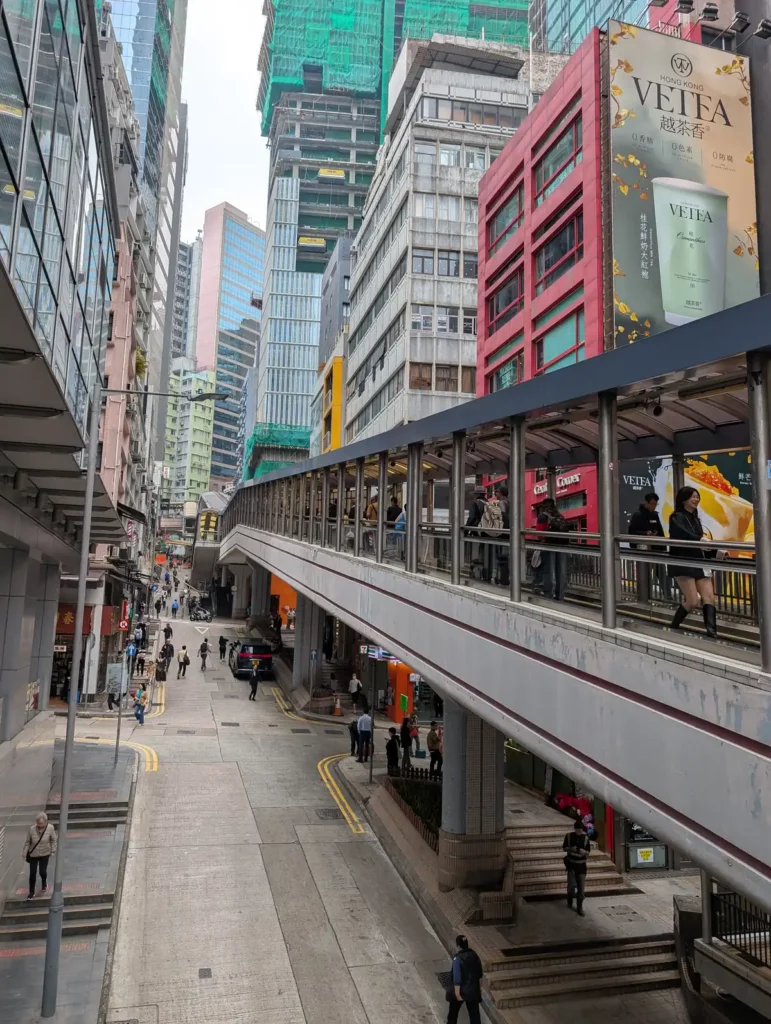
There are 18 escalators and 3 moving walkways, all running through interesting areas, past bars, restaurants, houses, shops and giving an insight into Hong Kong life. It’s all free and you can break your journey on the way up if you spot something that looks interesting.
I stopped off at Tai Kwun – a heritage site in the former police station, court and prison complex that now houses cafes, shops, galleries and event spaces.
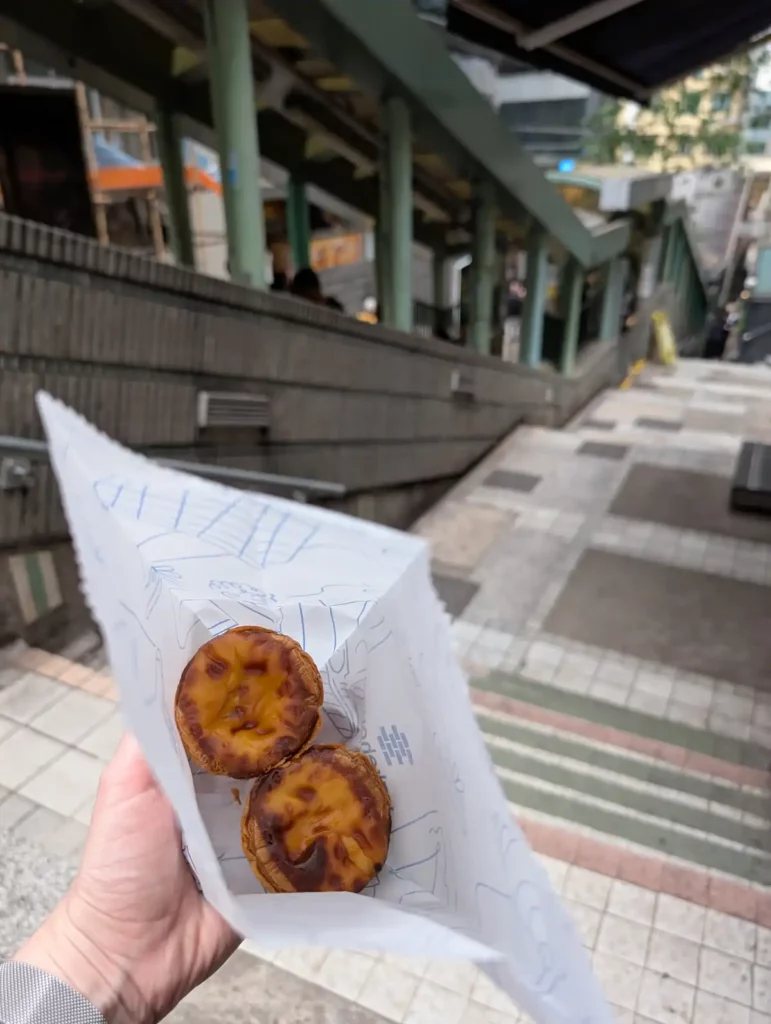
Further up, I headed to Bakehouse for one of their famous sourdough egg tarts. These are a modern take on the traditional Hong Kong-style custard tart and absolutely worth the queue.
12.30pm: Walk towards the Peak Tram via the botanical gardens
At the top of the escalators, you’ll find yourself in a quieter residential area. From here, I walked through the leafy streets and past the Hong Kong Zoological and Botanical Gardens – one of the oldest of its kind in the world – towards the Peak Tram station.
1pm: Ride the Peak Tram to Victoria Peak
The Peak Tram is one of Hong Kong’s classic experiences. It’s a steep funicular railway that takes you up to Victoria Peak, where you’ll find panoramic views of the city and harbour. It’s been running since 1888 and was the first funicular railway in Asia. On the way up you’ll see spectacular views over Hong Kong Island’s skyscrapers and Victoria Harbour, and there’s lots to do at the top.
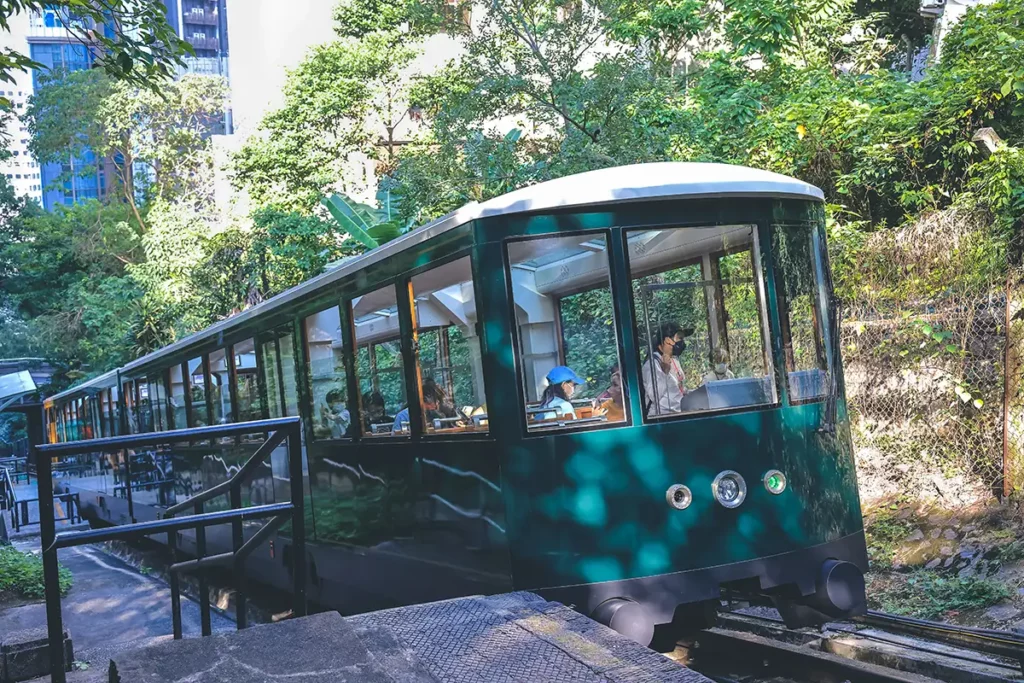
The Peak Tram is one of the most popular attractions for visitors to Hong Kong and gets very busy. I highly recommend either buying your tickets online or using an Octopus card (more on those later) rather than queuing to buy tickets. I found that using Trip.com to buy my Peak Tram tickets was a little cheaper than the official site and they had more availability than GetYourGuide.
If you buy tickets online, you’ll be offered an upgrade to the Sky Terrace or Ruby skip the line access. The Sky Terrace is probably worth it for the views if you’re only in Hong Kong for a short time (although there are other, free viewpoints which you can walk to), but I don’t recommend buying the Ruby pass as it made absolutely zero difference on my visit.
When you get to the front of the queue to get on the Peak Tram, aim for the right hand side of the tram going up for the best views.
2pm: Explore the Peak
If the weather’s clear (check the Peak webcams before you go), the views from the top are incredible. Unfortunately it was pretty cloudy during my Hong Kong layover so I didn’t get that picture-perfect shot but it was still worthwhile.
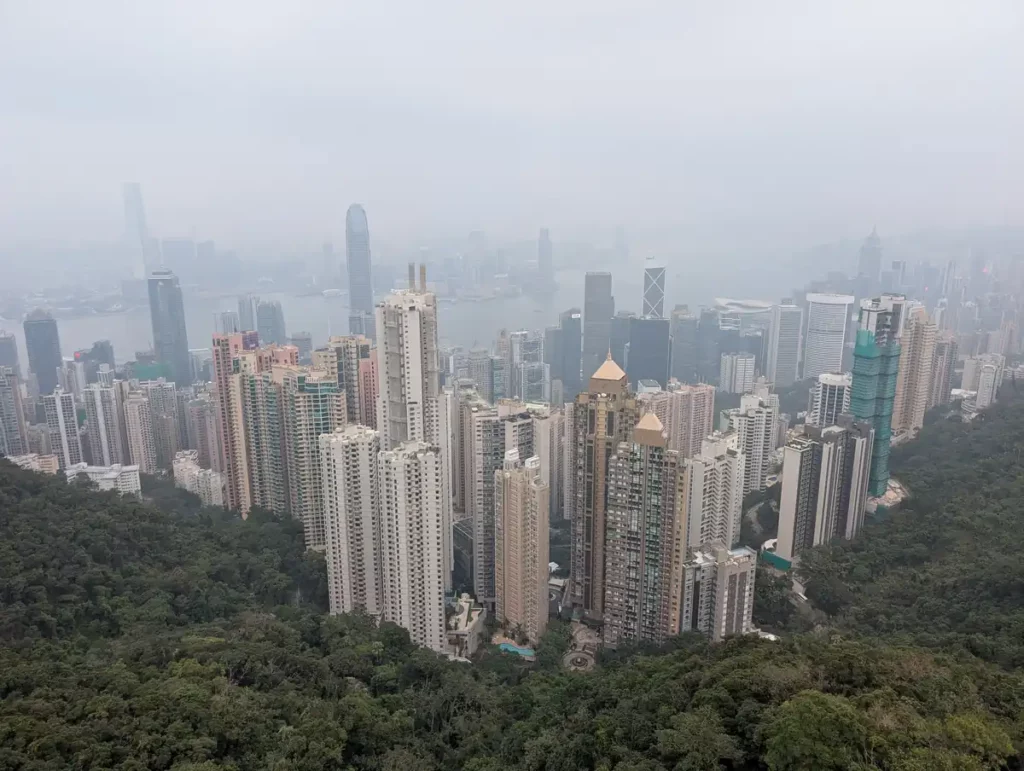
There are several free viewing points, but you can also pay to access the Sky Terrace if it wasn’t already included in your Peak Tram ticket. There are a few short walks at the top to quieter (and free!) viewpoints.
If you’re feeling hungry, the Peak Galleria shopping centre has a few restaurants, including a branch of Tim Ho Wan, a dim sum chain that used to be known as the world’s cheapest Michelin starred restaurant, and a branch of Mak’s Noodle, a chain that’s also boasted a Michelin star in the past.
3.30pm: Take the Star Ferry from Wan Chai
From the Peak, I made my way back down on the tram then headed over to Wan Chai Pier. This ferry terminal for the Star Ferry tends to be quieter than Central, though the views from the boat are no less jaw-dropping. You can pay with a contactless debit or credit card.
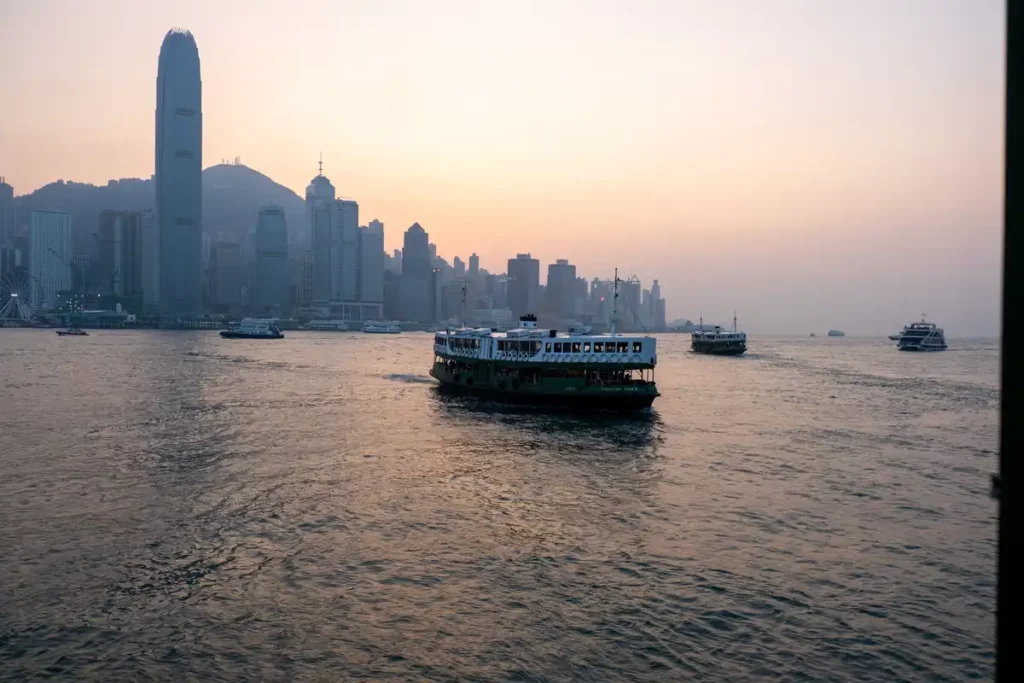
The Star Ferry is another iconic Hong Kong attraction. The little green and white ferries have been running between Hong Kong Island and Kowloon since 1888, and the journey across Victoria Harbour was one of the highlights of my Hong Kong layover.
4pm: Walk the Avenue of Stars
The Star Ferry drops you in Tsim Sha Tsui on the Kowloon side. From the pier, it’s a short walk to the Avenue of Stars along the waterfront.
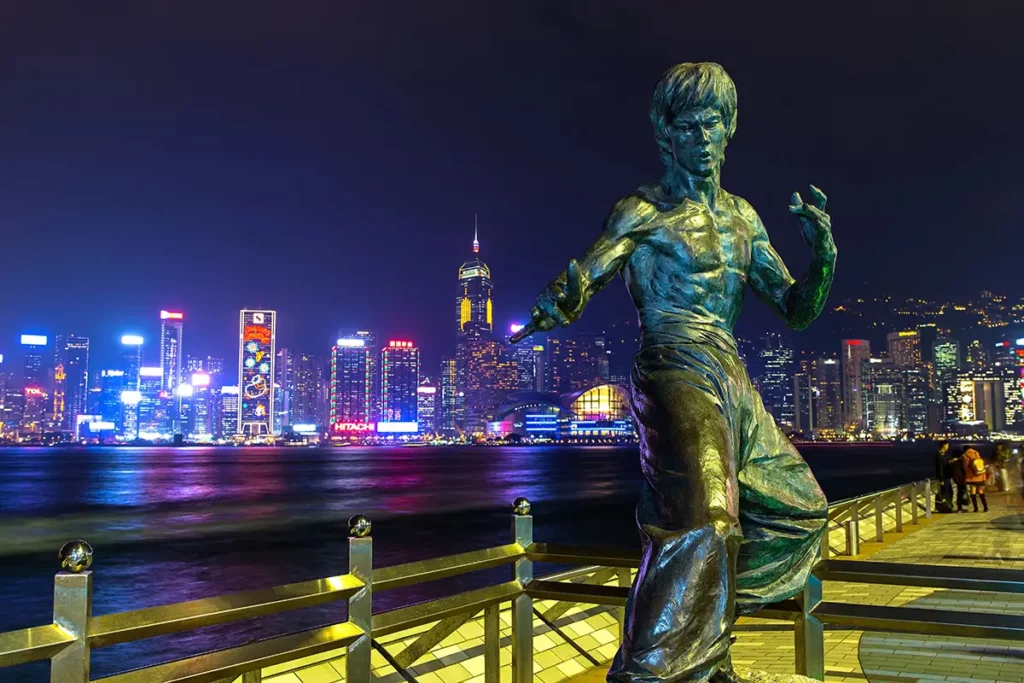
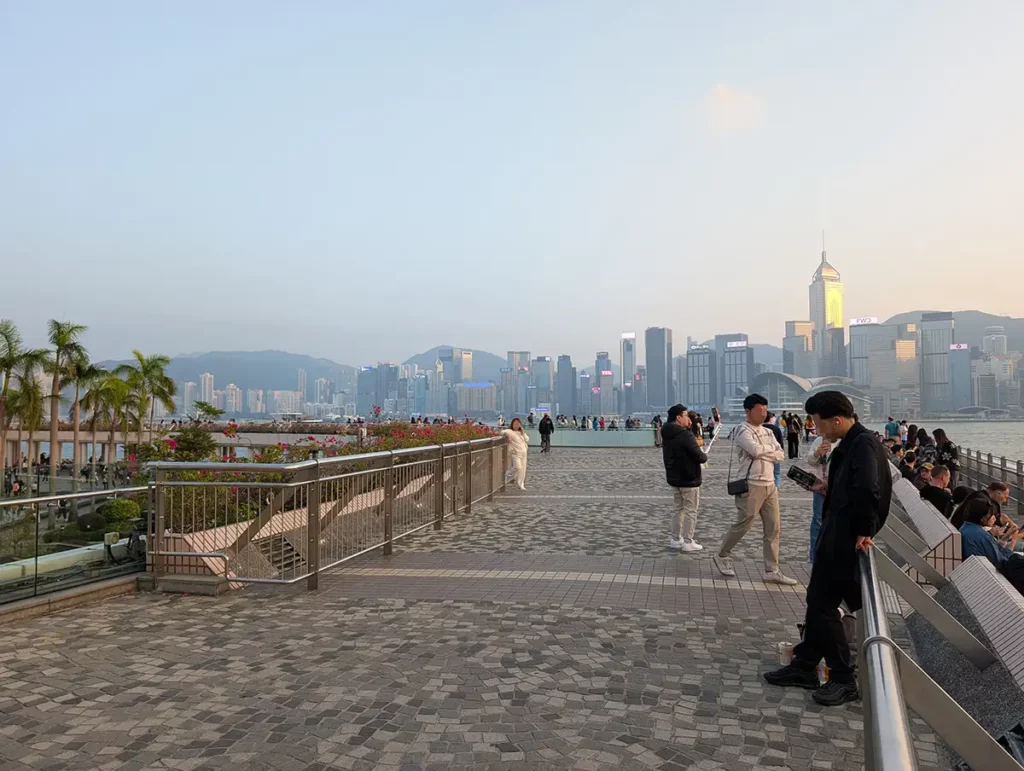
This wide pedestrian promenade has plaques and handprints of Hong Kong film stars, plus a bronze statue of Bruce Lee, which unfortunately was hidden under a giant wooden box for restoration during my short trip to Hong Kong. It’s a great place to see the skyline start to light up at dusk before the 8pm free light show.
5–7.30pm: Shopping or markets
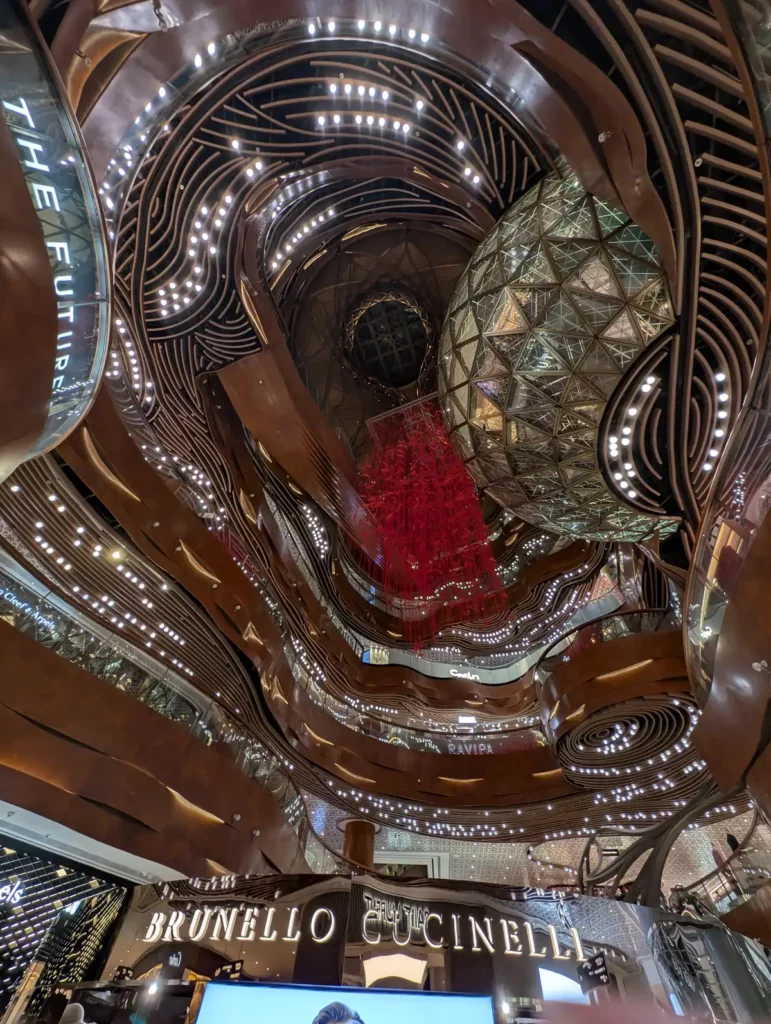
With a couple of hours before the evening light show, you could explore nearby K11 Musea, a huge high-end shopping centre with food, art and rooftop views. Inside it’s like being inside a Cadbury’s Flake bar.
Alternatively, if you want something more local, head a couple of stops north on the Metro for the Ladies’ Market or Temple Street Night Market. These markets are lively, especially in the evening, and a good place to pick up souvenirs or grab a snack.
8pm: Symphony of Lights
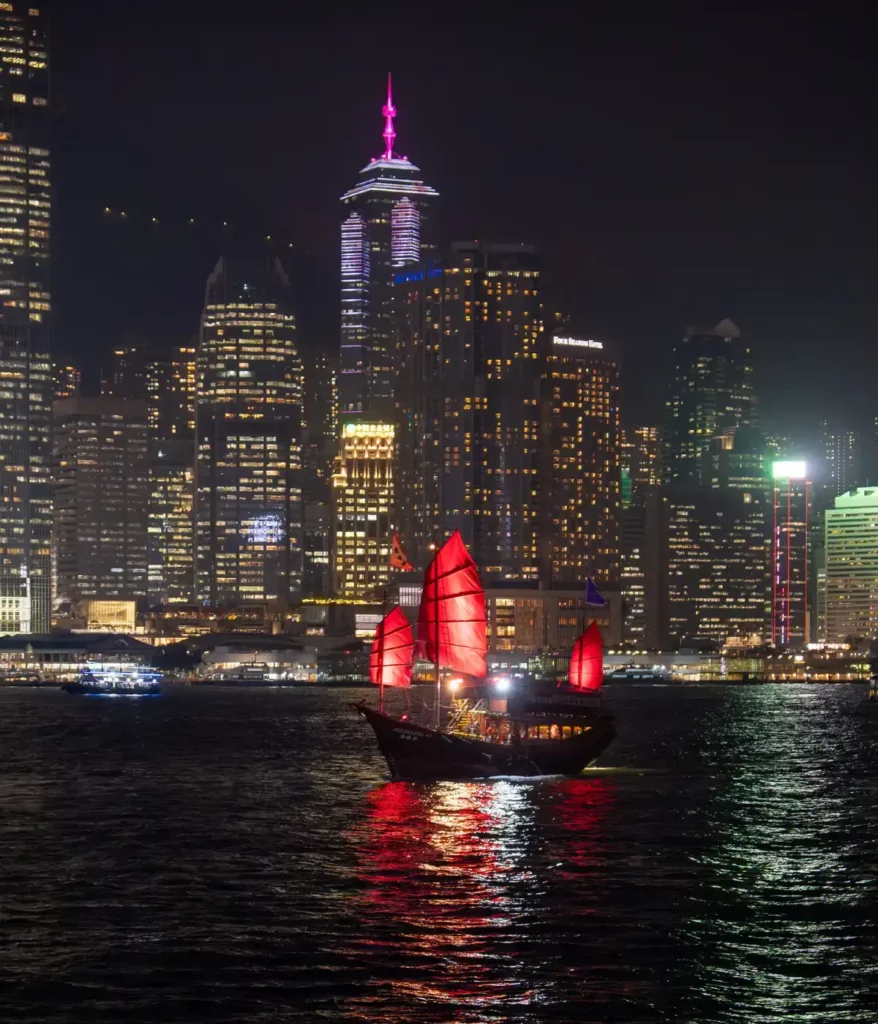
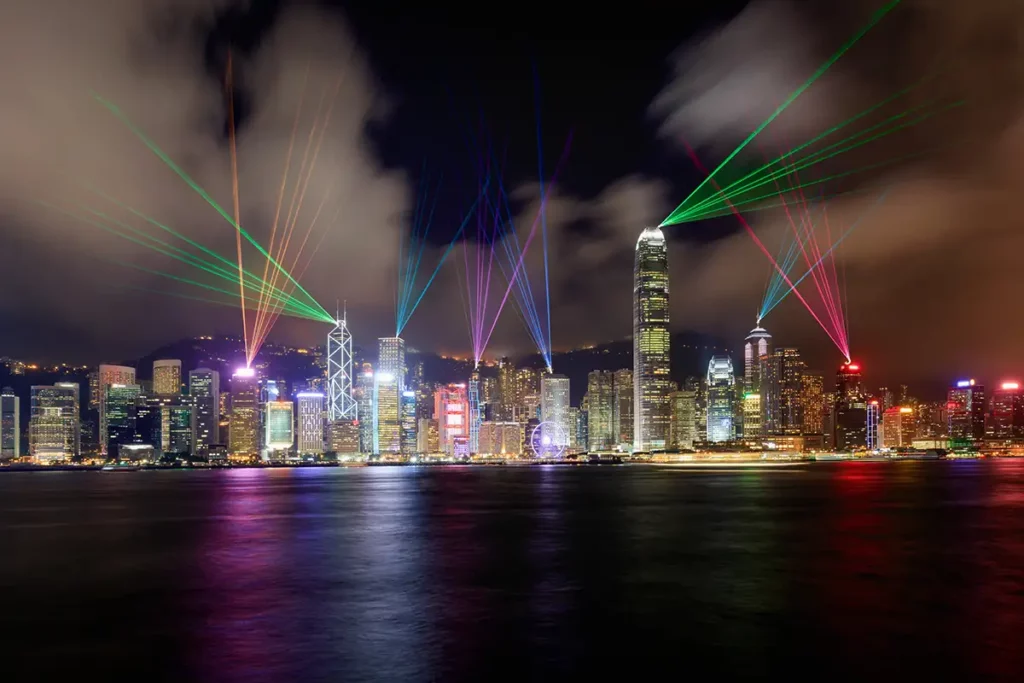
Every evening at 8pm, buildings on both sides of Victoria Harbour take part in a light and sound show. The Symphony of Lights features lasers and coloured lighting effects synchronised to music.
It only lasts about 10 minutes and the best view is from the Tsim Sha Tsui promenade by the Avenue of Stars – pick your spot early as the harbourfront promenade gets pretty busy. Unfortunately it was cancelled on the night I visited, but it’s usually a fun way to wrap up your day.
9pm onwards: Back to hotel and on to the airport
I spent a while just taking in the harbour view before catching the Star Ferry back to my hotel to rest, shower and collect my luggage, then headed back to the airport by bus. I’d booked the hotel for two nights so I could keep the room all day and leave late. This worked really well, especially with a 1am flight, and meant I didn’t have to worry about where to store my bags.
Short (6-8 hour) layover itinerary – just the highlights
With just a few hours to spare, you’ll need to prioritise, but you can still get a great taste of Hong Kong.
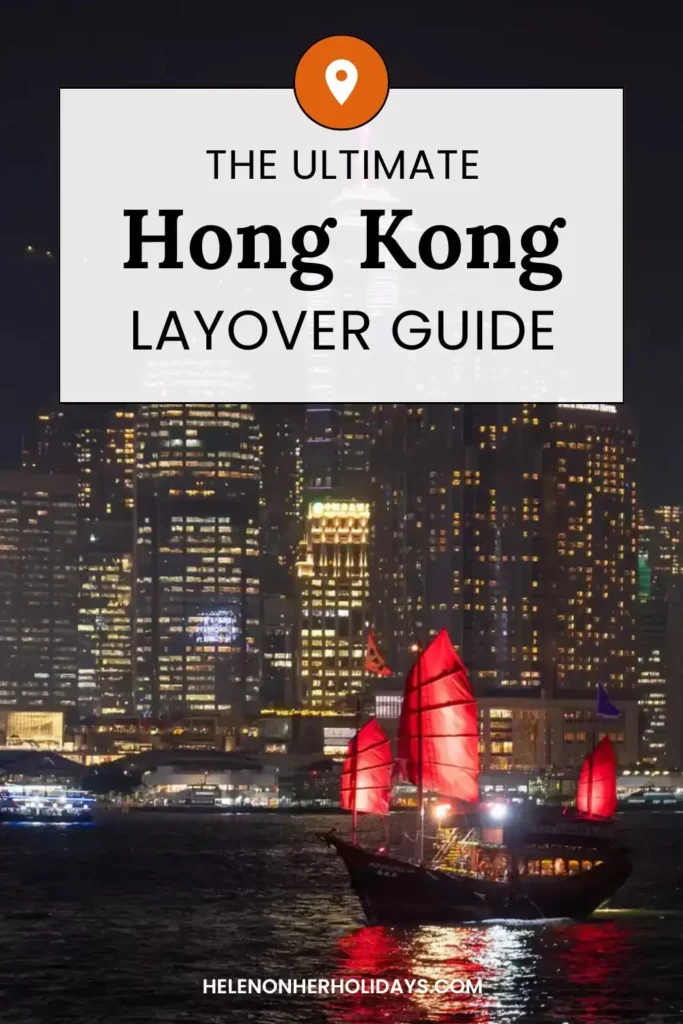
The one sight you shouldn’t miss is the Victoria Harbour and surrounding skyline, and luckily for travellers on a layover, it’s just as impressive at night as it is during the day.
For a very quick visit to Hong Kong, take the Airport Express to Hong Kong Station, walk 10 minutes to the Central Piers, and hop on the Star Ferry to Kowloon. The ferry ride is only 10 minutes, but it offers stunning views of skyscrapers on both sides and costs just HK$3 (about £0.30).
Once in Tsim Sha Tsui (Kowloon side), stroll the Avenue of Stars promenade for panoramic harbour vistas and maybe snap a selfie with the Bruce Lee statue. To get back to the airport, either retrace your steps or take one of the airport buses back from Tsim Sha Tsui.
More quick things to do in Hong Kong
Try local food
I’m vegetarian so this is a bit tricky for me, but if you eat meat and fish, you’re in for a treat in Hong Kong.
In Tsim Sha Tsui near the ferry pier you’ll find some famous dim sum spots. For a splurge with a view, book a table at Hutong or visit Tim Ho Wan for a more affordable meal. The highest bar in the world is also nearby; Ozone is on the 118th floor of The Ritz-Carlton Hotel, offering breathtaking views from 480 metres (1,575 feet)up in the sky.
If you’re in Central, the iconic Maxim’s Palace City Hall dim sum restaurant lets you choose your dumplings in the traditional way from carts making the rounds.
Don’t forget an egg tart (I got mine from Bakehouse just off the Central-Mid-Levels-Escalators) or a pineapple bun, and wash it down with a milk tea.
Explore Central and Man Mo Temple
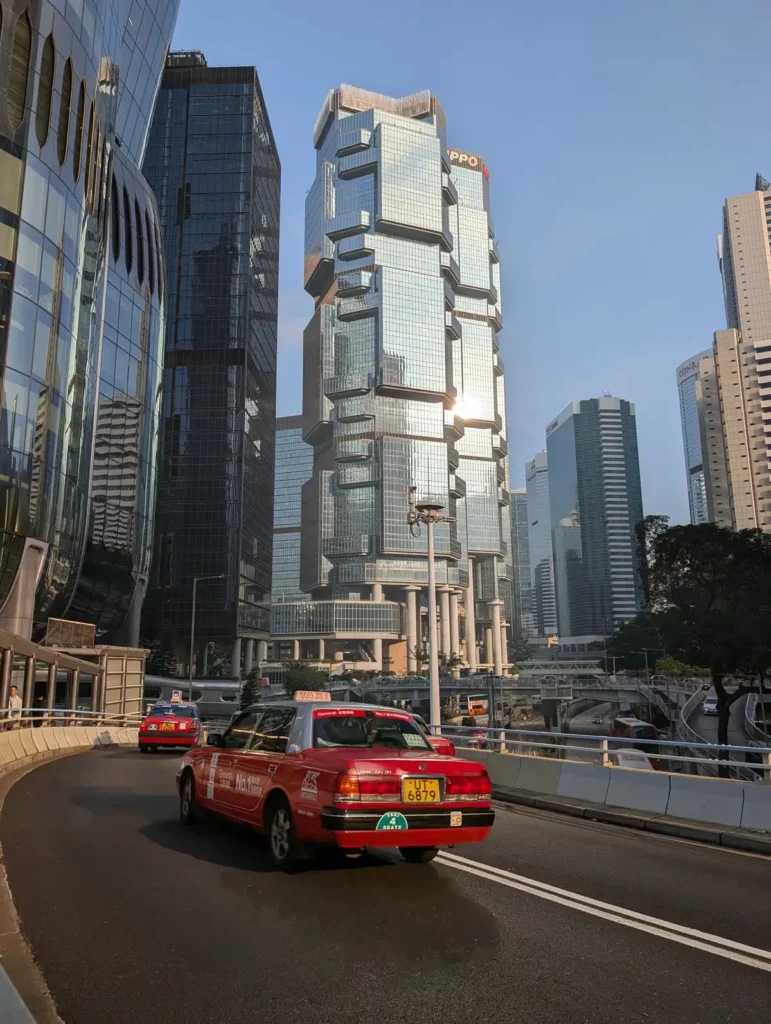
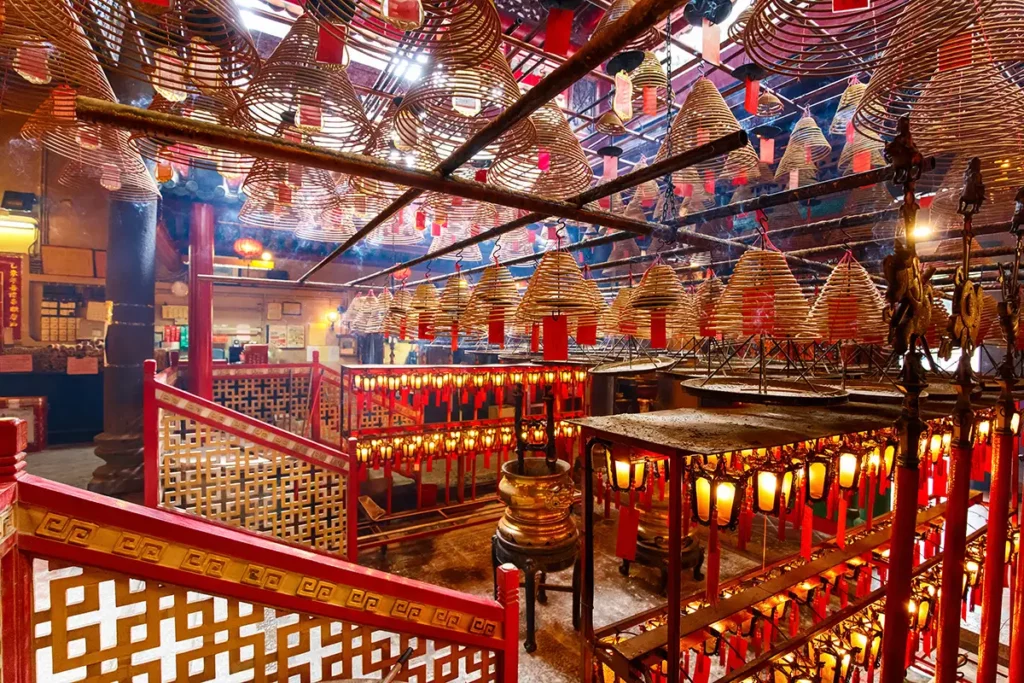
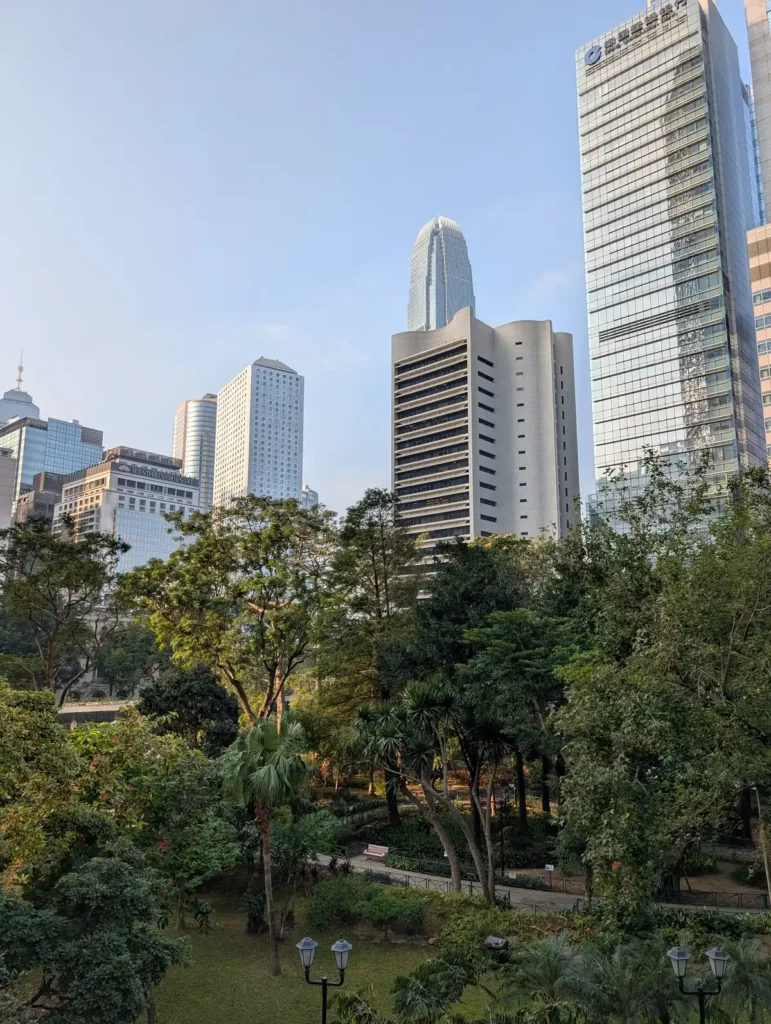
From the ferry pier or Hong Kong Station, you’re right by the Central business district, with its canyons of glass skyscrapers above buzzing streets. A short walk or taxi ride can take you to Man Mo Temple on Hollywood Road, a beautiful, incense-filled temple that feels a world apart from the modern towers.
Go shopping
Hong Kong is known for its mix of modern malls and traditional markets, and even on a short layover you’ll find plenty of opportunities to shop. Central is one of the city’s main commercial areas and ideal for high-end or air-conditioned browsing. In this area, you’ll find sleek shopping centres like ifc mall (conveniently linked to the Airport Express at Hong Kong Station) and Landmark, packed with international fashion brands, electronics and beauty stores.
For something more individual, explore the nearby streets around Wellington Street and Gough Street where you’ll find local designers, independent boutiques and stylish homeware shops. The recently restored Central Market now houses independent shops and cafés and is right next to the start of the Central-Mid-Levels escalators.
Over in Kowloon, Tsim Sha Tsui is a major shopping hub too, with large malls like Harbour City and K11 Musea right next to the Star Ferry and Avenue of Stars.
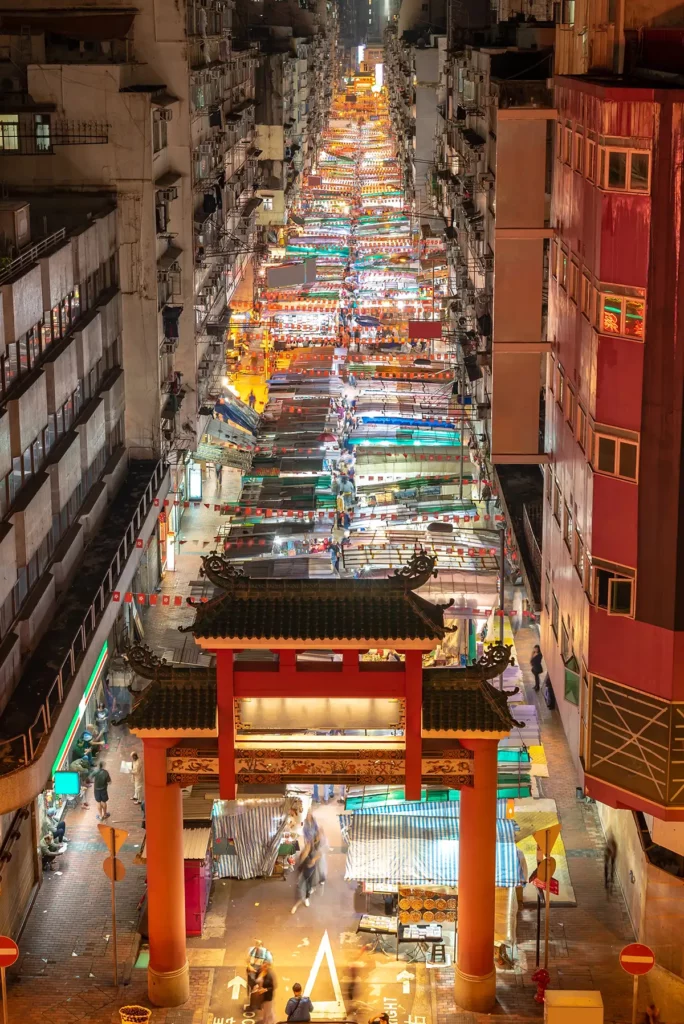
If you’re more interested in seeing local markets, the Temple Street Night Market in Jordan is a good option in the evening, offering souvenirs, watches, accessories and street food in a lively atmosphere. For daytime browsing, the Ladies’ Market in Mong Kok is one of the city’s most famous, with stall after stall selling clothes, bags and gifts. Both are close to MTR stations and relatively close to the other sights in Kowloon.
Alternative short layover idea – Lantau Island
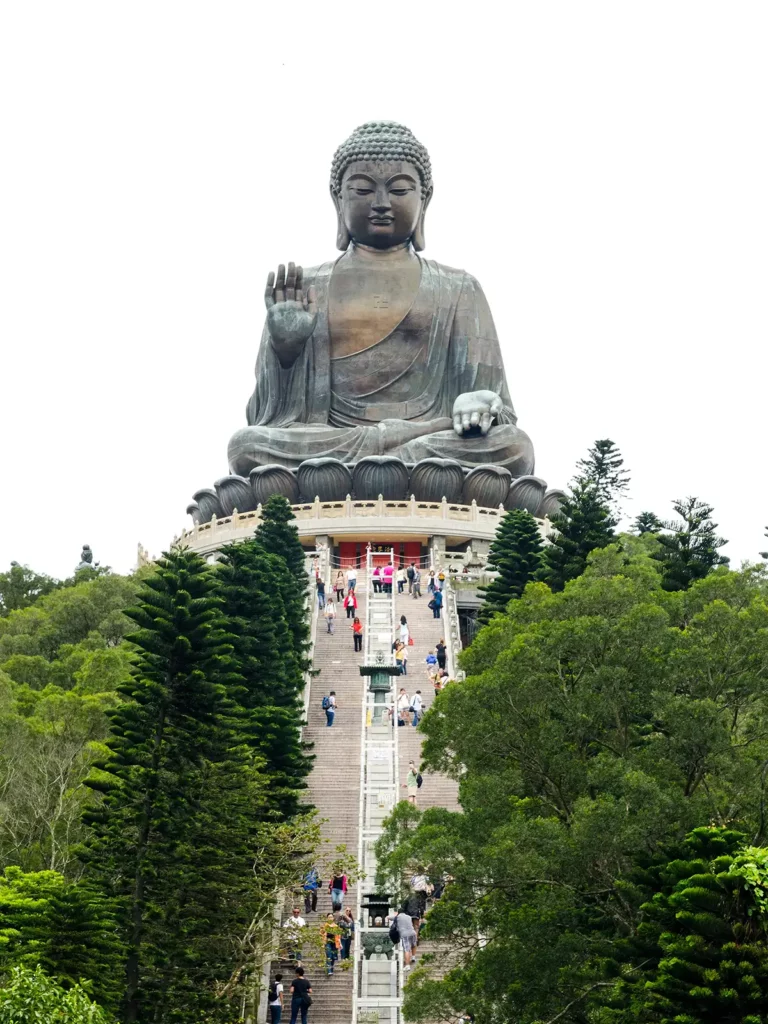
If you’re not keen on going into Hong Kong for just a few hours, and your layover is during the day, another option is to explore the area near the airport on Lantau Island. There are a few choices on Lantau Island; you could take the cable car to the Big Buddha, do some light hiking, visit Disneyland or go shopping at one of Hong Kong’s outlet malls.
Cable car and Big Buddha
The start of the Ngong Ping 360 cable car to Lantau Island’s Big Buddha is a short bus or taxi ride from the airport. A round-trip on the cable car plus a quick visit to the Tian Tan Buddha and Po Lin Monastery can be done in about 4 hours if the queues aren’t too long.
Hong Kong Disneyland
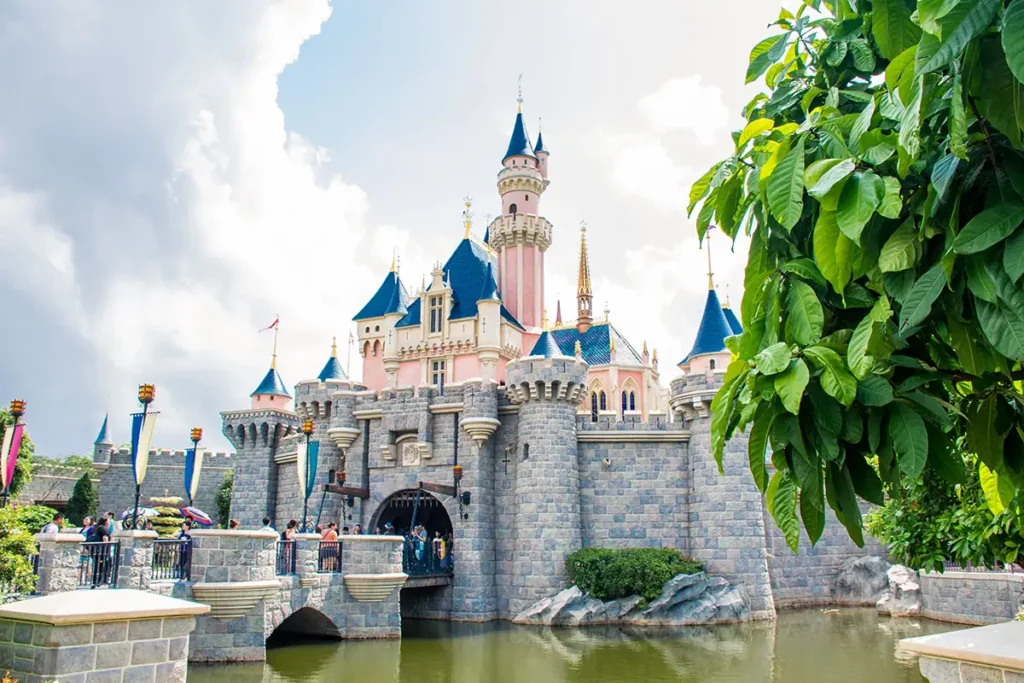
Lantau Island is also home to Hong Kong Disneyland. If your layover starts first thing in the morning and your next flight is late at night, then a day in the park could be a fun option.
Citygate Outlets mall
Citygate Outlets is a large shopping centre near Hong Kong International Airport, popular for its discounted prices on international brands. It’s located in Tung Chung, around 10 minutes by taxi or 15-25 minutes by bus from the airport, so it’s a practical option if you have a shorter layover and want to stay close to your terminal. Just be aware that it can get busy, especially at weekends or around sales.
Macau
If you’ve visited Hong Kong before, what about a quick trip to Macau? Like Hong Kong, Macau is a semi-autonomous Special Administrative Region (SAR) of China which was held by Portugal until 1999. It’s famous for its casinos, but there’s a lot more to explore.
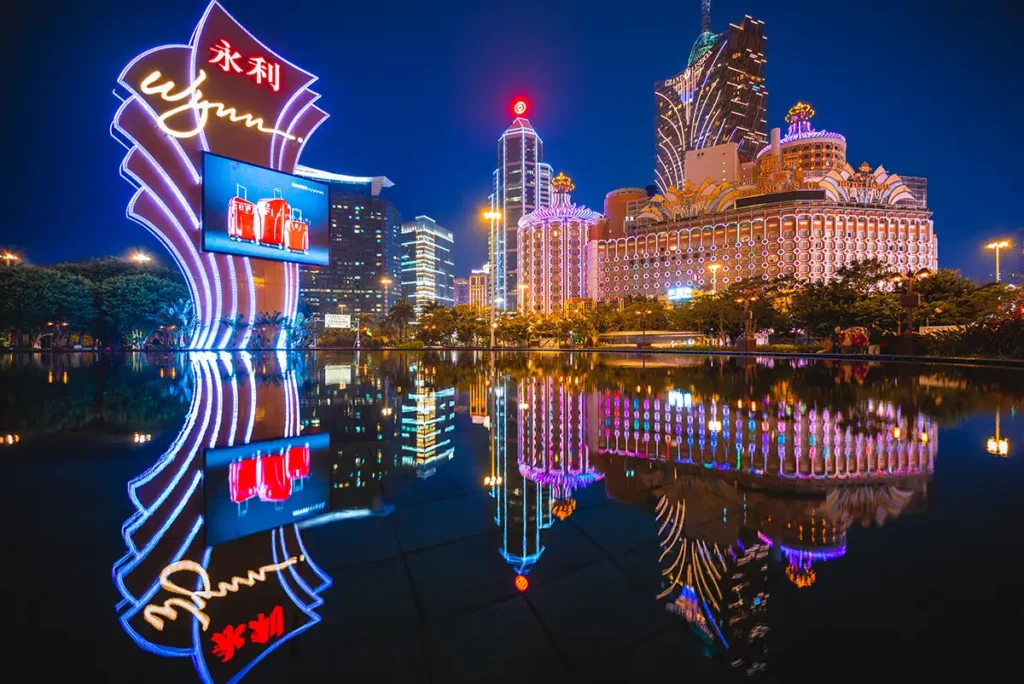
The easiest way to get to Macau is to use the Macau HK Airport Direct bus service, which travels across the Hong Kong-Zhuhai-Macau Bridge, the longest sea crossing in the world.
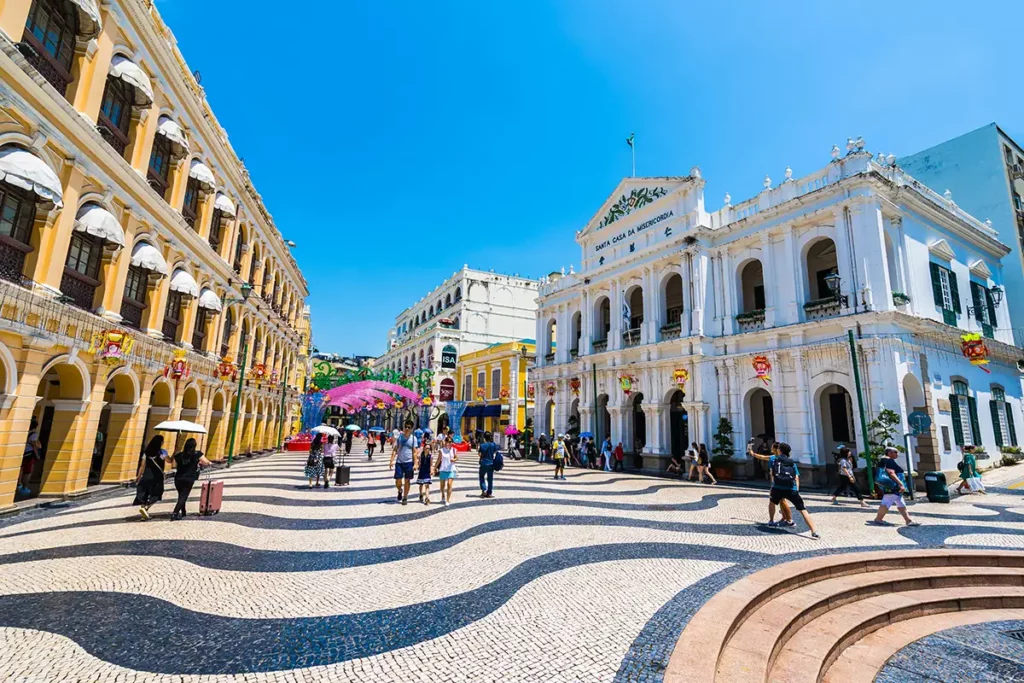
Once you arrive, Macau is small enough to let you hit the highlights quickly. With a layover of at least 8 to 10 hours, you can wander the cobblestone streets of the Senado Square, grab a Portuguese egg tart, and stand before the iconic Ruins of St. Paul’s.
Can I visit China on a Hong Kong layover?
It is possible to visit mainland China during a Hong Kong layover but it’s much more complicated and time-consuming than the short distance would suggest, as you need a separate visa to enter mainland China.
The easiest way to visit the nearest mainland city Shenzhen is to get a 5 day visa on arrival at the Lo Wu MTR station terminus, which is right next to the border with Shenzhen. To get there, you can take a bus or taxi from the airport to the Luen Wo Hui Bus Terminus, which is next to the Sheung Shui MTR station, then take the MTR one stop to Lo Wu.
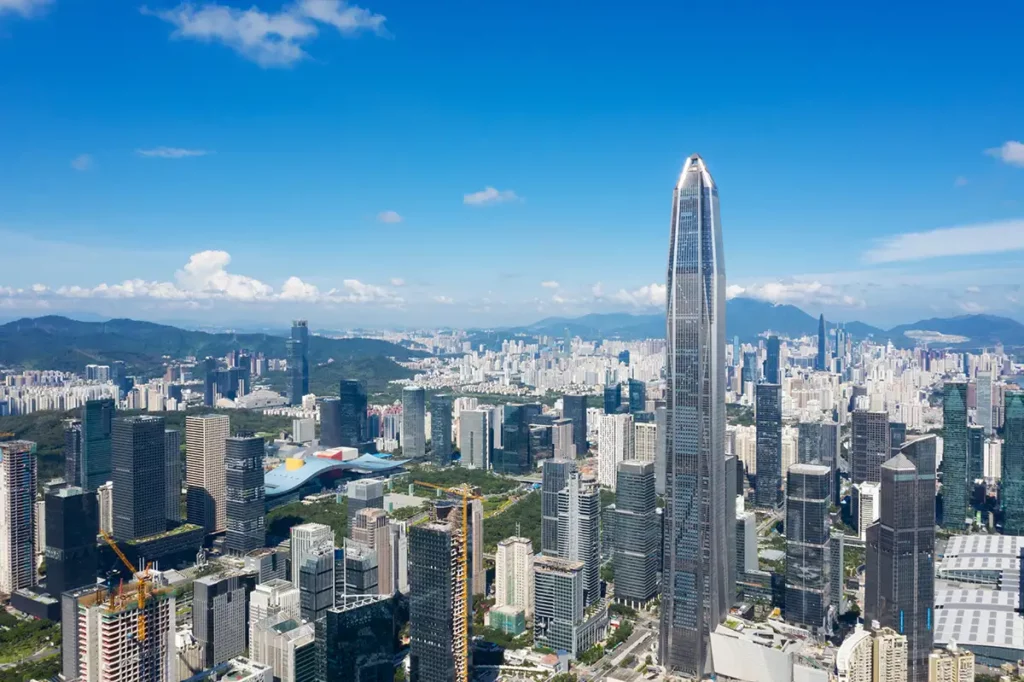
There is a high speed rail link between Hong Kong’s West Kowloon station and Shenzhen, but there’s no way to get a visa on arrival using this route. You can use it on the way back to the airport though.
Visitors from the USA, Canada, UK, Australia, New Zealand and most European countries are eligible for the 5 day visa on arrival; I had difficulty finding an official, full list from the Chinese authorities so I’d recommend checking on your own country’s government website.
Getting a visa on arrival involves filling in a form, having a photo taken and paying a fee of CNY 130 (around £13 or $18 USD). The 5 day visa on arrival is just for the Shenzhen area; you won’t be able to go outside the city limits.
Practical tips for a Hong Kong layover
Here are my top tips to make your Hong Kong layover as easy as possible, and get the most from your time in Hong Kong. They’re all based on my experience visiting Hong Kong between Cathay Pacific flights in December 2025.
Do you need a visa to leave the airport?
For most travellers on a layover, the answer is that no visa is required. Hong Kong operates its own immigration system (separate from mainland China), and it grants visa-free entry to visitors from over 170 countries for short stays. You can check whether your passport will allow you visa-free entry on the Hong Kong Immigration Department website.
How much time do you need for a layover?
Hong Kong’s efficient airport and great public transport makes quick visits possible, but you still need to allow enough time to leave the airport and get back without cutting it too fine for your next flight. I recommend a minimum of 6 hours between flights to comfortably leave the airport, see a couple of sights and get back in time for your next flight.
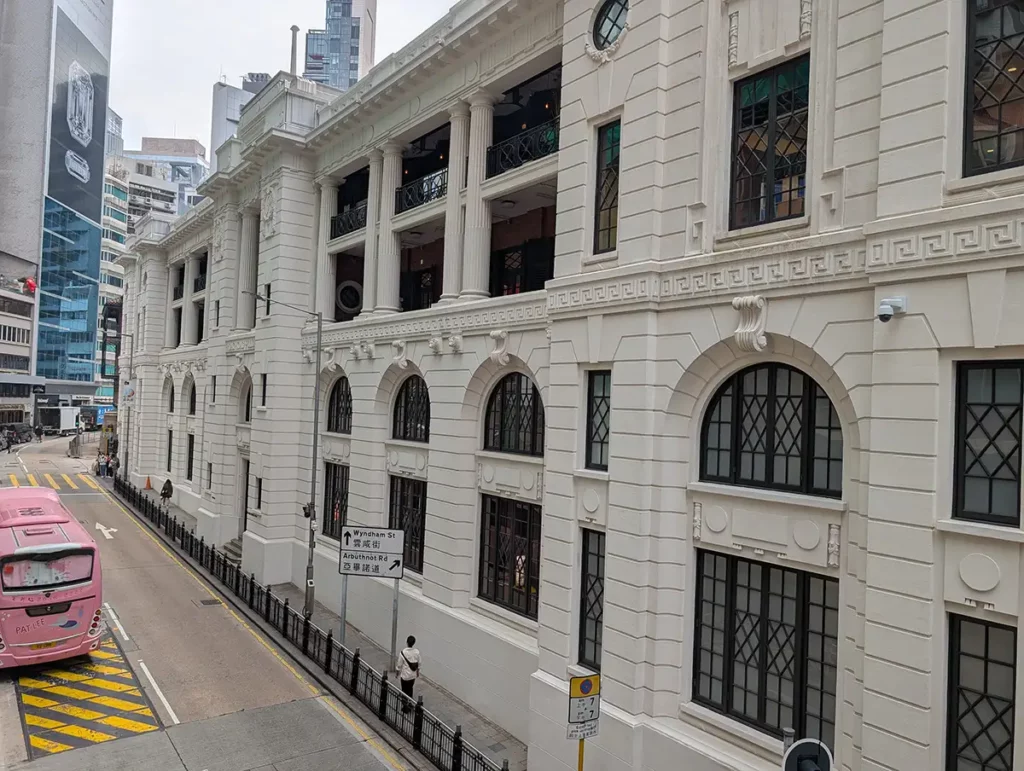
What happens to my checked in baggage?
The answer depends on the length of your connection and your airline ticket.
Short layover (usually less than 24 hours)
If both flights are on one ticket and your connection is under 24 hours, your airline will typically check your bags through to your final destination. This means that you won’t need to pick up your checked luggage in Hong Kong and it’ll be transferred automatically to your next flight.
It also means that you won’t have access to your bag in Hong Kong, so make sure you pack anything that you’ll need for your Hong Kong layover in your hand luggage.
Long layover (over 24 hours or separate tickets)
If your layover extends beyond 24 hours, you’ll have to collect your baggage in Hong Kong and re-check it for the next flight. For example, I landed in Hong Kong on a Wednesday afternoon and my next flight was in the early hours of Friday morning, so I needed to pick my bag up from the carousel, just as I would have done if Hong Kong was my final destination.
If you do have your luggage with you and don’t want to take it into the city, Hong Kong International Airport has a baggage storage facility in Terminal 1.
Getting from Hong Kong airport to the city
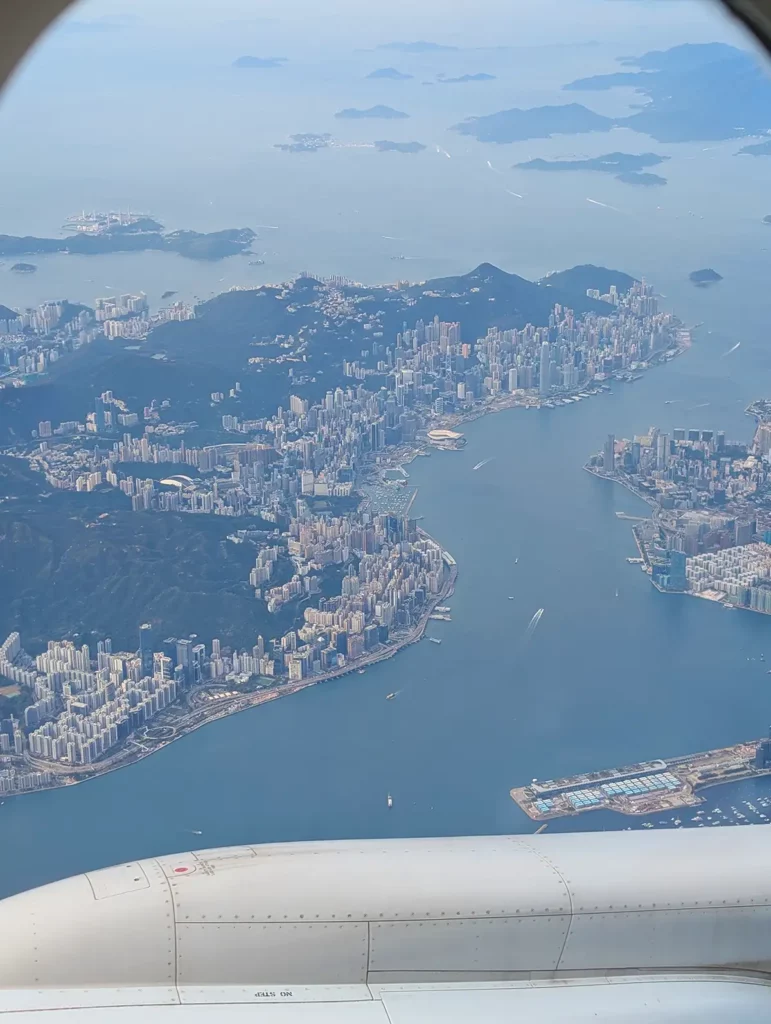
Once you’re through immigration, your next step is to head into the city. The airport is on Lantau Island, about 30 km from Hong Kong’s Central district.
You have three main transport options:
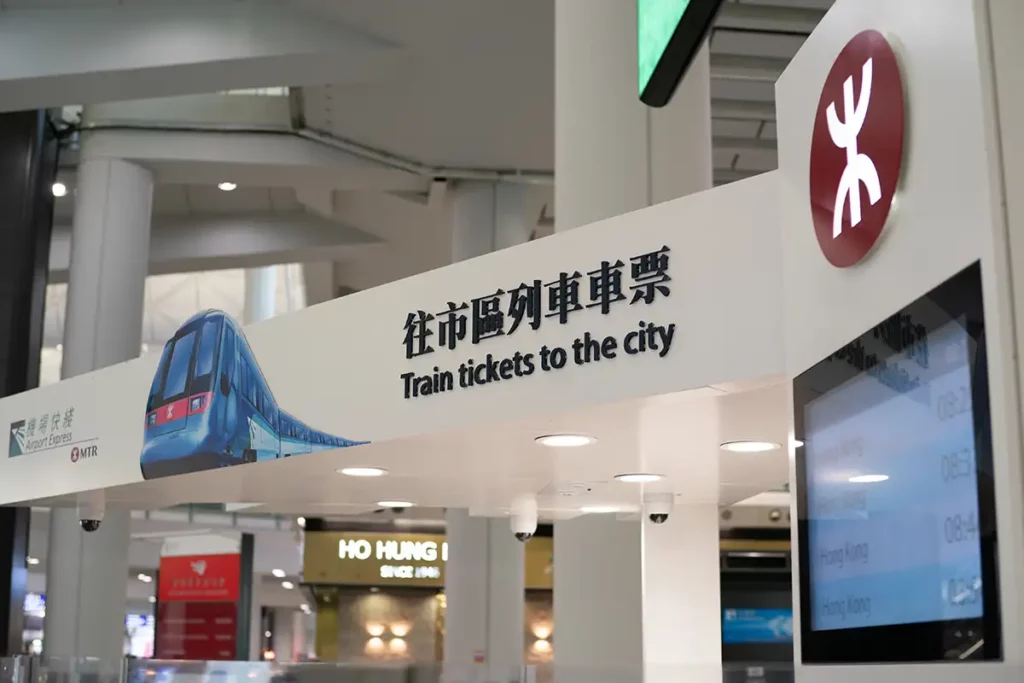
Airport Express train
This is the fastest and most popular way into the city. The Airport Express departs right from the airport terminals every 10–15 minutes and reaches Kowloon Station in 22 minutes or Hong Kong Station (Central) in 24 minutes. The train is a bit pricey, but it’s by far the quickest route into town and ideal when time is tight.
Airport buses
Hong Kong’s public buses are a cheaper alternative to the Airport Express train and go many places directly, though slower. The bright orange Cityflyer double-decker buses leave from the airport bus terminus and serve different city areas. My hotel was closer to an airport bus stop than a train station, so I took the bus.
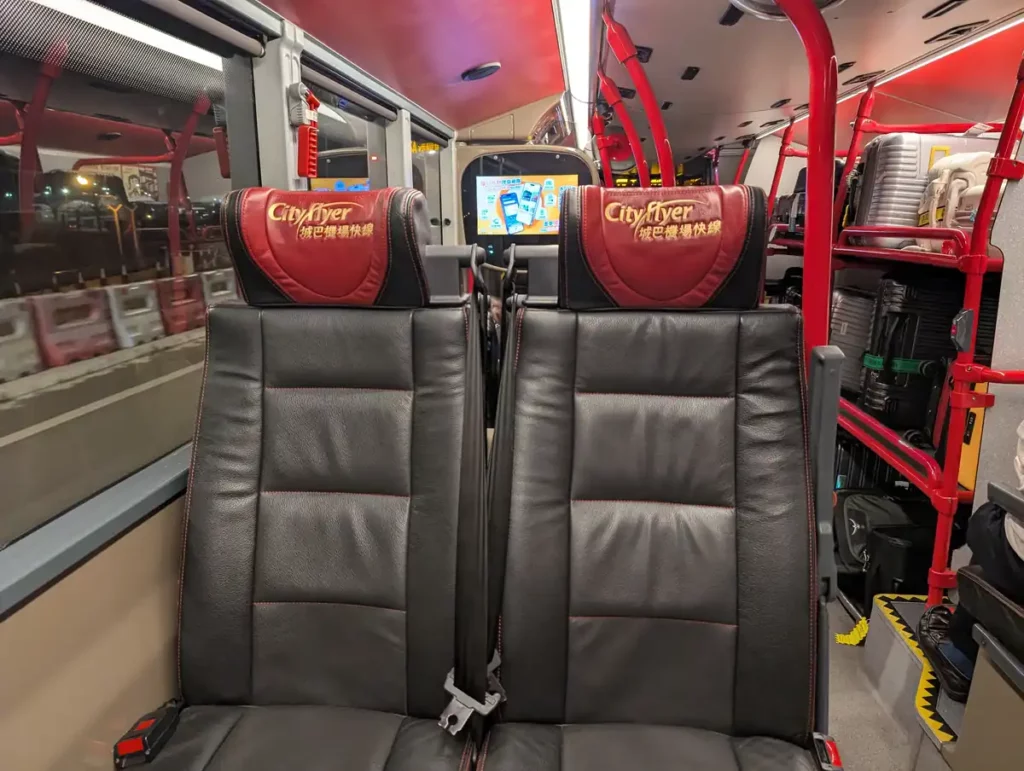
One issue with the bus was luggage; lots of people on my bus into the city were travelling with big bags, and although there’s a big luggage rack on the lower deck, it got full quickly. I was sat downstairs so could see my bag the whole time, but if I hadn’t been one of the first on board, I would have had to sit upstairs without it.
Travel time into the city by bus was about 45 minutes for me but that can vary a lot with traffic. Expect up to around 90 minutes if you’re travelling during rush hour.
You can pay for your bus ticket using cash, Octopus or with a contactless credit or debit card, but make sure you read my note about contactless cards below.
Taxi
If you’re in a group, or if you arrive late at night or early in the morning, taking a taxi can be convenient. Taxis queue up at the airport 24/7; a ride to Central or Tsim Sha Tsui will cost roughly HK$300–400 (around £30-40/$45-60 USD), plus tolls and maybe a small luggage fee.
Hong Kong taxis are primarily cash-based, but more are accepting electronic payments like Octopus, credit and debit cards, Alipay or WeChat pay. A new law requiring all taxis to offer at least two e-payment options is due to come in during April 2026, but there’s no guarantee that one of the options will be a payment method that you have.
If you do take a taxi, have your hotel address written in Chinese just in case, as not all drivers speak fluent English.
How to pay for things – Octopus card vs. contactless payments
Every Hong Kong travel guide I read before my trip told me that I needed to get an Octopus card as soon as I arrived, and that without it I wouldn’t be able to get on buses or trams or even buy food.
The Octopus is a rechargeable smart card used for transit fares and small purchases, and it’s true that Octopus has been king in Hong Kong since it was introduced in 1997.
However, here’s a pro tip for 2026 travellers: you may not need to buy an Octopus card at all!
I was initially really stressed because I couldn’t find anywhere to buy a physical Octopus card at the airport without using a Chinese payment app (the machines wanted Alipay or WeChat Pay, which I didn’t have). But it turned out not to be an issue; I simply used my contactless debit card everywhere, including on public transport.
That said, there are a few caveats if you also decide not to get an Octopus card:
- I have a couple of different debit cards (Visa debit and Mastercard debit), and I found that sometimes one of them wouldn’t work, but the other one would. If you only have one card, I’d be extra wary and make sure to have enough cash for whatever it is you need to pay for.
- In the UK I usually use my phone to make card payments using Google Pay, but that also seemed unreliable, so make sure you have a physical credit or debit card.
- Not every single turnstile or bus is equipped for card payments yet, as the rollout is still ongoing, so it’s best to have some cash on you just in case, preferably in small notes and coins so you have exact change.
- Both of the ding ding trams I took had contactless card readers. The Star Ferry terminal had either ticket machines where you could pay with a card, or you could use the ticket gate to tap in.
- I’m vegetarian, so street food is often a no-go for me. I ate mostly in cafes in the touristy areas, and picked up drinks at convenience stores. I’ve heard that street food vendors and market stalls still prefer Octopus or cash.
- Your bank might charge foreign transaction fees for each tap. Check your card’s policy; my main card has no foreign fees, so it was fine.
The Octopus card is still very handy and widely used by locals. If you’re staying longer than a day, if you’re planning to eat a lot of street food or you’ll be coming back to Hong Kong soon, it could be worth getting one. For a quick layover, though, you can absolutely survive with just your contactless bank card and a bit of cash.
Should you get a hotel on a Hong Kong layover?
If your layover is overnight or 20+ hours, you might be wondering if it’s worth getting a hotel. After my experience, I highly recommend booking a hotel for any layover that involves an overnight, even if your stay is short.
Having a hotel room to shower, change, take an afternoon nap or sleep overnight is a game-changer. My flight out of Hong Kong to Manchester was at 1am, so I actually booked two nights at a hotel (the night I arrived and the next night) even though I knew I’d be checking out at 9pm on the second day to head to the airport.
This gave me a home base for my entire stay in Hong Kong; I could leave my bags securely, come back in the evening to freshen up, and even lie down for a couple of hours before my late-night, 15-hour economy flight back to the UK. Yes, I paid for an extra night, but I thought it was money well spent for the comfort and peace of mind.
If booking an extra night isn’t in the budget, you could also look for hotels that offer day-use rooms. Hong Kong Airport itself has hotels close by, including the Regal Airport Hotel, which is connected to the terminal.
If you do get a hotel, make sure it’s convenient for the sights you want to see and close to transport to and from the airport. Areas like Central, Wan Chai and Tsim Sha Tsui are great for sightseeing access. I stayed in Wan Chai, within walking distance of the ding ding trams, Star Ferry and buses back to the airport, but if I went back I’d stay in Tsim Sha Tsui as it seemed like a much more fun neighbourhood, especially in the evening.
If your layover is just a daytime stretch (for example 8 hours, all in daylight), then obviously you’d skip the hotel. But for anything approaching an overnight, I’d say go for it – your body will thank you before that next long flight!
What about free transfer tours?
Hong Kong International Airport offers free transfer tours for transfer passengers with at least 7 hours between flights. There are three set itineraries; which one you’ll go on depends on the time of day.
Only the evening tour includes Victoria Harbour, which for me is Hong Kong’s standout attraction. For that reason, I think it’s still better to go it alone on a self-guided layover itinerary.
Summary
I hope these tips help you make the most of your Hong Kong stopover. From my own recent layover trip, I can assure you that it’s absolutely worth leaving the airport and diving into the city, even if only briefly. Hong Kong is easy to navigate, efficient, and packed with unforgettable experiences at every turn.
Would you choose a Hong Kong layover?