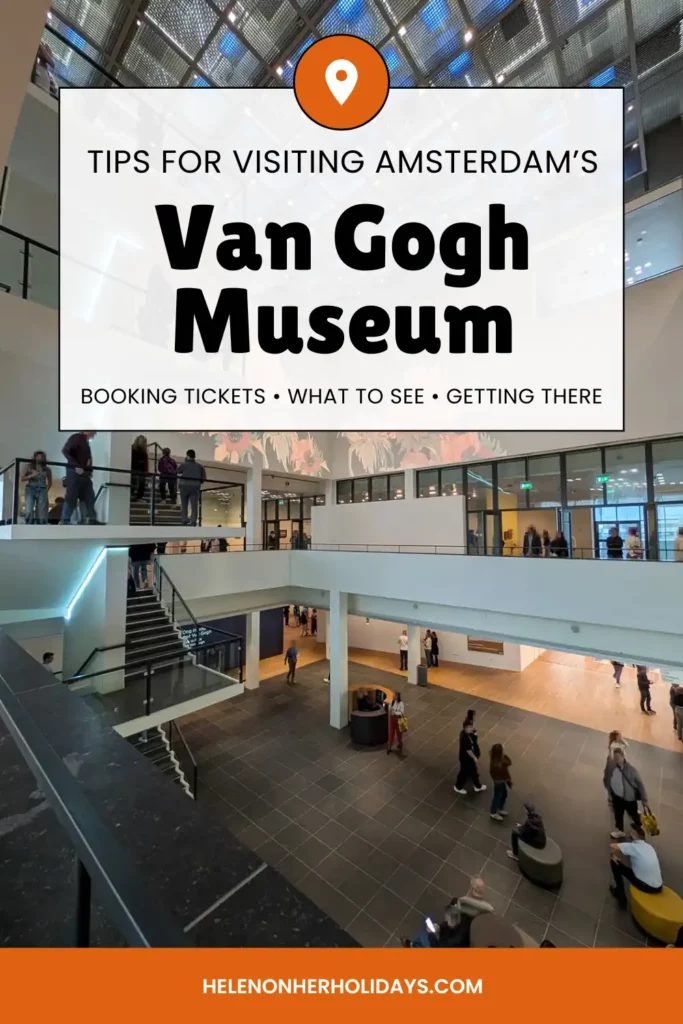
Amsterdam’s Van Gogh Museum holds the world’s largest collection of Vincent van Gogh’s work, with over 200 paintings and 500 drawings spanning his entire career. It’s one of the most popular museums in Amsterdam, which means visiting requires more planning than you might expect.
I’ve visited the Van Gogh Museum three times, most recently in October 2025. Since my last visit in 2014 the museum has got way more popular, security rules have increased and they’ve added a timed entry system. Here’s everything you need to know to have a smooth and enjoyable trip to the Van Gogh Museum in 2026.
Contents
Book your tickets as early as possible
Tickets for the Van Gogh Museum are only available online. Tickets are sold with timed entry, where you have to pick the date and time of your visit. Tickets sell out well in advance, so to be sure of getting a good slot (I recommend as early as you can manage), you’ll need to book at least two weeks in advance at the latest. Children under 18 enter free, but you still need to book them a timed slot.
You can book tickets on the museum website for €25 but if you book through GetYourGuide for €27 they offer free cancellation up to 24 hours before the time you’ve booked.
For bigger groups, I’d suggest booking as soon as you know the date you’d like to visit. If you’re visiting in the quieter winter months, you might find availability closer to your travel dates, but I wouldn’t rely on it.
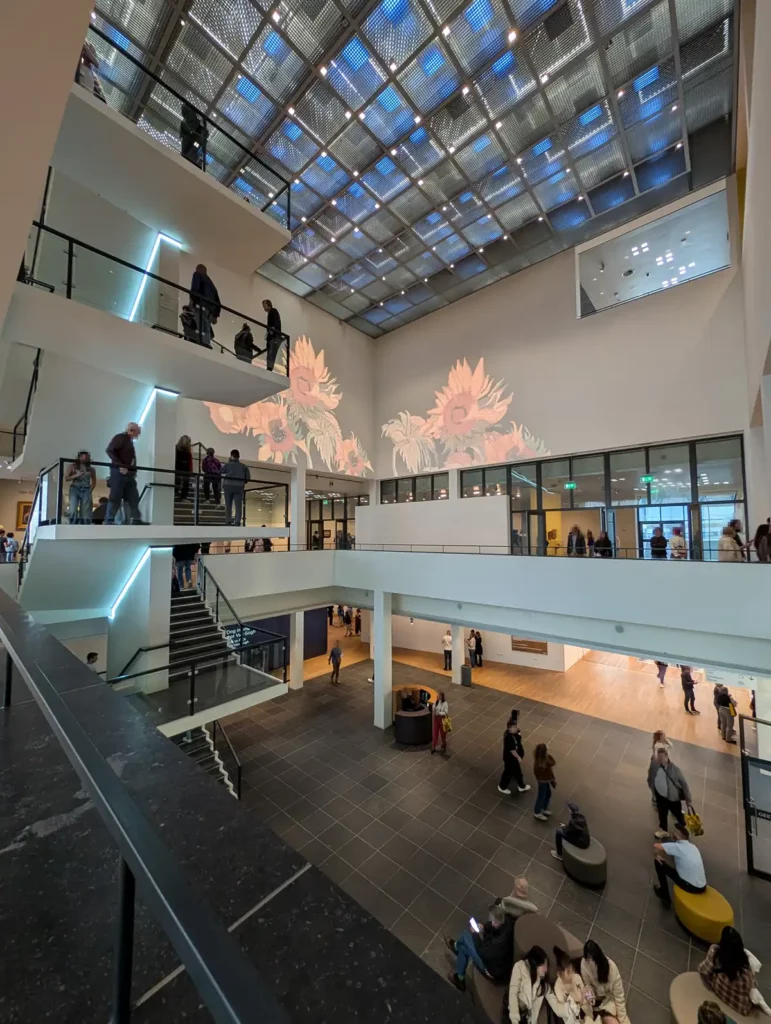
For my visit on a Thursday in early October I booked my ticket a week in advance, but most times that day had already sold out. I got the last ticket for my timeslot.
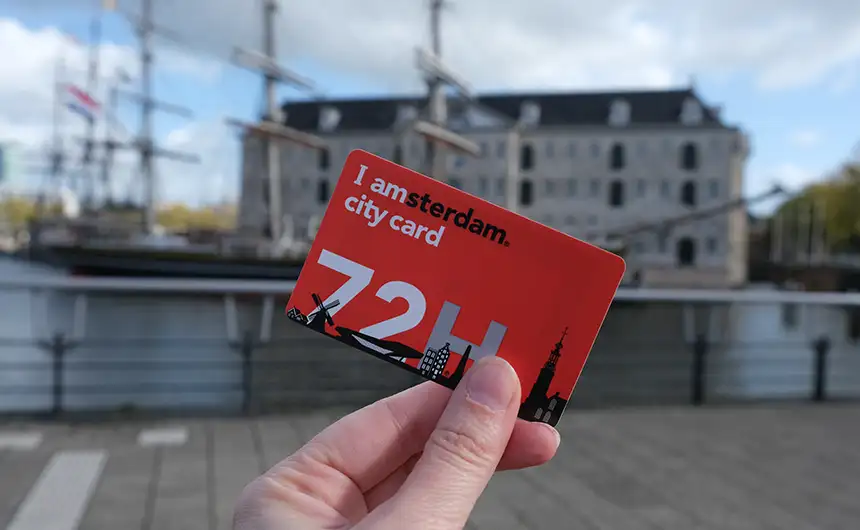
The I amsterdam City Card no longer includes Van Gogh Museum entry. It does include over 70 other museums so it’s still well worth looking at for your trip.
Read more: Is the I amsterdam City card worth it?
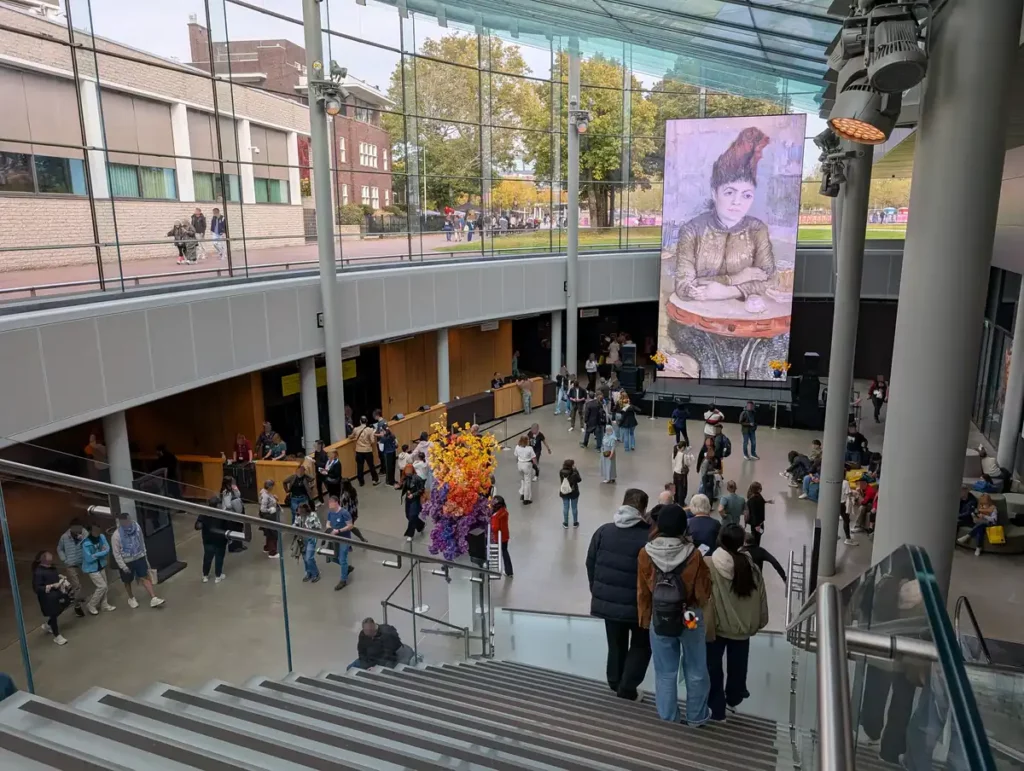
What to do if tickets are sold out
If standard tickets are gone for your dates, keep trying. Cancelled tickets mean that slots do sometimes reappear, though there’s no pattern to when.
Guided tours are worth checking too. Small-group tours may have availability when standard entry is sold out, because they include a reserved time slot. They cost more, but if it’s the difference between seeing the museum or not, it’s worth considering.
You’ll queue outside for your timed entry slot
Your ticket shows a specific time slot. You have half an hour after the time on your ticket to enter the museum.
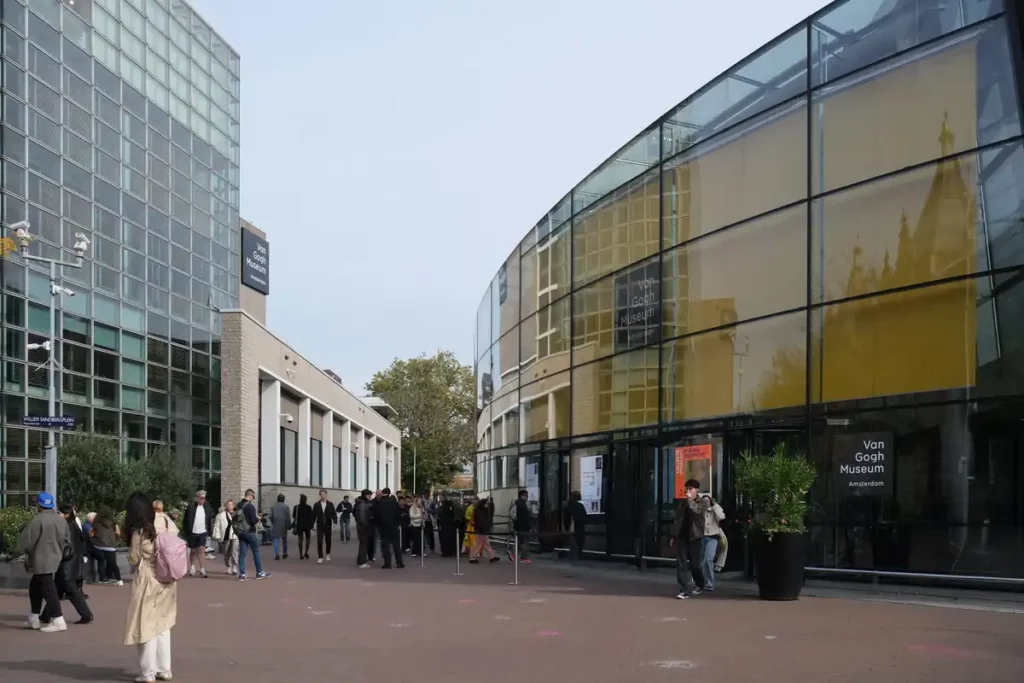
Even with a ticket, you’ll queue outside until your designated time slot. I arrived 5 minutes before my time slot and joined the end of the queue, but the queue moved really quickly; first someone on the door checked the time on my ticket, then someone inside scanned my ticket and let me in.
You don’t need to queue up any longer than I did, and the staff will tell you to come back later if you’re there too early, so there’s no need to stand outside in bad weather.
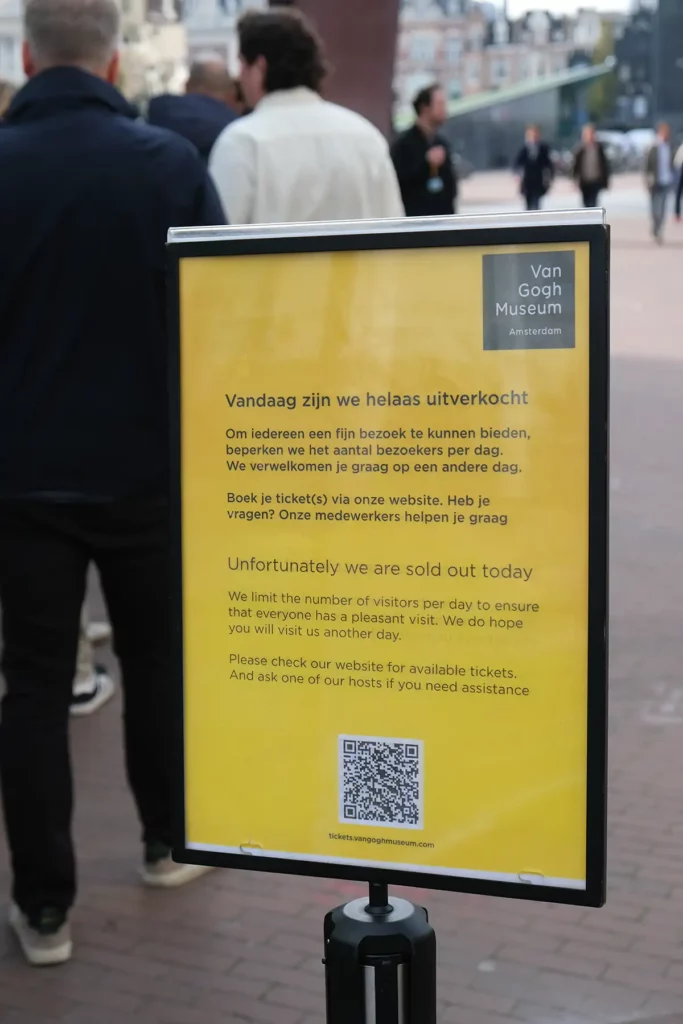
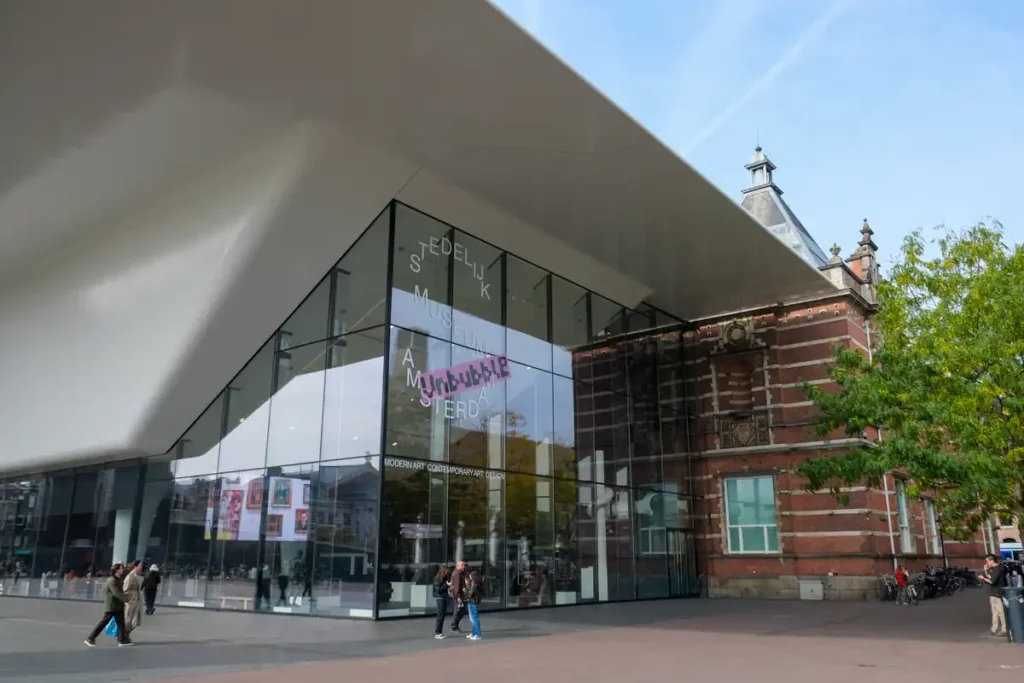
If you’re a bit early and the weather’s rotten, the Stedelijk Museum next door has a café and shop in its large atrium (you don’t need a ticket to visit the atrium). From there it’s only a minute’s walk to the Van Gogh Museum.
Early morning is your best chance for fewer crowds
Even though the timed tickets slots help to manage the number of visitors inside the museum, it’s still one of Amsterdam’s top attractions, and it gets very busy.
My Thursday early afternoon slot was sold out, and the museum was packed; although I saw everything I wanted to see, it was really difficult to get close to the most famous works, and impossible to read their little information boards.
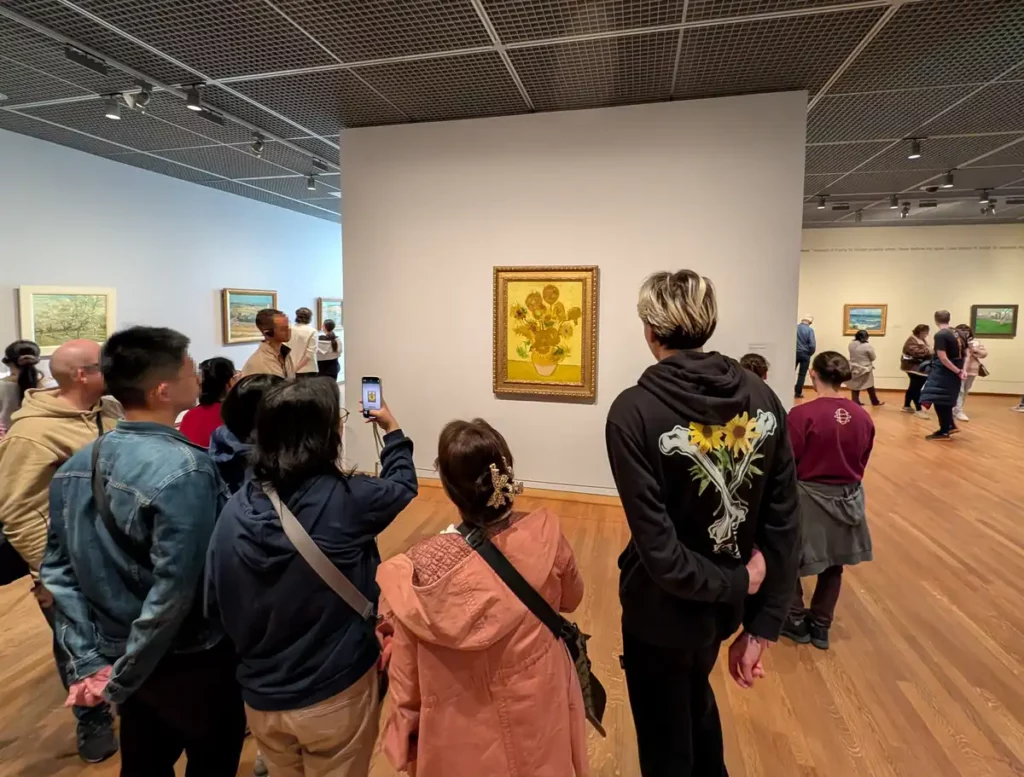
The Van Gogh Museum opens at 9am. If you can book a 9am or 9.30am slot, you’ll have the galleries at their quietest. It’s a trick I’ve used at Amsterdam’s other big museum, the Rijksmuseum, where I had Rembrandt’s The Night Watch all to myself at 9.15am.
If you really want to beat the crowds to Van Gogh’s greatest works, book a 9am slot then consider heading to the first floor, coming back to the ground floor later. The museum is in chronological order, working upwards, so everyone is heading in the same direction.
The lockers are smaller than you’d expect
The museum has free self-service lockers where you create your own PIN code. You’ll need to store coats, umbrellas and any bags larger than a smallish handbag. The lockers are quite small though; I had a backpack with me that fits on Ryanair as a personal item and it was a tight squeeze, even in the largest locker size they had available.
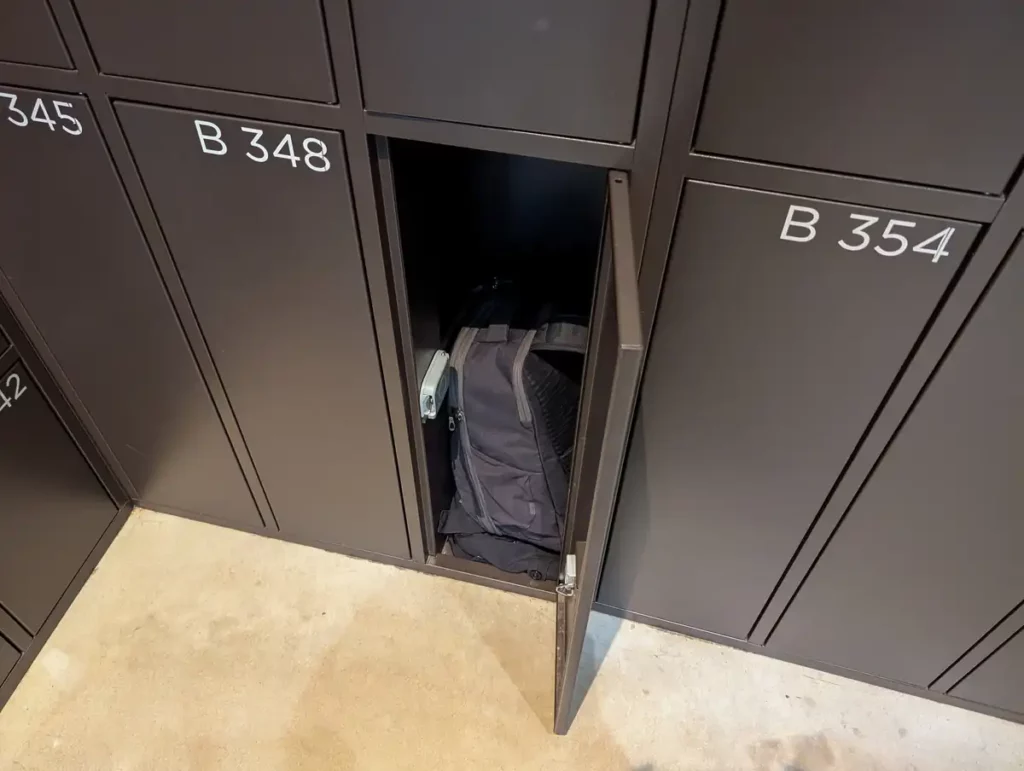
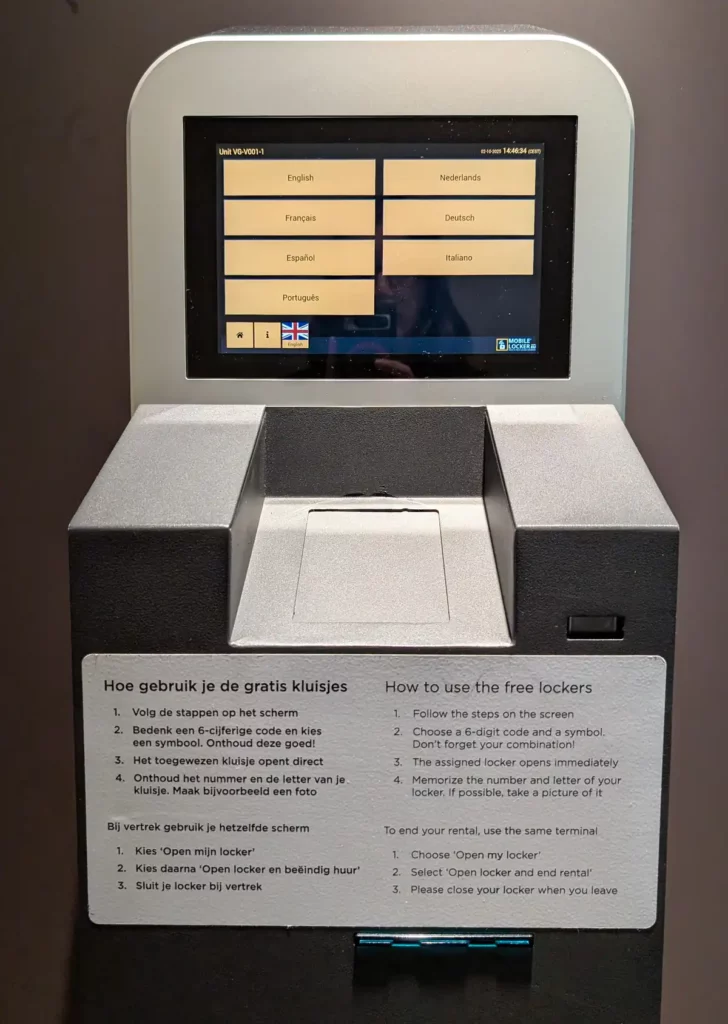
Small crossbody bags are generally fine to keep with you inside. When you collect your belongings, remember both your locker number and the PIN you created as there’s no other way to open it.
If you have a bag that’s bigger than 45×25×25 cm, or any kind of trolley case, you might be denied entry as you can’t take it into the museum and they don’t have lockers big enough to store it.
If it’s not convenient to leave your bags at your hotel, the Lockerpoint chain of luggage storage facilities has bigger lockers in the underground car park next door to the Van Gogh Museum.
The audio guide is a big help
The audio guide costs between €3.75 and €5.75 when you buy it with your ticket, and gives you the choice of a highlights, full or extended tour. I did the one-hour highlights tour and found it surprisingly good, even though I’m not normally a fan of audio guides.
The Van Gogh Museum is always very busy, and during my visit I couldn’t get near enough to the most famous paintings to read the little information displays. Being able to listen to the information through the audio guide meant I got context I’d have otherwise missed and really helped me to understand Van Gogh’s life and the significance of the major works.
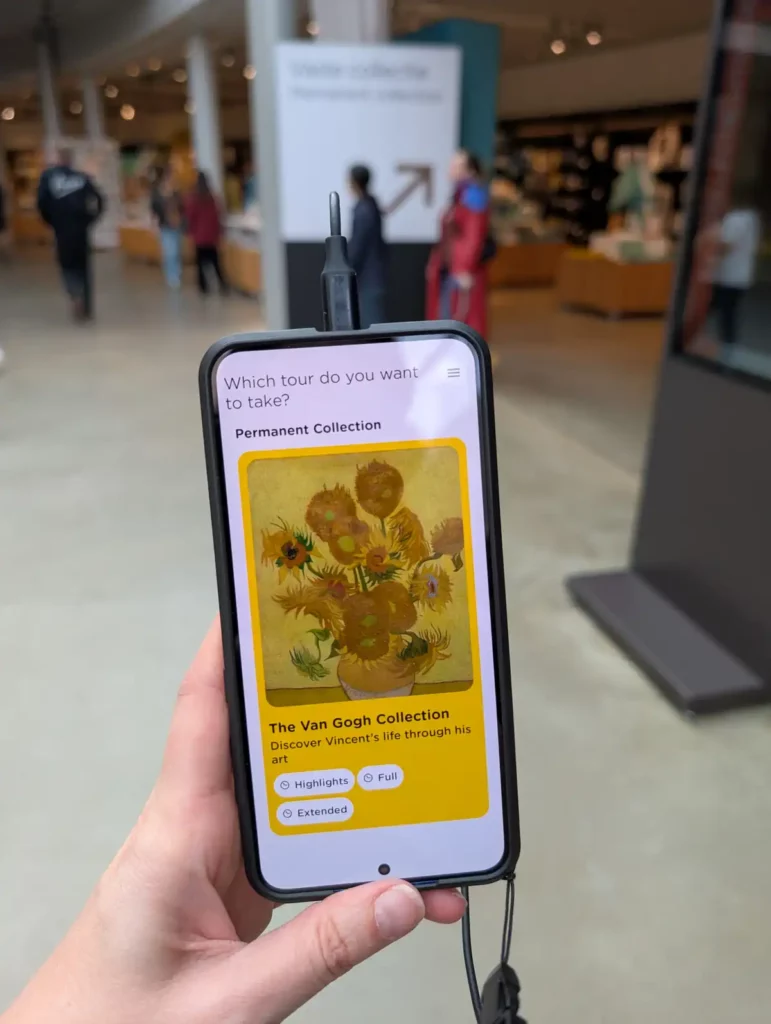
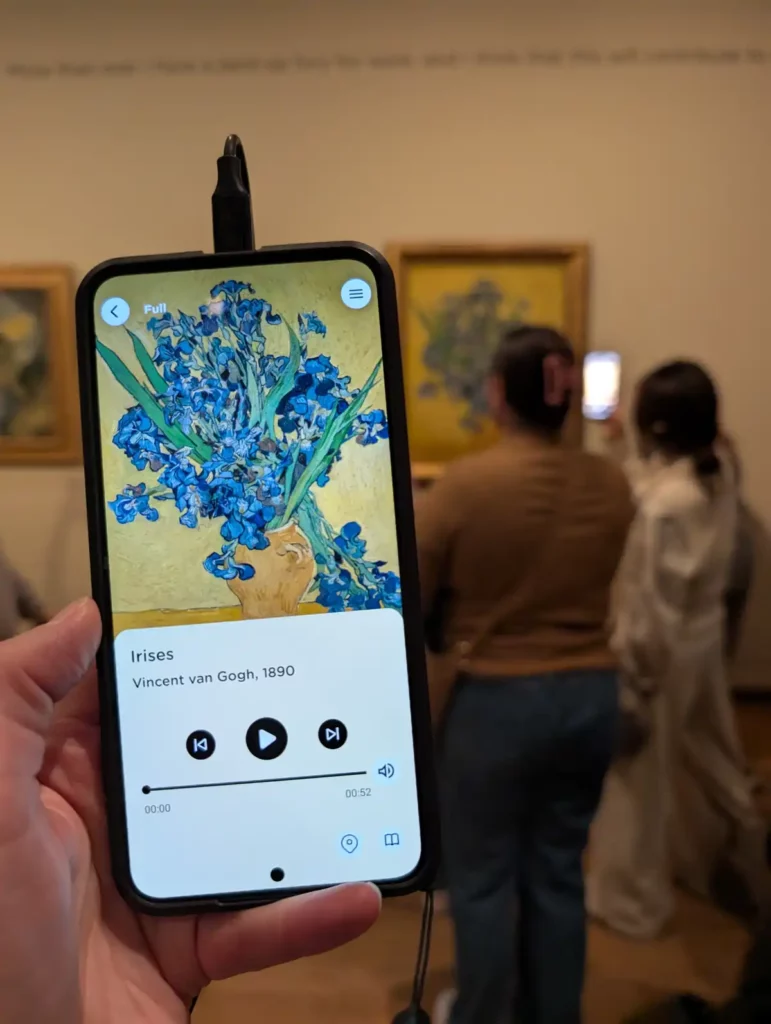
If you’re visiting purely to see the paintings and you’re not particularly interested in Van Gogh’s life or artistic development, you might not need it. But for most people, especially on a first visit, it’s worth the small additional cost to get a richer experience.
Guided tours are another option if you want more depth. The Van Gogh Museum offers 50 minute group tours for €7.50 per person. Alternatively you can find longer, usually 1.5 to 2 hour small group tours on sites like GetYourGuide. If you book through a third party site, check how many people will be on the tour, your tour guide’s qualifications and whether it includes your museum ticket.
Allow at least two hours, possibly more
Most people spend 1.5 to 2 hours visiting the permanent collection, and that was my experience too. Add another 30-45 minutes if you’re seeing temporary exhibitions.
If you’re particularly interested in Van Gogh, or if you’re someone who reads every caption and spends time with individual paintings, you could easily be there for 3 hours or more.
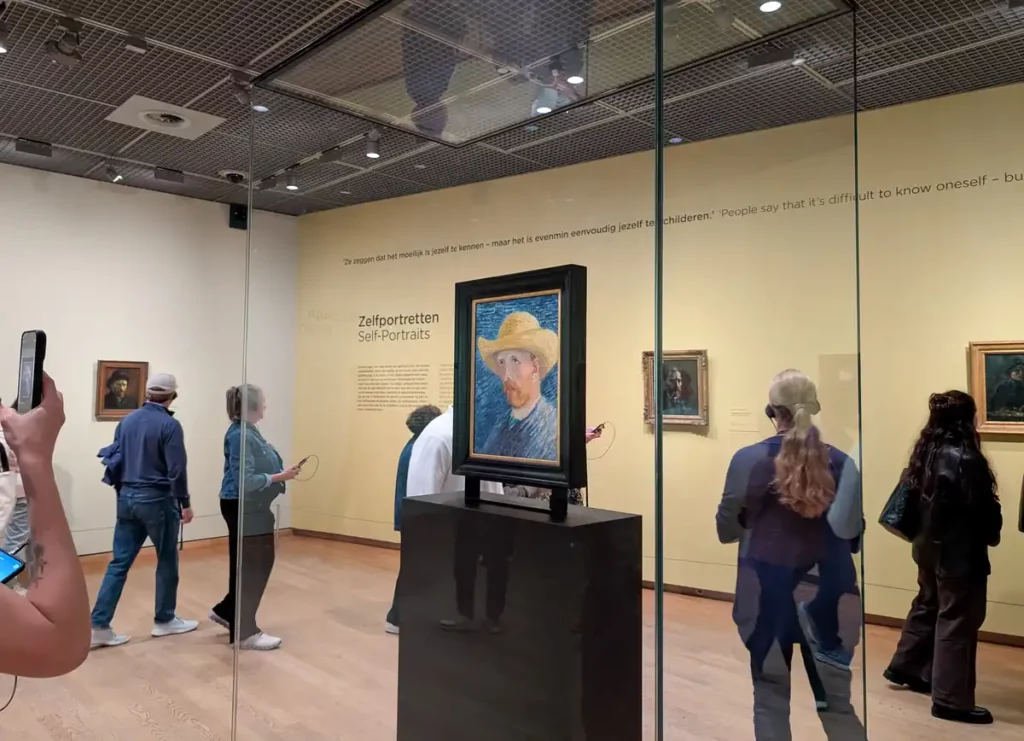
The permanent collection is arranged across four floors in the main Rietveld building. The layout is chronological – ground floor for early work and self-portraits, moving up through his artistic development. The second floor includes his letters to his brother Theo. The third floor shows Van Gogh’s last works and pieces by his contemporaries.
You don’t have to follow the suggested route, but the chronological flow makes sense for a first visit. Some people recommend starting on the third floor and working down to beat crowds, though you lose the narrative that way. It can make sense to come back to the busy ground floor at the end of your visit if you have an early or late ticket.
What you’ll actually see (and what you won’t)
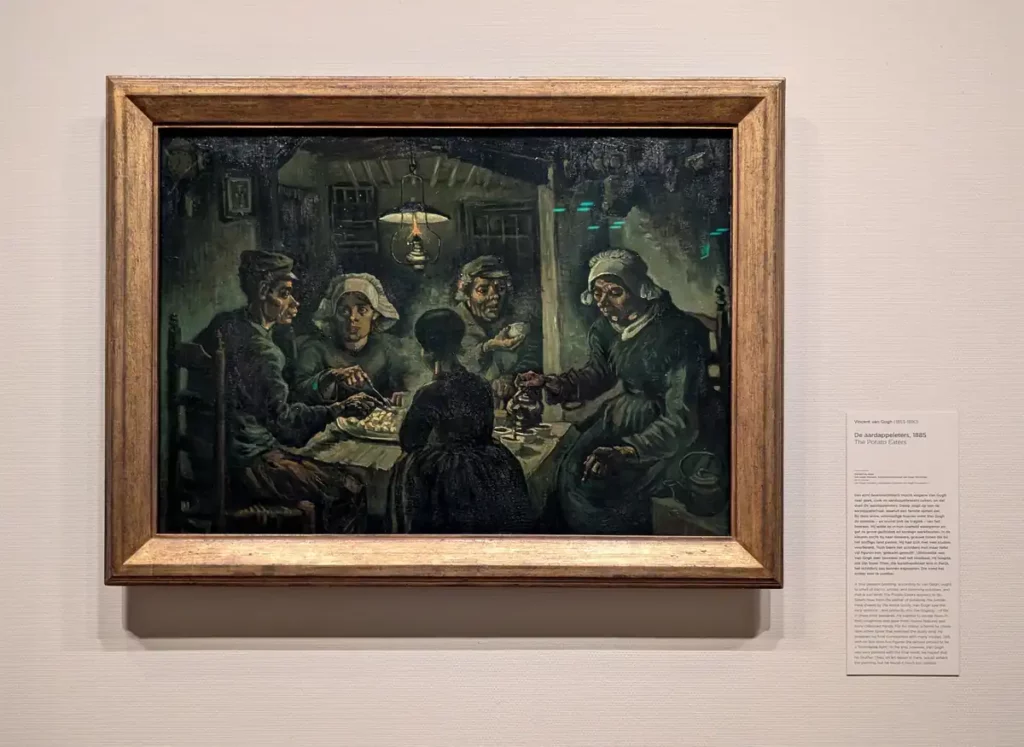
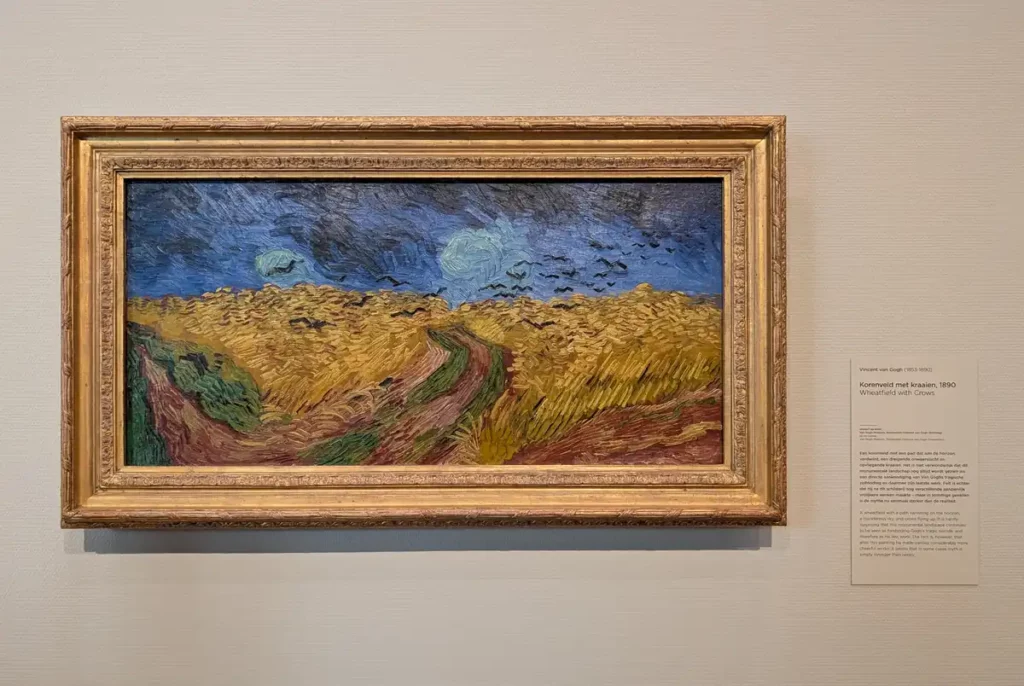
The museum has Sunflowers, several self-portraits, The Bedroom, Almond Blossom, The Potato Eaters and Wheatfield with Crows among its most famous works.
Almond Blossom is one of my favourites, but before I visited I didn’t know that Van Gogh painted it as a gift to his brother Theo and his wife when they had a baby boy, which adds an extra, lovely meaning to the springtime theme. The baby boy was named after Vincent, and went on to found the Van Gogh Museum.
Irises is another of my favourite Van Gogh paintings, so I was very happy to see it here in Amsterdam.
Some of Van Gogh’s most famous paintings aren’t here; Starry Night for example is in the MoMA in New York. Several other famous Van Gogh paintings are in museums elsewhere in the world, which surprises some visitors. The Amsterdam collection is still the largest anywhere, and it includes enough of his best-known work that you don’t feel like you’re missing out.
The museum does an excellent job of showing Van Gogh’s development as an artist. You see his early, darker work from the Netherlands, the lighter paintings from his time in Paris, and the vivid colours from Arles and Auvers-sur-Oise in southern France.
Temporary exhibitions vary, so check what’s on during your visit – they’re included in your standard ticket. I didn’t get to see one this time round as I visited during a changeover period, but I’ve seen some great exhibitions here in the past.
You can take photos (within limits)
Photography is allowed inside the museum for personal use. You’re not meant to take videos, but people do. Flashes, tripods and selfie sticks are forbidden.
Please be mindful of other visitors though. The galleries get really crowded with people trying to get selfies with the most famous works, so much so that it can get difficult for visitors who want to just see the paintings. It’s not quite at the levels you’ll see at the Louvre in front of the Mona Lisa, but it can be a bit annoying.
Cafés and shops
There are two cafés and a posher bistro restaurant inside the museum. No food or drink is allowed in the galleries themselves.
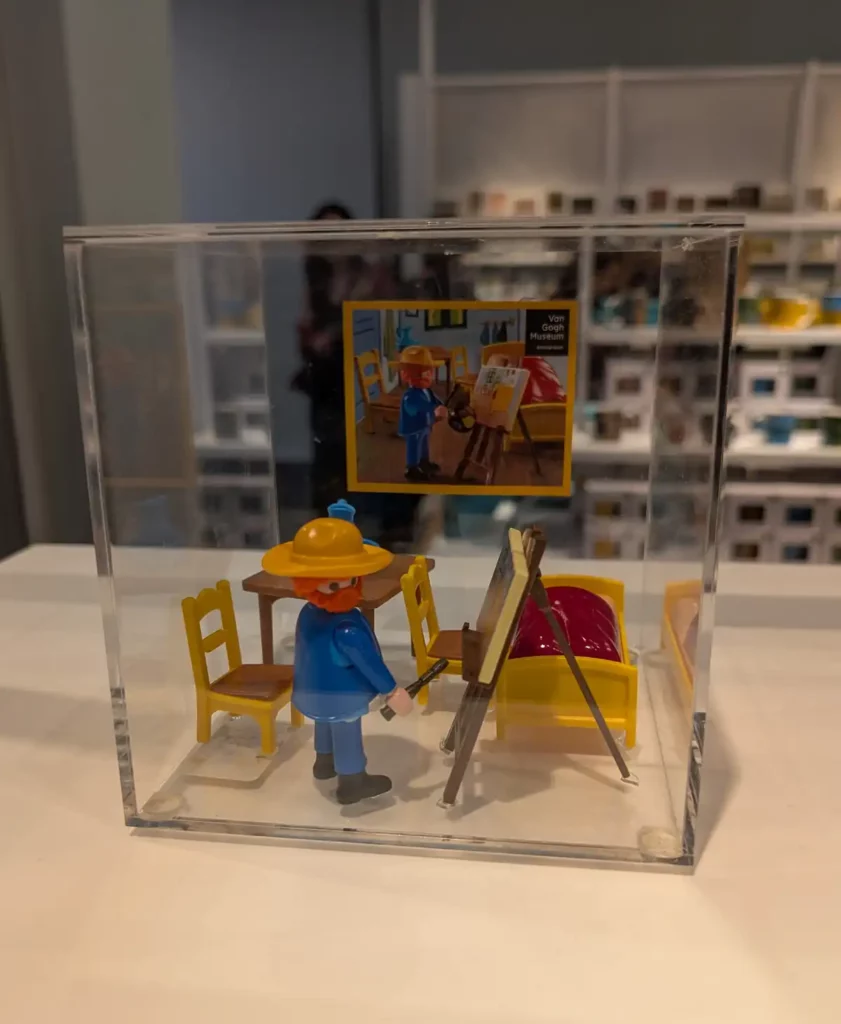
The museum shop sells high-quality Van Gogh reproductions and some very covetable gifts – plus fun Playmobil scenes of Vincent painting some of his most famous works. There are three shops inside, including one dedicated to art books. The one in the atrium was a bit quieter during my visit compared to the one nearest the galleries.
The museum is completely cashless, so it accepts card payments only for the cafés, restaurant and shop.
Accessibility
The museum is fully wheelchair accessible with lifts to all floors. There aren’t many places to sit as you go around the collection, so it’s worth knowing that you can borrow wheelchairs, folding chairs or walkers for free at the entrance, although it’s best to reserve them in advance by emailing the museum.
Visitors who are unable to navigate their way through the museum independently can bring a companion with them for free.
Toilets are located on multiple floors and are well signposted.
Getting there
The main entrance is the large oval-shaped building with big glass windows on Museumplein (Museum Square – Google Maps link). If you’re coming from a side street and see a grey building on Paulus Potterstraat, that’s the large group entrance – keep walking to the square to enter as a normal visitor.
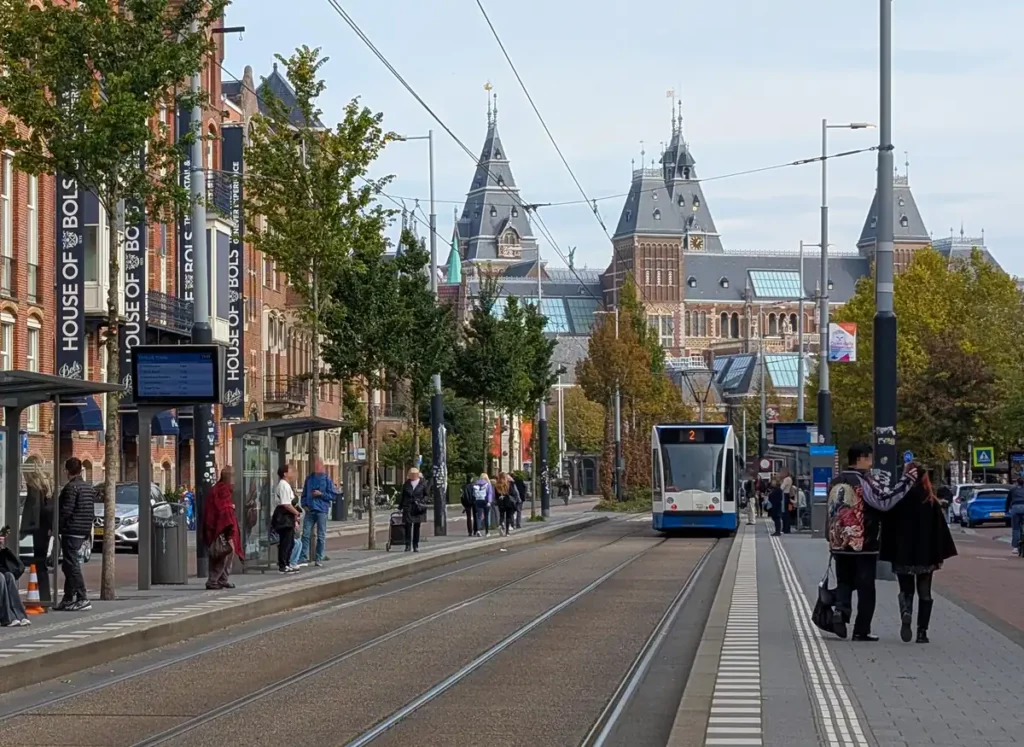
Trams are the easiest option to get to the Van Gogh Museum. Tram lines 2 and 12 go directly from the Museumplein stop 5 minutes’ walk from the museum to Amsterdam Centraal Station via Leidseplein and Dam Square. I came from the airport by train then caught a tram to Museumplein and it was all very easy.
Buses 357 and 397 also stop at Museumplein. The closest Metro stations are Vijzelgracht and De Pijp, although neither are as convenient as the tram or bus.
If you’re cycling (which I don’t recommend in Amsterdam!), there are bicycle racks outside the museum, though spaces fill up on busy days.
Driving isn’t worth the hassle. There’s paid parking at the Q-Park underneath Museumplein and on surrounding streets, but Amsterdam’s public transport is reliable and parking is expensive.
Things to do near the Van Gogh Museum
The Van Gogh Museum is on Museumplein near some other major Amsterdam museums.
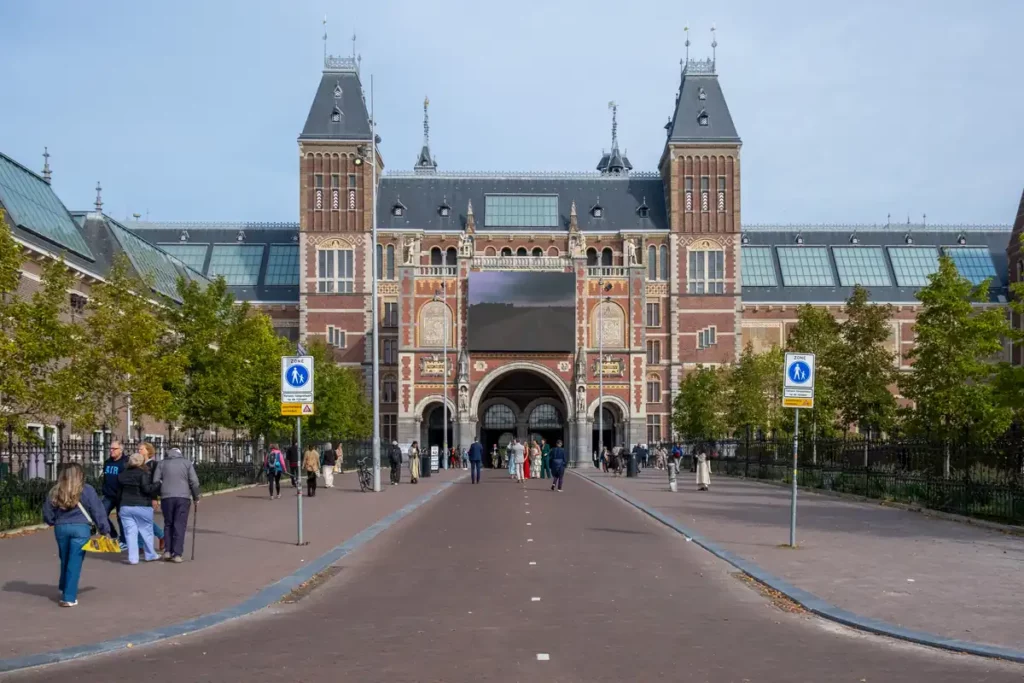
The Rijksmuseum sits at the head of the large square, an imposing red brick building housing an enormous collection of Dutch art and history spanning 800 years, including Rembrandt’s The Night Watch and several works by Van Gogh.
The Stedelijk Museum (modern and contemporary art) is also on the square, as is the highly Instagrammable Moco Museum. The House of Bols cocktail museum and experience is directly across the road from Moco.
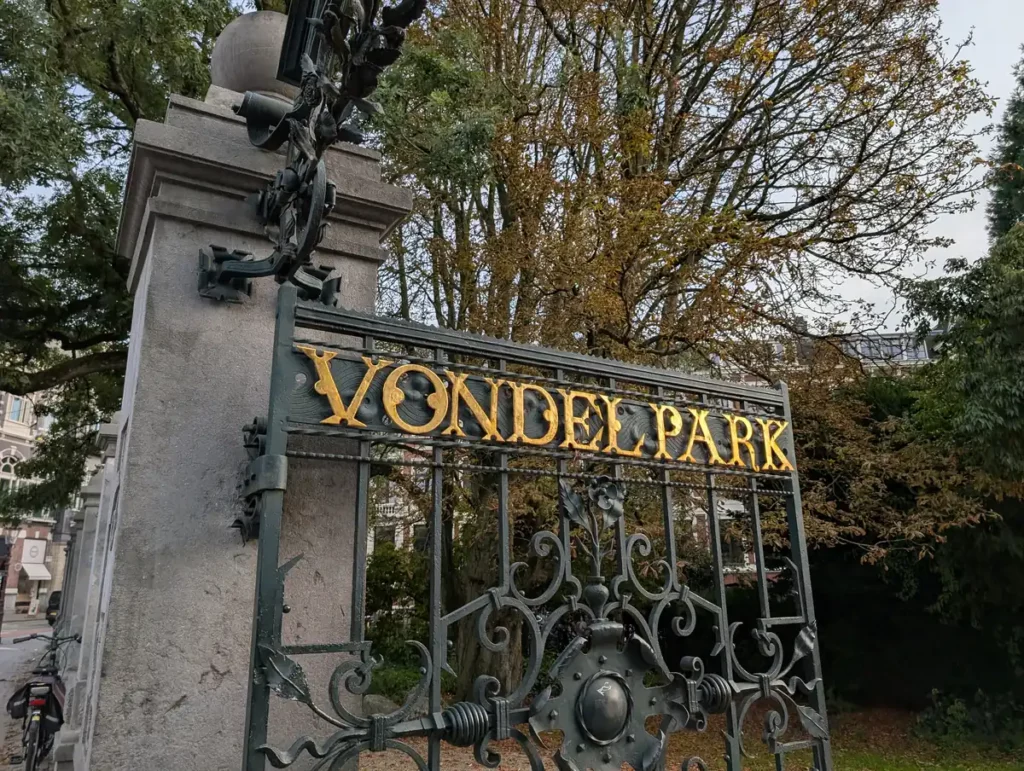
A few minutes’ walk from Museumplein you’ll find more excellent Amsterdam attractions. Amsterdam’s largest park, the Vondelpark, is good for a break if you want greenery and space after being indoors.
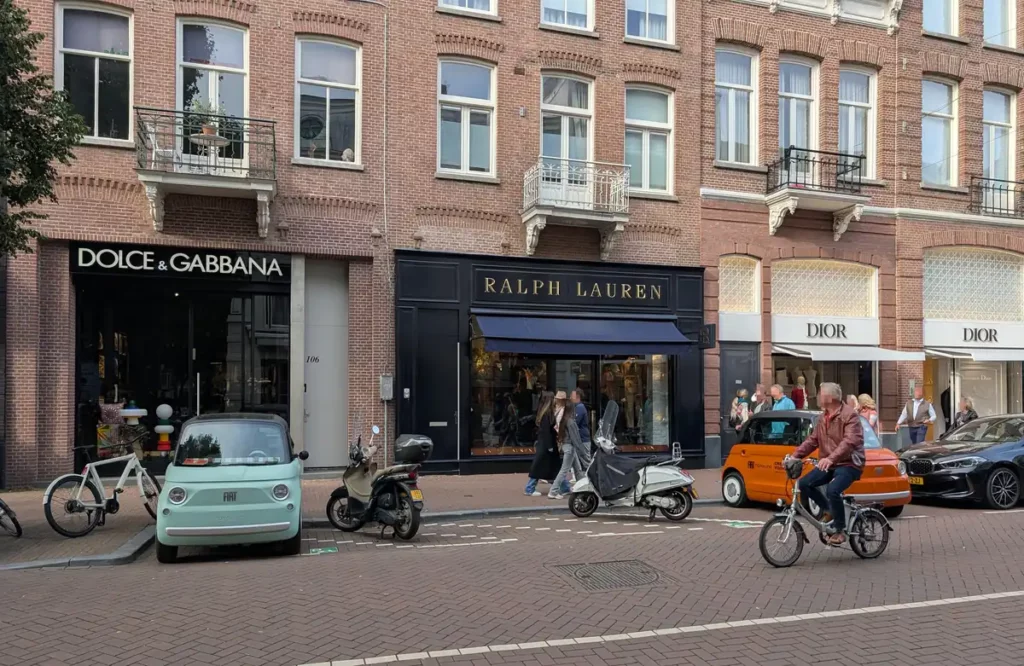
If you like luxury shopping, Pieter Cornelisz Hooftstraat is very close by, with top brands like Gucci, Versace and Saint Laurent.
The Heineken Experience is under 15 minutes’ walk across Museumplein and along the canal, while the foodie De Pijp neighbourhood is around the same distance.
You can pick up a canal tour outside the Rijksmuseum near Museumbrug.
Van Gogh and Rembrandt in Amsterdam experience
If you’re planning a trip to the Van Gogh Museum in Amsterdam, you might also have come across the Van Gogh and Rembrandt in Amsterdam immersive experience. The Van Gogh and Rembrandt experience is a sound and light show in the Noorderkerk church in the Jordaan area. Both artists visited the church during their time in Amsterdam.
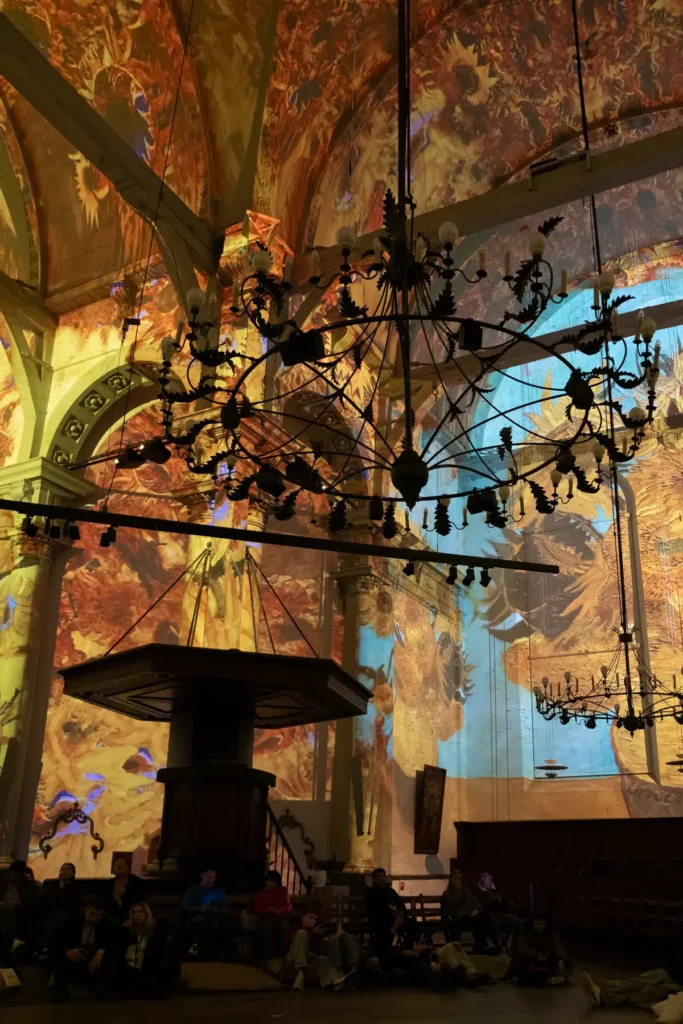
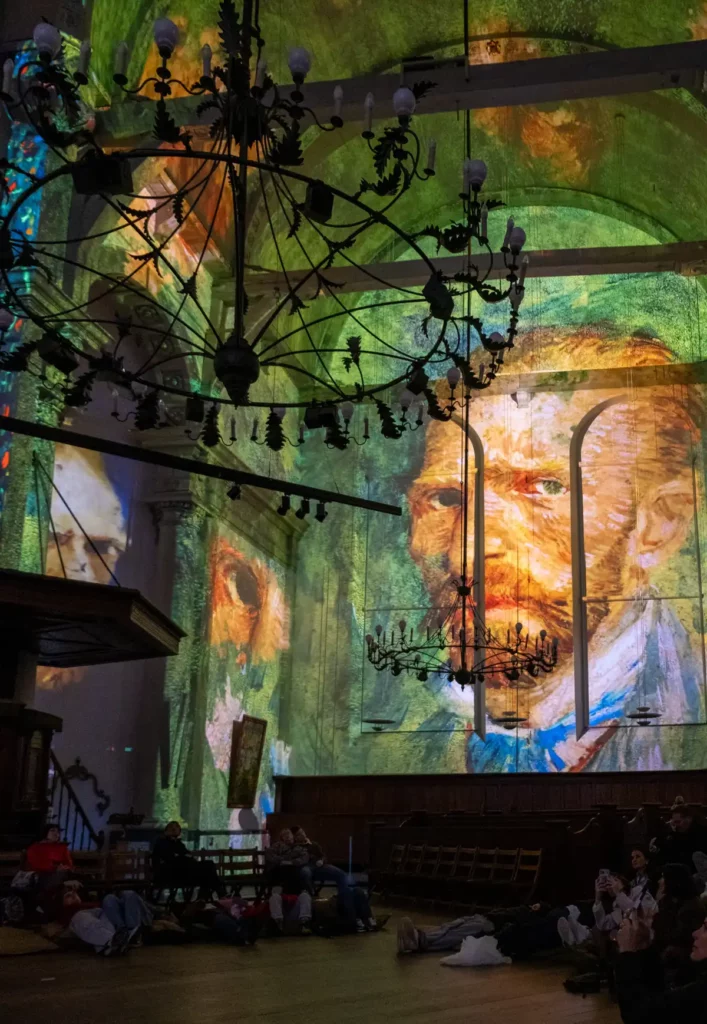
I visited both the museum and the experience in October 2025, and they’re very different. In the Noorderkerk experience, moving images of Van Gogh’s works are projected onto the roof and walls of the church, accompanied by music and recordings of an actor reading Vincent’s letters. It lasts about an hour.
I did enjoy the experience, but it’s definitely not a good substitute for the museum. I think I would have struggled to know what was going on if I hadn’t visited the museum a couple of days before.
It’s also worth knowing that the Rembrandt content is minimal, so if you’re thinking of visiting for Rembrandt, it’s not worth it.
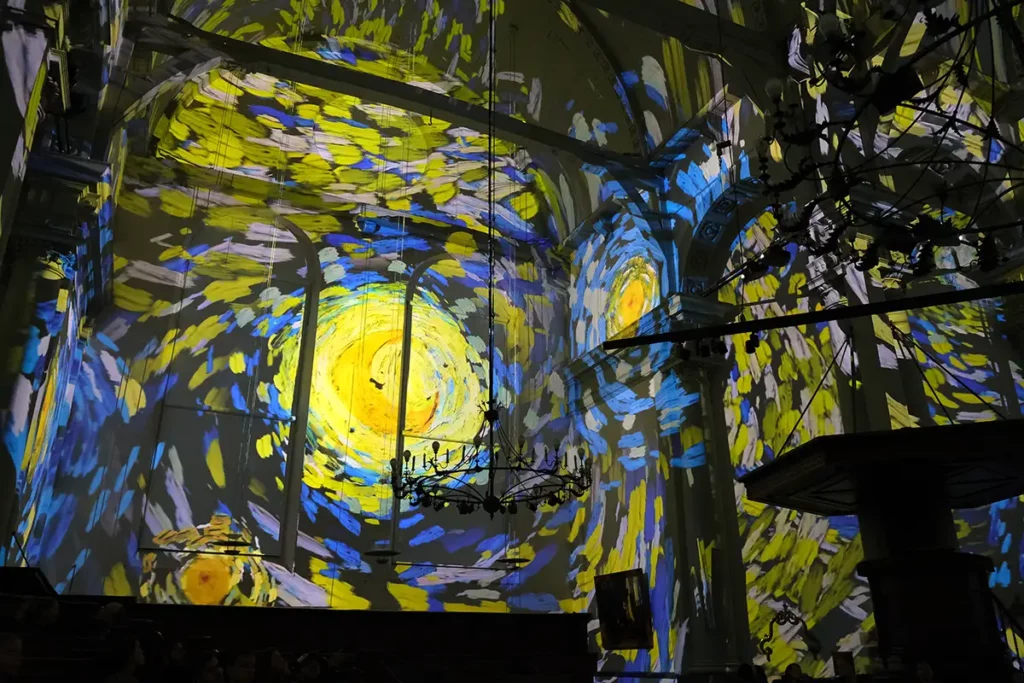
The Noorderkerk is very lovely though, and the projections are mesmerising. The Van Gogh and Rembrandt in Amsterdam experience is a great rainy day activity and usually doesn’t need to be pre-booked; I just turned up as a show was about to start. If you get there early enough, you can nab one of the bean bags on the floor, otherwise there are plenty of chairs.
Read more: Cultural things to do in Amsterdam
Is the Van Gogh Museum worth it?
The Van Gogh Museum is one of those Amsterdam attractions that justifies a bit of advance planning. Yes, it’s crowded, and yes, you need to book ahead. But standing in front of Sunflowers or Almond Blossom, and seeing how Van Gogh’s style evolved across just ten years of painting, makes it worth the effort. Get the audio guide, aim for a 9am slot if you can, and give yourself at least two hours. It’s worth doing properly.
About Helen
Hi! I’m Helen, and I’ve visited Amsterdam and the Netherlands multiple times. I really love Amsterdam but I always tell people not to sleep on the rest of the Netherlands as there’s so much else to see! You can see my other posts from the Netherlands here.
I live near Manchester, UK and work full time, so I’m all about making the most of my annual leave with day trips, weekend getaways and short breaks.
Pin it for later!