When I started planning my last trip to Naples I came across a cool picture of old, vintage cars hidden away in a tunnel under the city. After a bit of searching, I found out that the picture was of the Bourbon Tunnels, and since I’m a sucker for anything strange or a bit secret, it immediately went on my list of things to do.
Here’s my full, honest guide to what it was like to visit the Bourbon Tunnels (Galleria Borbonica) and if it’s worth your time in Naples.
There are quite a few underground tours in Naples so actually finding and booking the right one can get a bit confusing. If, like me, you want to see the one with the old cars, you need the Bourbon Tunnels tour. I’ve got a comparison with the other Naples underground tours further down in this review.
Contents
The history behind the Galleria Borbonica
The Galleria Borbonica (Bourbon Gallery, or Bourbon Tunnel) was designed by the architect Errico Alvino in 1853 and built for King Ferdinand II of the House of Bourbon. There had been unrest in Naples, and the tunnel was intended to both give the king an escape route from the Royal Palace in case of riots, and create a quicker route for the army from the barracks on the other side of the hill in Chiaia.
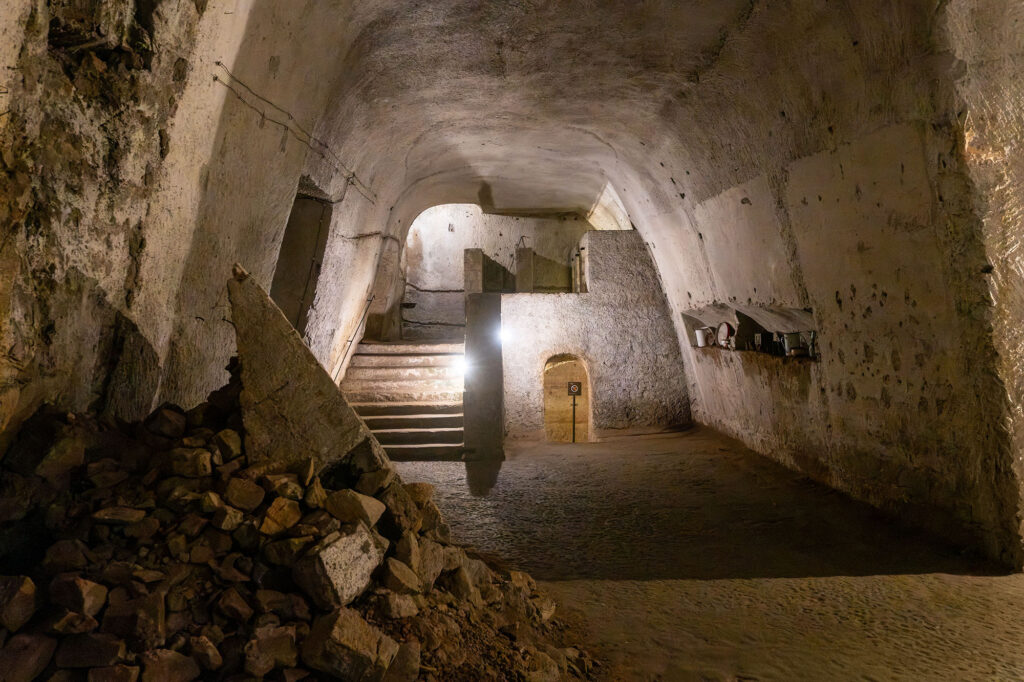
It was cut straight through the older aqueduct that already ran beneath the Pizzofalcone hill, so the tour combines Renaissance-era water cisterns with the much newer Bourbon Tunnel itself.
The Bourbon Tunnels didn’t stay a royal escape route for long. During the Second World War, Neapolitans used the tunnels as a bomb shelter, and the guides bring that part of the story to life just as vividly as the older history.
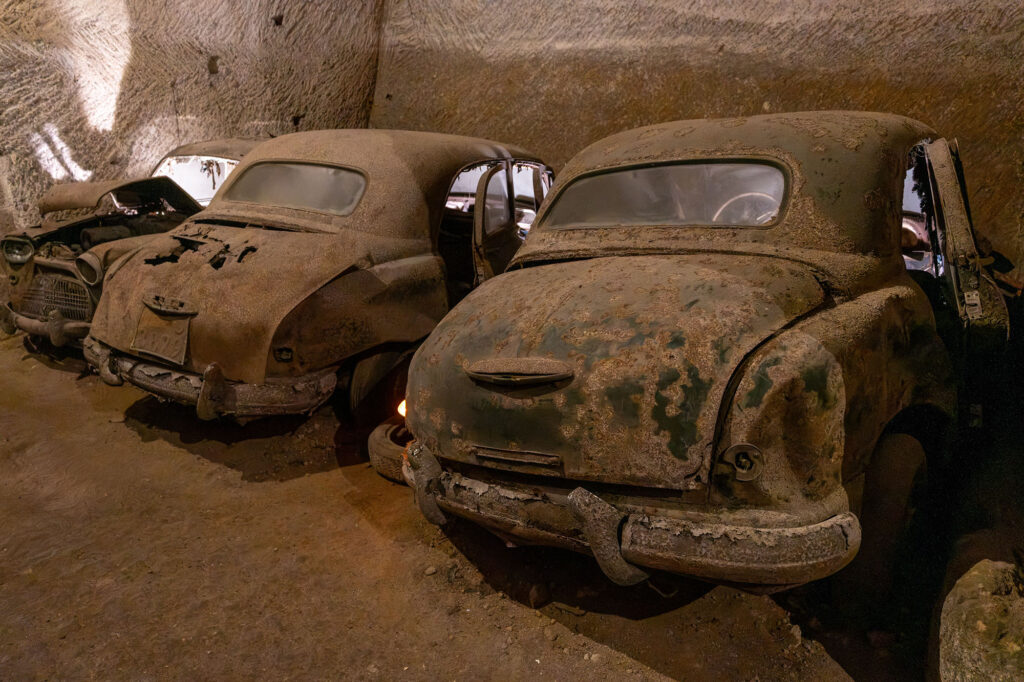
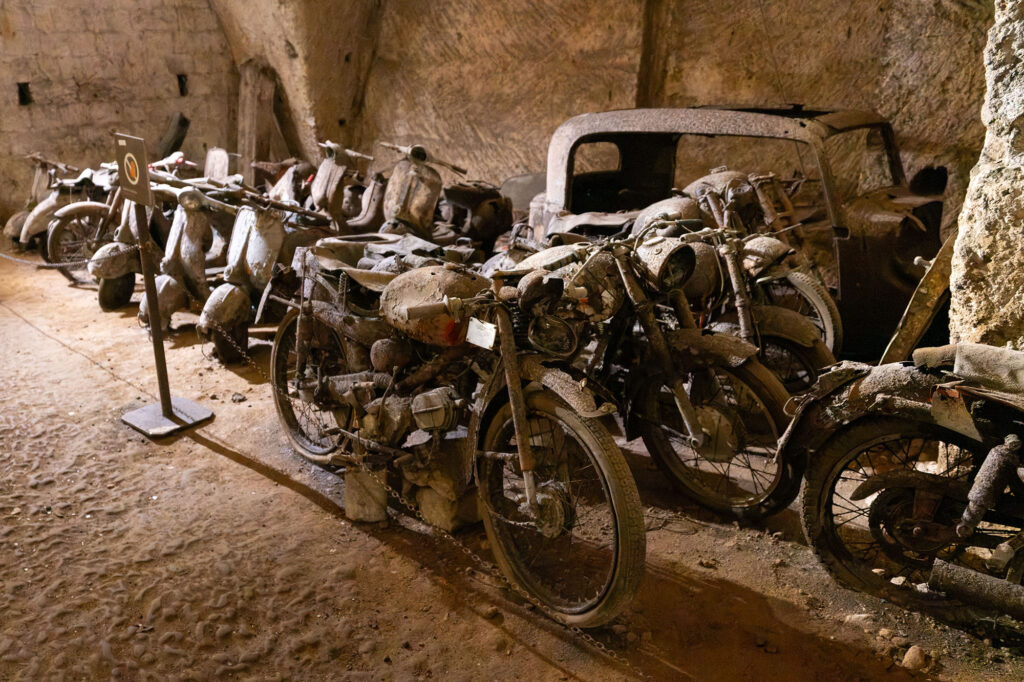
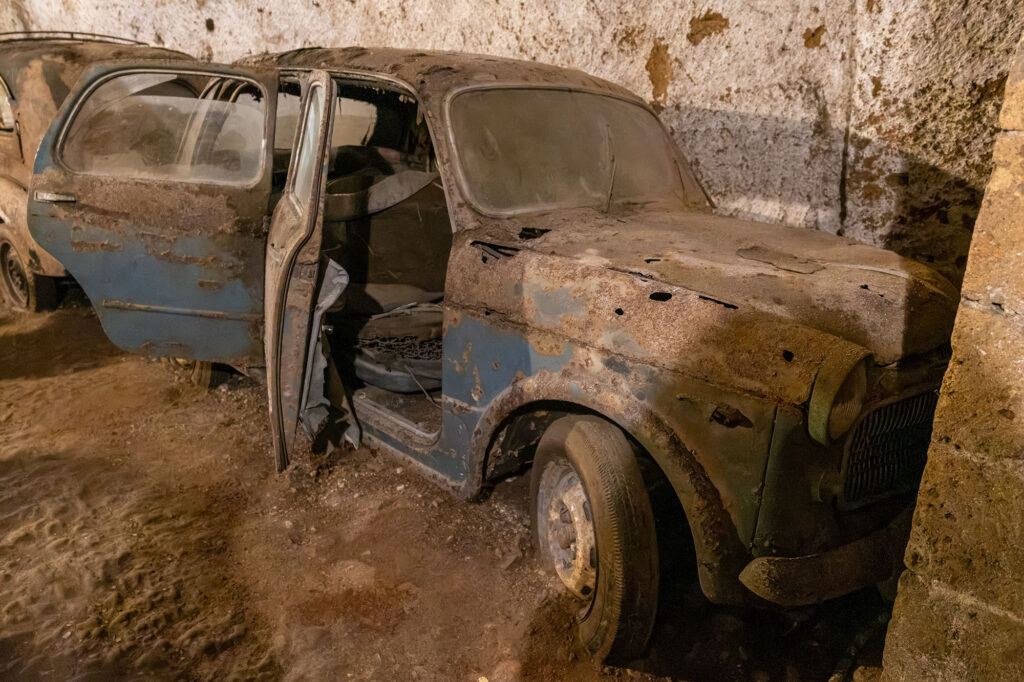
After the war, the space became a council impound lot and rubbish dump and it stayed that way right up until 1970. That’s why the route takes you past rusting 1940s and 1950s cars and motorbikes, abandoned for decades.
Booking a Bourbon Tunnels tour
The Bourbon Tunnels have three possible entrances, though only two of them are used on the standard route. Most visitors go in at Vico del Grottone, 4, a dead-end alley just behind Piazza del Plebiscito, and come out at Via D. Morelli, 61, inside the Morelli car park near Piazza Vittoria in Chiaia (or vice versa). The more accessible version of the tour starts from the car park for more level access.
There are a few practical things that are worth knowing before you book. The standard tour only runs on Fridays, Saturdays, Sundays and Italian public holidays, with tour times at 10am, 12pm, 3pm and 5pm. Booking is mandatory and groups are kept small, so time slots do sell out, especially at weekends. The tour itself lasts about an hour.
You can get a discount of 20% on the ticket price if you’ve got the Campania Artecard tourist card, but you need to take it along to the ticket office and book in person rather than booking online. Since tours often sell out, the discount might not be worth the risk if you’re set on visiting the Galleria Borbonica and are only in Naples for a limited time.
For my trip to Naples I did have a Campania Artecard as it’s the cheapest way to see Pompeii, Herculaneum and lots of other Naples attractions but I also had a super busy schedule so I just booked online.
There’s also a 30% discount if you have a City Sightseeing Napoli ticket.
What to expect on the Galleria Borbonica tour
My tour started from Vico del Grottone. We arrived a few minutes early, went in to let them know we were here and then waited in the little alleyway. The guide called our English-speaking group right on time. The tour was sold out, but there were still only around 15 of us on the tour.
The first part of the tour was actually getting down to the tunnels. For the Vico del Grottone entrance that means going down around 75 narrow steps – if that’s going to be a problem for you then make sure you book a tour that starts at Via D. Morelli. This entrance was only discovered in 2007 and was used in the 17th century by the people who maintained the water cisterns.
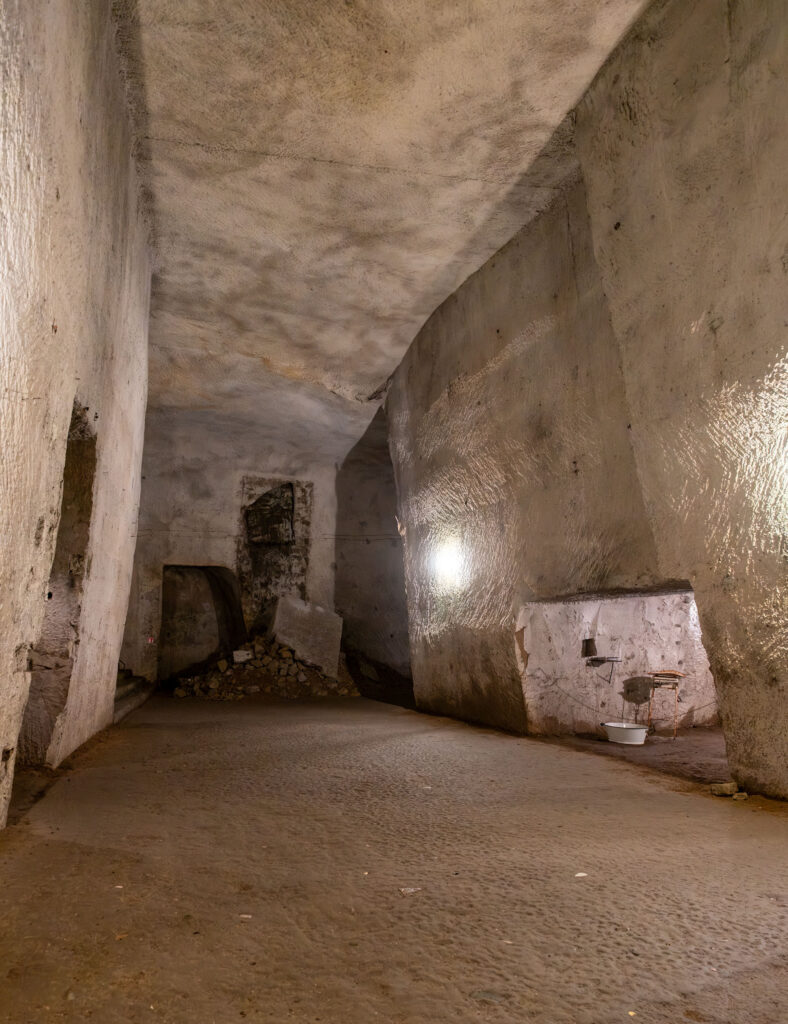
Once you’re down there, the route immediately opens up into huge caverns carved out of the rock. As a mildly claustrophobic person I was really relieved that we were past the worst bit already! You’re warned when you book that it’s cooler in the tunnels than it is outside, but I didn’t think it was actually cold and while I’d brought a jacket, I didn’t need it. I am from the north of England though so perhaps I’m just hardy.
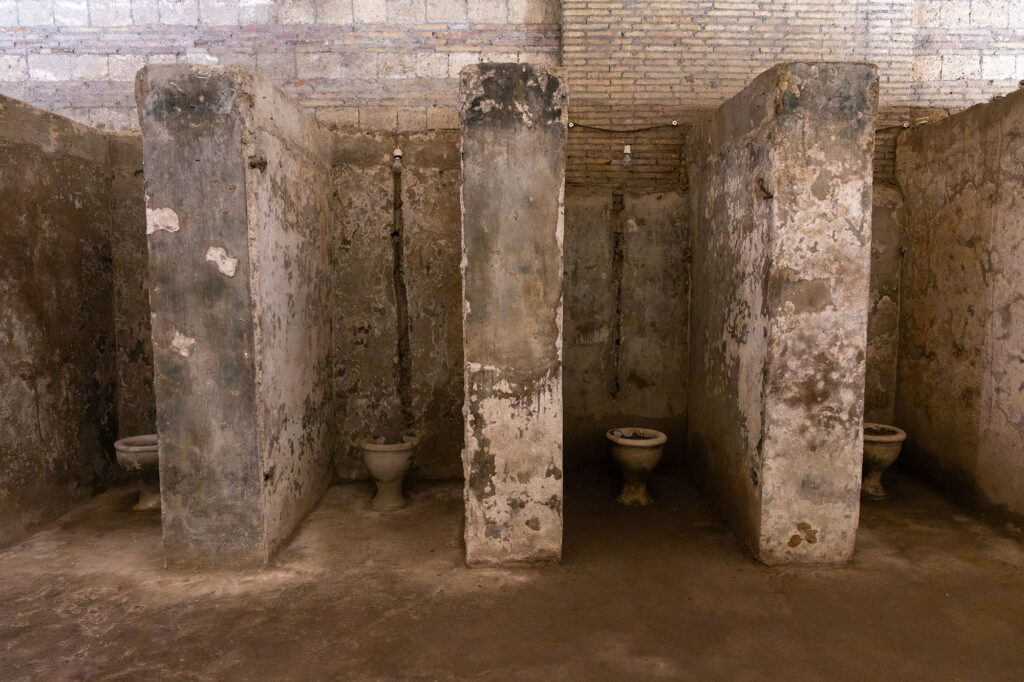
The old stone cisterns were used as air raid shelters during World War 2 and you can see lots of evidence in the form of toilets, beds and other things left behind including children’s toys. Around 10,000 people sheltered down here during the raids and the tour really brings the experience to life.
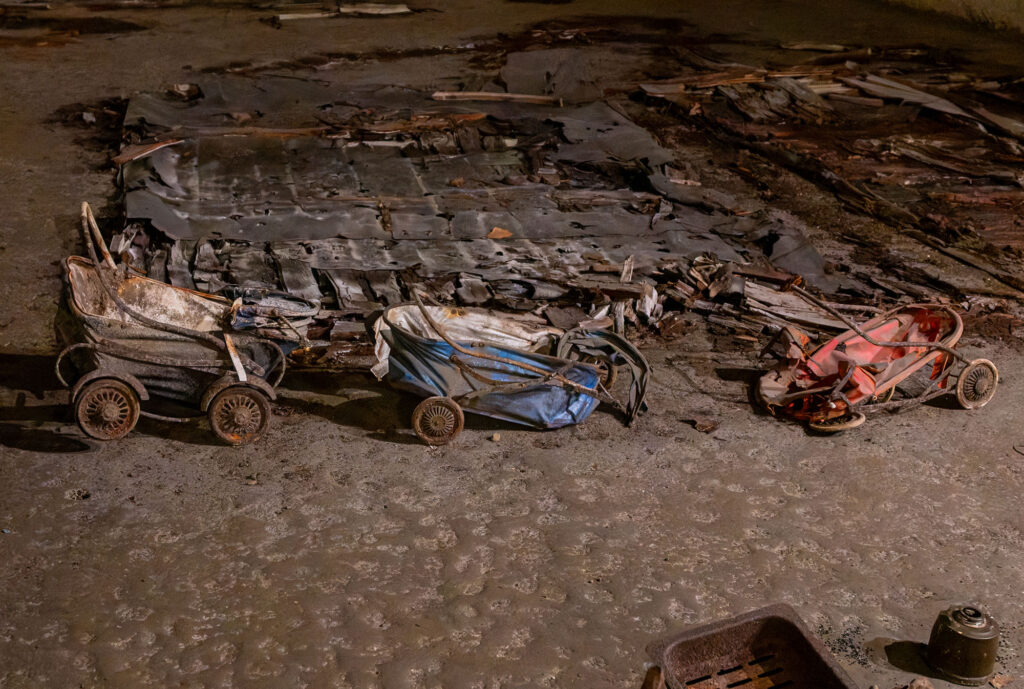
Because it’s such a maze down here, you need to stick closely to the guide, but the small group meant that it was easier to keep everyone together and there were only a couple of times where we had to wait for people to catch up.
The water cisterns, older aqueducts and the actual Bourbon Tunnels all interconnect, sometimes through narrow corridors and sometimes up or down a few steps. It sometimes makes it a bit difficult to understand what kind of tunnel you’re actually in but the guide does a good job of explaining where you are and what you’re looking at.
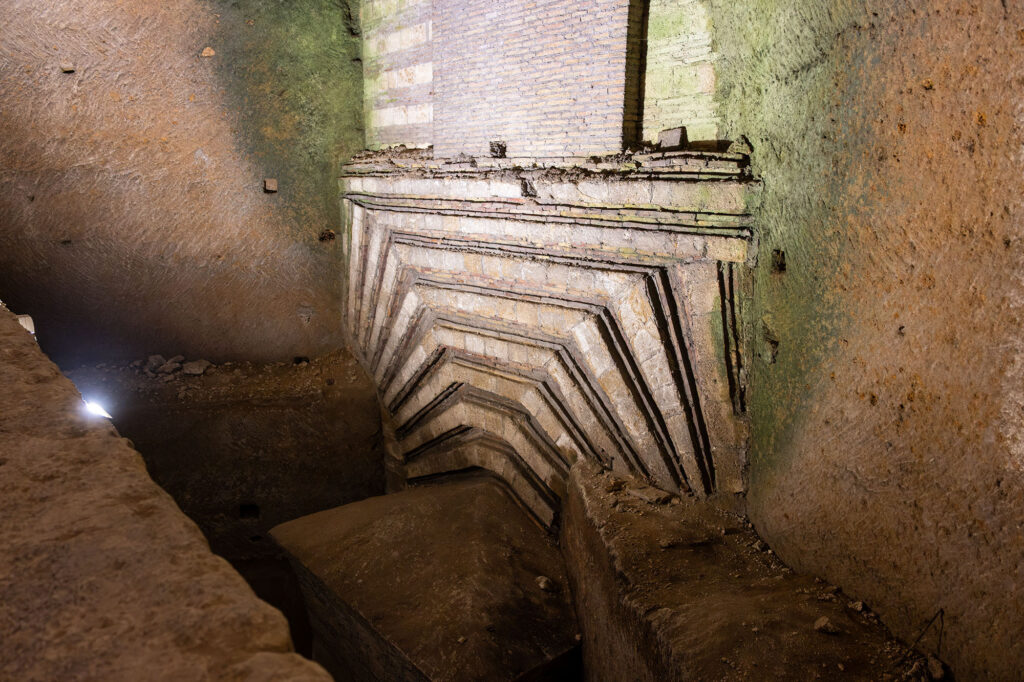
The thing that most of the tunnels have in common is their size – they’re absolutely huge! They have high ceilings and feel about as airy as you could expect from a space that’s been carved out from the rock under Naples. One of the old cisterns is even nicknamed the ‘Cathedral’ for its domed roof. We’d visited Naples Cathedral and done the rooftop tour the day before and it was strange and surprising to see the same sort of structures underground.
My favourite bit of the tour was of course when we entered the Bourbon Tunnels. While the old water cisterns can be a bit haphazard, the architect of the Bourbon Tunnels tried to make the new route as straight and even as possible and it does feel a bit like suddenly coming across a main road.
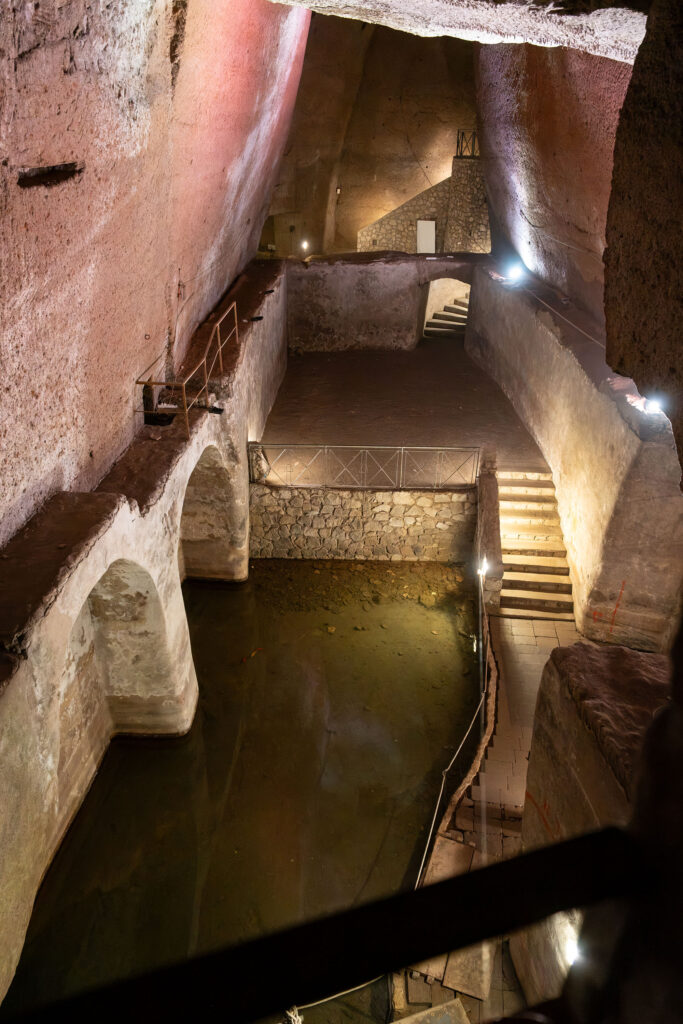
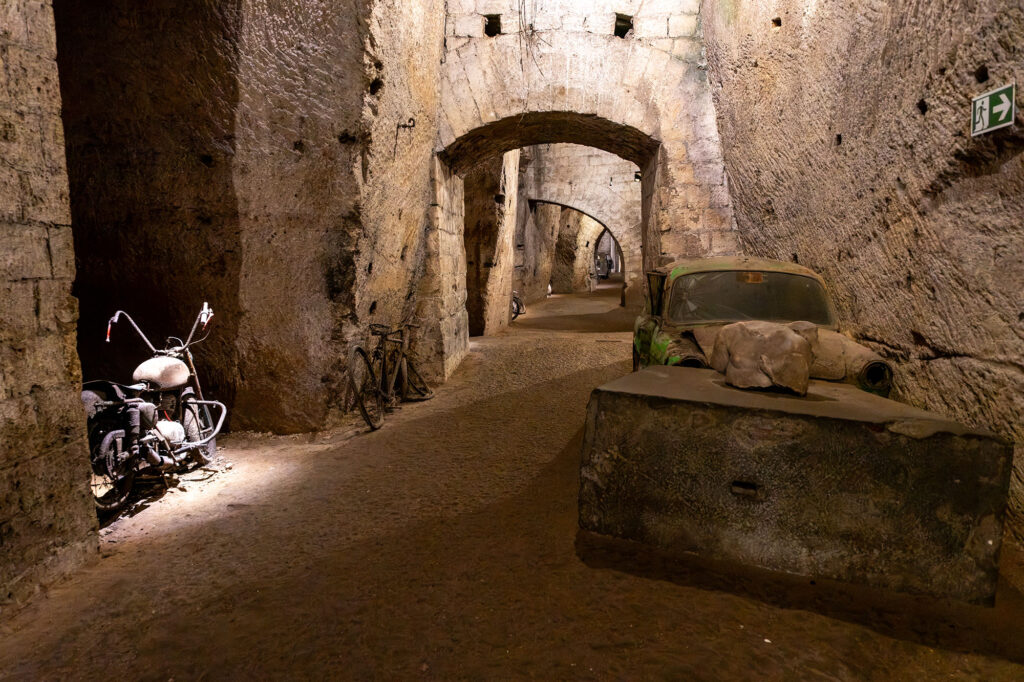
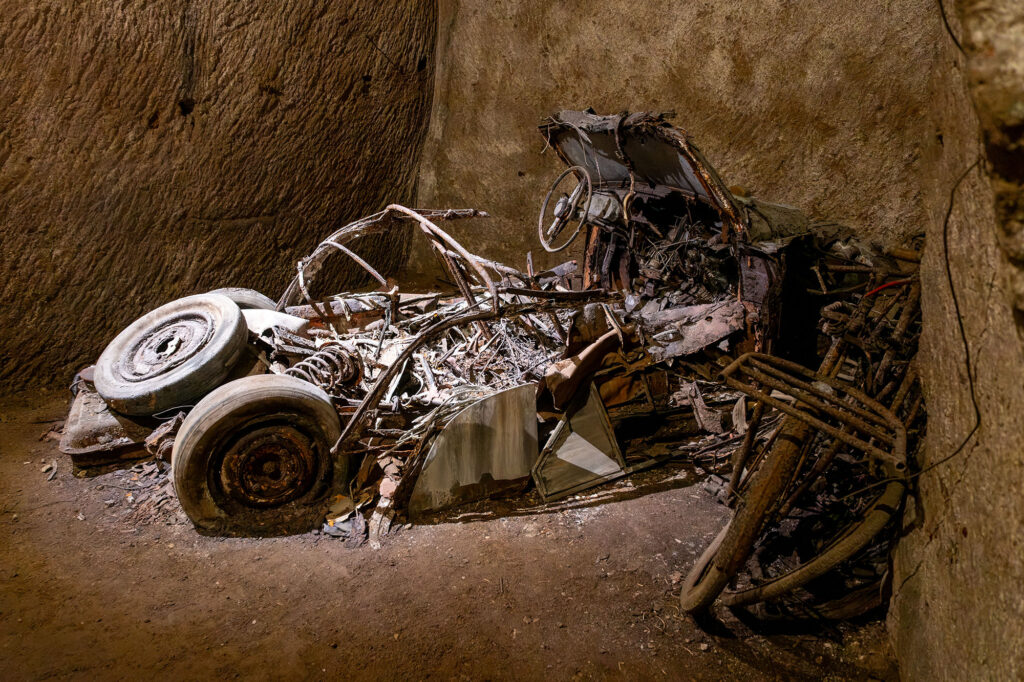
First, we crossed some of the old water courses on an aqueduct, then we entered the first section with the old cars. It’s definitely a weird sight – vintage cars that you might expect to see in a museum rusting away down here, 40 metres below the streets above.
While none of them are going to be driven away any time soon, some of them still have their seats and steering wheels and others are just skeletal remains. I really liked how they were lit from inside; it makes the effect even more dramatic. There’s also a section with motorbikes, and the odd van too.
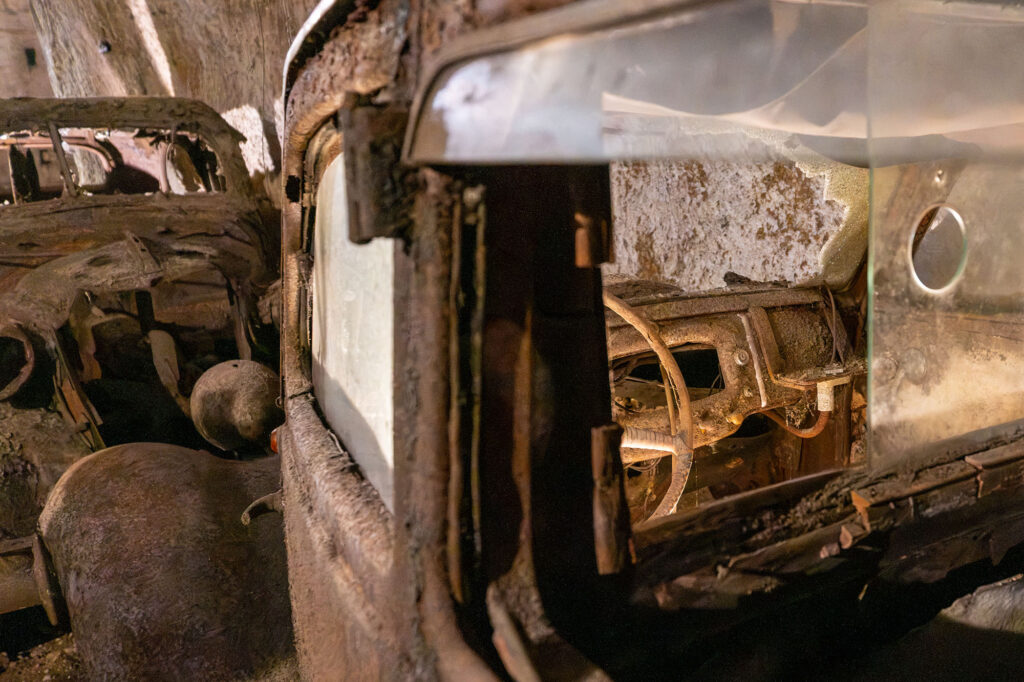
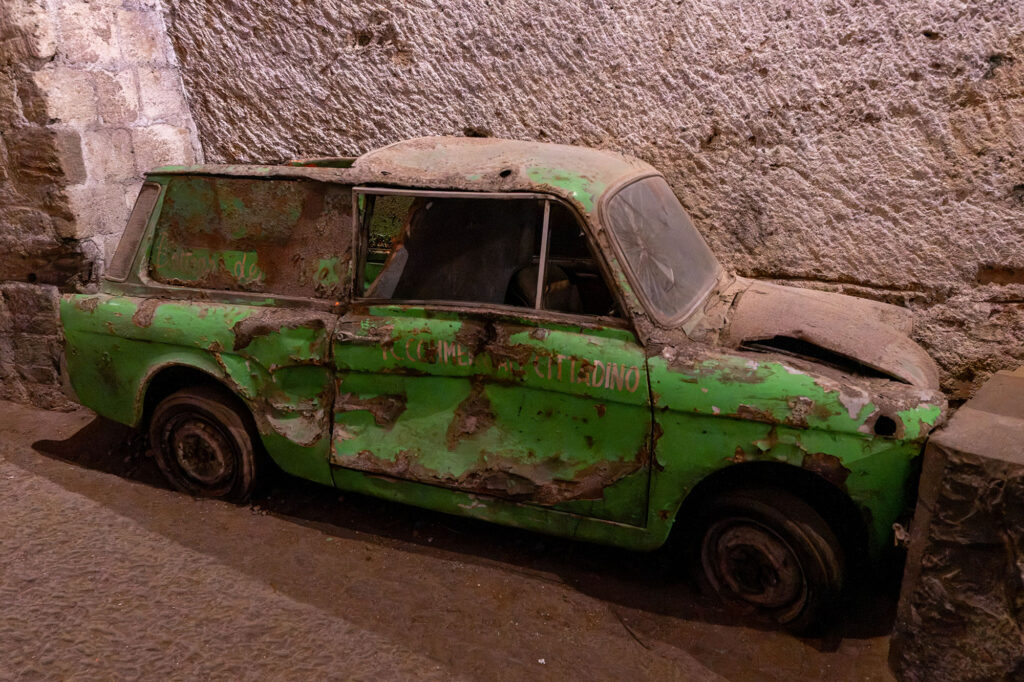
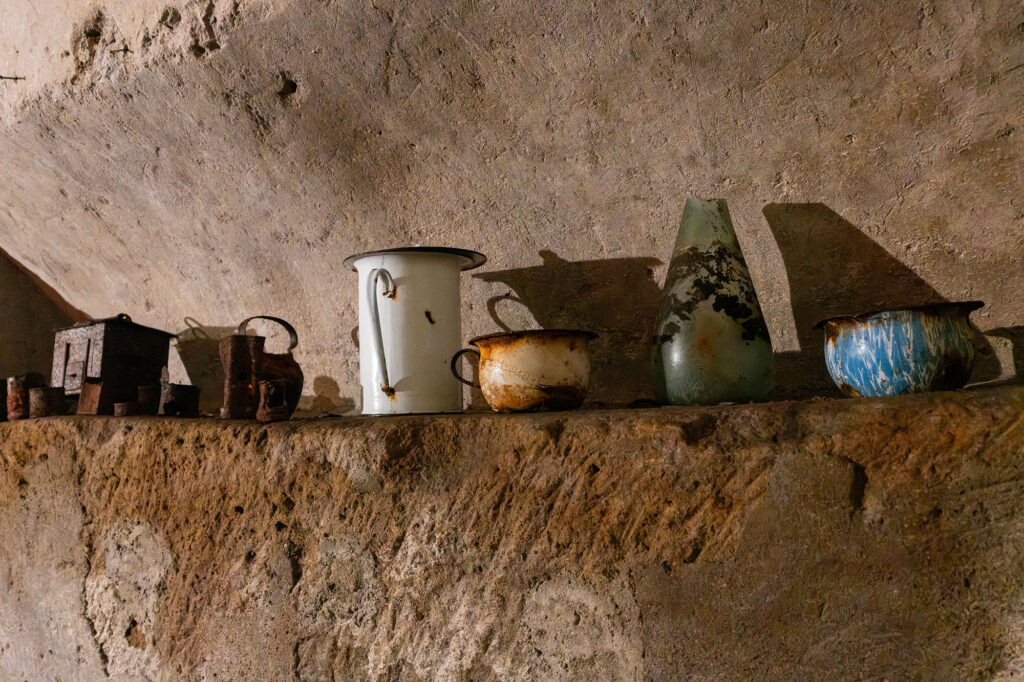
Towards the end of the tour there’s a room showing some of the things the people excavating the tunnels found. Because the tunnels were used to dump the rubble and rubbish resulting from the Naples air raids, the excavators uncovered all sorts of interesting household stuff; lamps, plates, kitchen tools and lots and lots of beautiful old tiles, which they’ve displayed around the walls as a sort of museum.
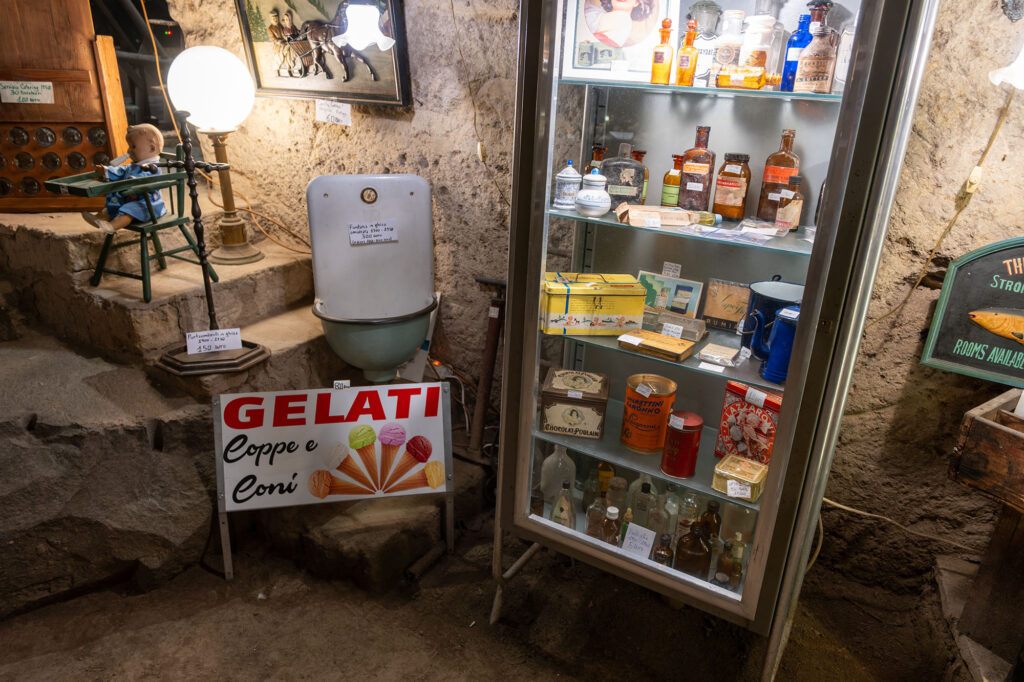
Our tour ended at the Via Domenico Morelli entrance, where the tunnel leads straight into what’s now a car park, then out into the street. The ticket office at this end also has a shop selling some amazing stuff that they found in the tunnels – I was very tempted by an old ice cream sign!
Things to do near the Galleria Borbonica
The Bourbon Tunnels are in the centre of Naples, close to lots of other Naples attractions like the Royal Palace, the Lungomare waterfront, Piazza del Plebiscito and Castel Nuovo. They’re only around 20 minutes’ walk from the historic centre, but don’t do what I did and book another attraction straight afterwards – after our surprise exit on Via D Morelli we had to run all the way to the Sansevero Chapel for our next tour!
If you’re visiting Naples on a cruise, it’s around 20-25 minutes’ walk from the cruise port to the Vico Grottone entrance, passing Galleria Umberto I along the way. The Via D Morelli entrance is another 5-10 minutes’ walk through along Via Chiaia, which is full of shops and cafes.
Is it worth visiting the Bourbon Tunnels?
For €15 and an hour of your time, absolutely yes. The mix of 19th-century engineering, wartime history and abandoned cars makes for a really interesting story, and it’s one of the more accessible underground experiences in the city if tight spaces aren’t your thing. Just make sure you check the opening times and tour schedule while you’re planning your Naples itinerary.
Bourbon Tunnel or Napoli Sotterranea: which one should you book?
If you have time for both underground tours then both the Galleria Borbonica and Napoli Sotterranea are worth doing, and they’re different enough from each other that it won’t feel like repetition. But with so many other things to do in Naples it’s more likely that you’ll need to make a choice. If you do need to decide between the Bourbon Tunnel and Napoli Sotterranea, here’s some points that might help you choose.
Differences in what you’ll see at the Galleria Borbonica vs Napoli Sotteranea
What you don’t get at the Galleria Borbonica is ancient Greek and Roman underground sights. The tunnels at the Galleria Borbonica are much more recent, with the oldest parts from the 15th and 16th century. It’s more about 19th-century engineering and wartime history than ancient ruins, and it does have the vintage cars.
Napoli Sotterranea is the older of the two in every sense. The entrance is on Piazza San Gaetano in the heart of the historic centre, and takes you 40 metres below the surface through a network of tunnels that’s been in use for around 2,400 years.
The Greeks first quarried the tuff to build Neapolis, and the Romans created aqueducts to bring water from sources 70 kilometres away into the city. The water chambers on the standard tour at Galleria Borbonica are all empty but you can see illuminated pools on the Napoli Sotterranea tour which make for brilliant photos.
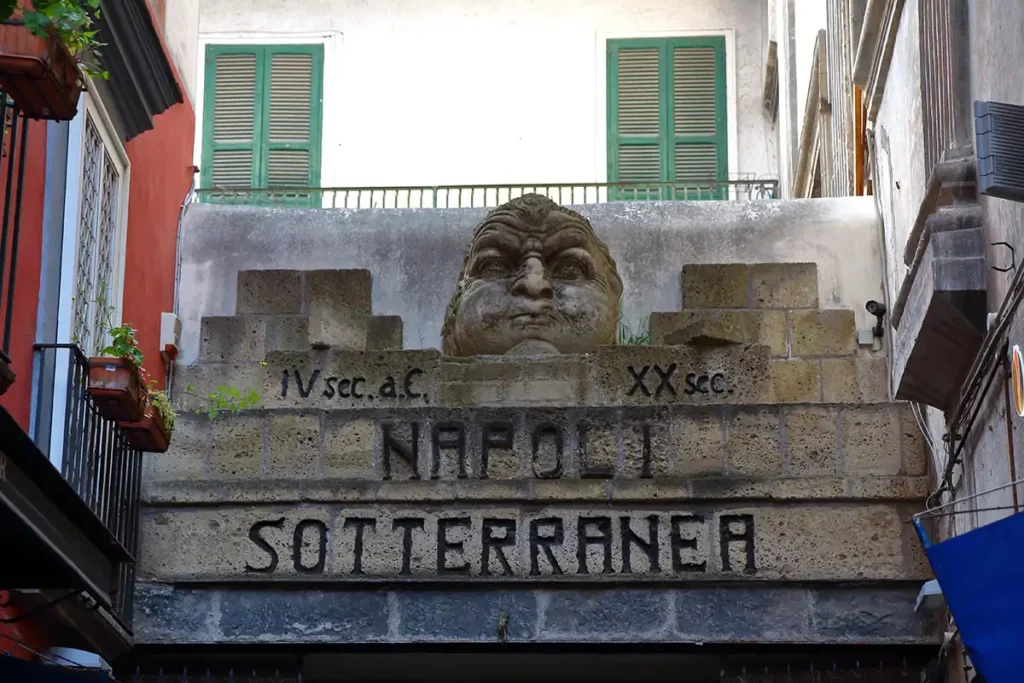
The WWII chapter at Napoli Sotterranea overlaps with the Bourbon Tunnel’s story – Naples used both systems as bomb shelters during the war, and Napoli Sotterranea has a dedicated War Museum section with preserved furniture and graffiti that survived intact underground.
Practical differences
The Bourbon Tunnel is the easier of the two if you’re at all claustrophobic or have accessibility needs. The standard route has none of the tight, low-ceilinged squeezes that some other underground attractions in the city involve, and the Via D. Morelli end has a level entrance, which also helps if you can’t manage stairs easily. It’s not a fully step-free site overall, but the Morelli entrance covers around 60% of the route for wheelchair users.
There’s one very narrow section on the standard tour at Napoli Sotterranea, but you can opt out of that part of the experience.
Tour groups at the Bourbon Tunnel can be significantly smaller and almost always need to be booked in advance, but the smaller groups mean it’s easier to hear the guide.
While the groups at Napoli Sotterranea are bigger, you can just turn up, or book a skip the line ticket. That can make it a bit easier to fit into a busy itinerary. The downside of bigger groups and frequent tours is that it can be difficult to hear what the guide is saying, and at points you might have to wait for the group in front of you to move on.
Ultimately, both of the main Naples underground tours are a great experience and worth your time in Naples. There are a few other underground tours in Naples which I’ve described in detail in my post about things to do in Naples.
Would you go underground in Naples?