
21 things to do in Naples, Italy – from pizza to Pompeii
Naples, Italy – either you’ll love it or you’ll hate it. It can be loud and messy in every sense, but it’s also one of the most intensely alive cities I’ve visited in Italy, packed with amazing things to do, delicious food, layer upon layer of history and a local pride that’s infectious.

SHOULD YOU GO?
Is Naples worth visiting?
Naples is worth visiting for its food, history and wide variety of things to do, from pizza and castles to underground tours, beautiful churches and the historic centre. Some travellers find it chaotic, but most tourist areas are safe with normal precautions.
About Naples
- Naples has enough attractions to fill 1 to 3 days
- Top things to do in Naples include eating pizza, visiting the castles, underground tours and exploring the historic centre
- Naples used to have a bad reputation; it’s much safer these days but take care around Piazza Garibaldi
- As well as having lots of things to do in the city centre, Naples is a great base for day trips to Pompeii, Sorrento, Capri, Ischia and the Amalfi Coast
I passed through Naples twice before I visited properly, which I think is pretty common. I see it so often – people arrive into Naples Airport, then get out as quickly as they can to Sorrento, the Amalfi Coast or Capri. But on my last trip, I realised what a mistake I’d been making. Naples is a fabulous city that’s well worth at least one day, and there are easily enough things to do in Naples and the surrounding area to fill up to a week.
Here are my favourite things to do in Naples, Italy, along with everything you need to plan your trip.
Contents
1. Eat pizza
The Pizza Margherita was invented in 1889 in Naples for the visiting Queen Margherita, and eating pizza is still one of the top things to do in Naples.
Neapolitan pizza is cooked in a wood-fired oven at very high heat for about 90 seconds, which produces a soft, slightly charred, pillowy base quite unlike the crispy versions you might be used to.

The most famous pizzeria in the city is L’Antica Pizzeria da Michele on Via Cesare Sersale. It only serves three varieties (the classics Margherita and Marinara, plus Cosacca, which has Pecorino cheese) and there’s usually a queue. If you’d rather skip the wait, there are excellent options all across the historic centre and Spanish Quarter.
The wood-fired style is just one way to eat pizza in Naples. There’s also deep-fried pizza fritta, that emerged during World War 2 as a cheaper way to cook when the traditional wood-fired ovens were scarce. I tried it at ‘A Puteca d’ ‘a Pizza and it was a bit greasy but very tasty.

The other Neapolitan way to eat pizza is pizza a portafoglio (“wallet pizza”), a slightly smaller than normal pizza folded into quarters and eaten on the go. It’s a great idea in theory, but what actually happens is the hot filling slides down, makes the paper fall apart and you get a stream of mozzarella coming out of the bottom. Or at least that’s what happened to me – maybe I’m lacking in pizza-eating skills!
Address: All over the city
Cost: Around €5-10 for a Pizza Margherita, depending on how touristy the restaurant is. Most take cards (including tap to pay) but it’s a good idea to have some cash just in case. L’Antica Pizzeria da Michele is cash only.
Need to book in advance? No, but you may need to queue for the most popular places.
2. Walk Spaccanapoli
The whole historic centre of Naples is a UNESCO World Heritage Site, and Spaccanapoli is its heart. It’s a long, narrow series of streets which were part of the original grid system of the ancient city of Neapolis and which cut straight through the historic centre of Naples, east to west, like a man-made canyon through the city.
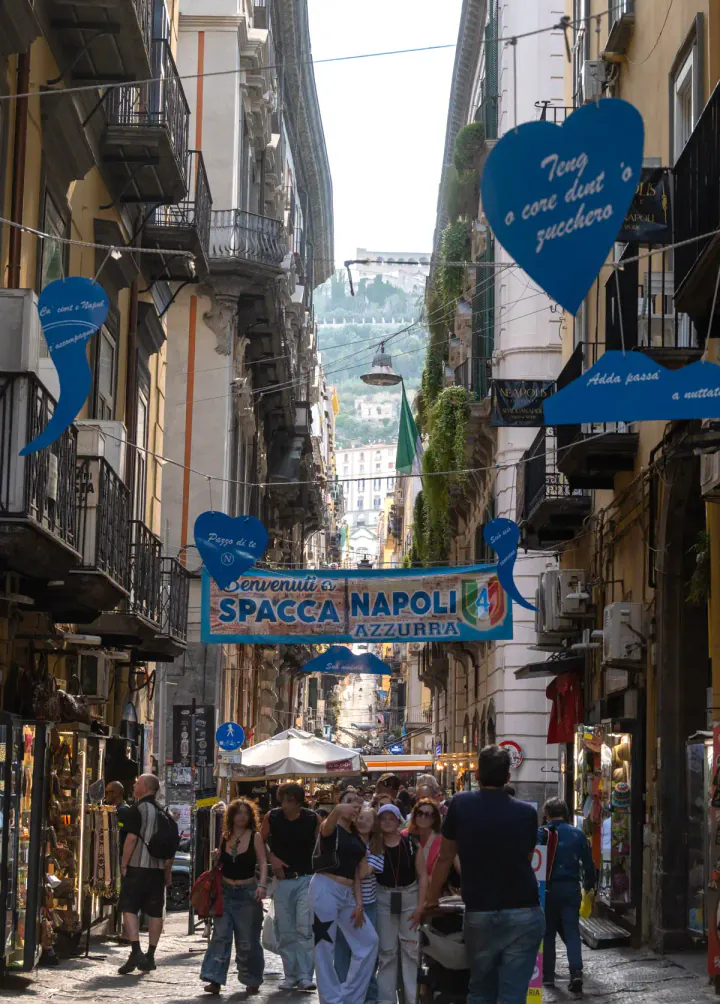
You’re likely to end up on Spaccanapoli without trying too hard, as many of the best places to see in Naples are either on the street or close by.
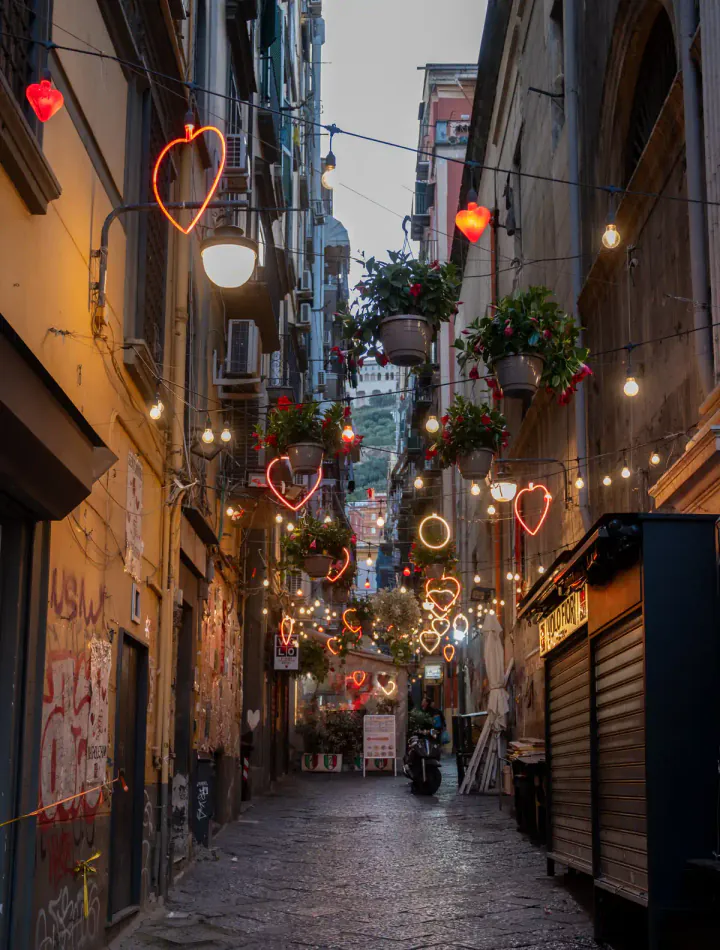
Spaccanapoli is loud and busy, but above all it’s full of life: shrines on walls, laundry and banners overhead, endless scooters and ancient churches squeezed next to pizzerias. It can feel a bit overwhelming at first, but once you get into the rhythm of it, it’s a real thrill.
The street goes by several names along its length, and no single street is called Spaccanapoli, so don’t be confused if the maps seem inconsistent.
Address: Spaccanapoli includes several streets along its 2km length. The section from Via San Biagio Dei Librai to Via Domenico Capitelli has the greatest concentration of tourist sights.
Cost: Free
Need to book in advance? No
3. Visit the National Archaeological Museum (MANN)
The Museo Archeologico Nazionale di Napoli (MANN) is one of the finest archaeological museums in Europe, and if you’re planning to visit Pompeii, it’s well worth combining the two.
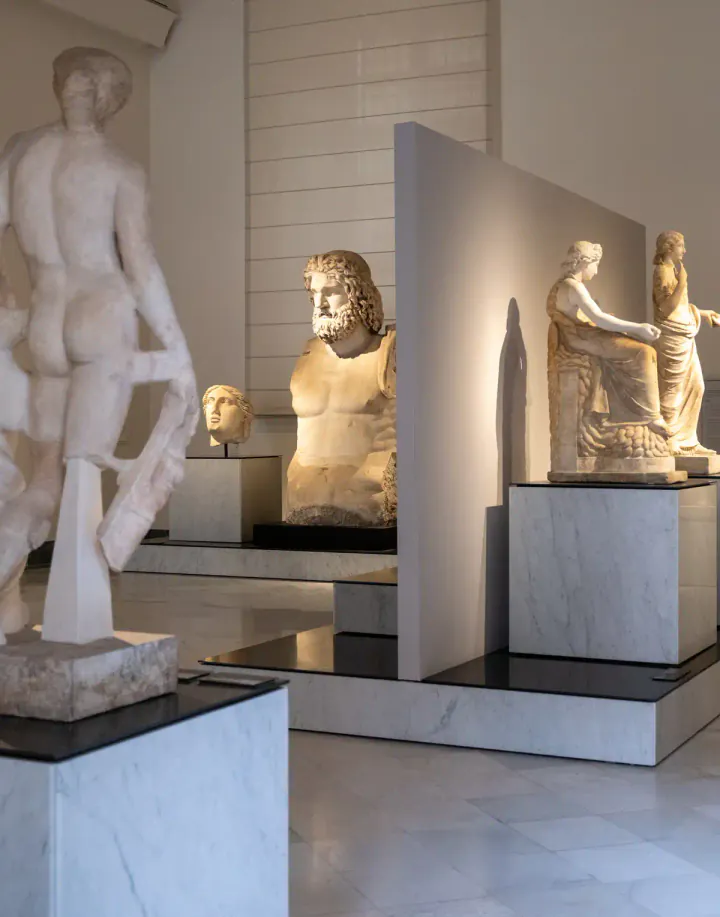
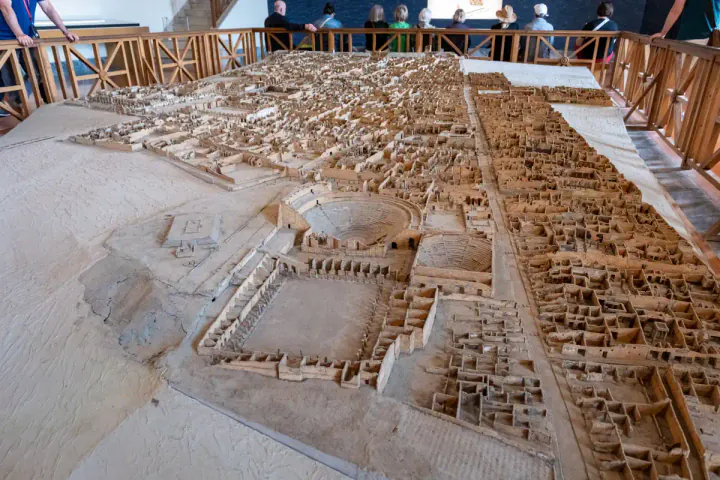
The museum holds many of the best finds from Pompeii and Herculaneum that have been excavated over the centuries. Its treasures include an enormous collection of Roman mosaics, huge sculptures and a collection of everyday objects that give you a vivid picture of life in ancient Rome.
I think it’s a good idea to visit Pompeii with a guided tour first, then come to MANN; I felt quite emotional looking at the objects that people at Pompeii had chosen for their villas.
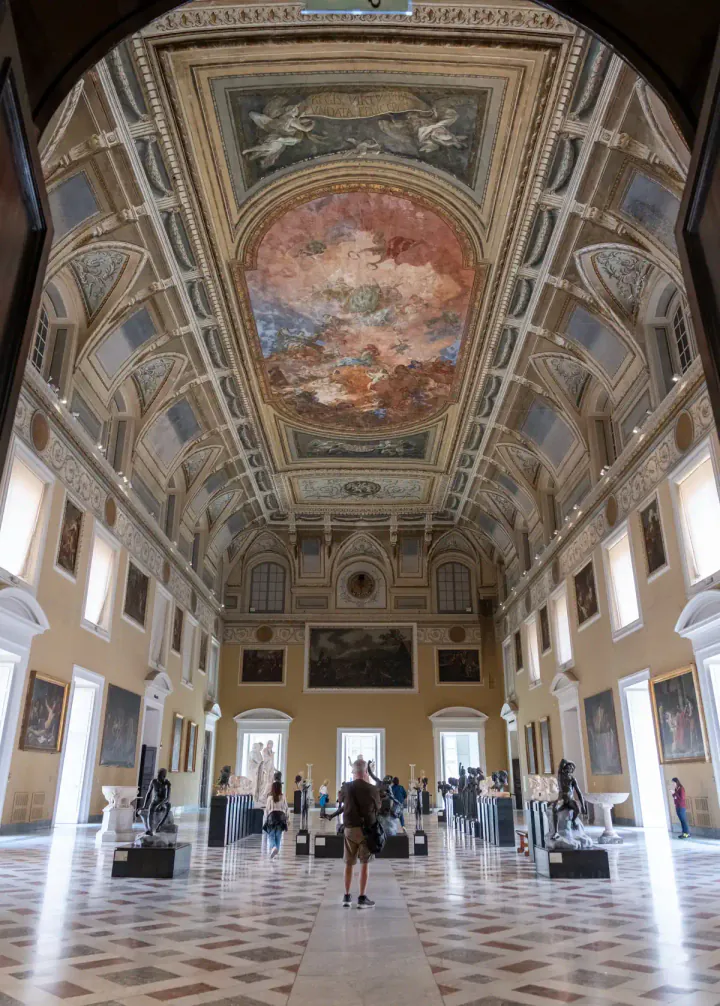
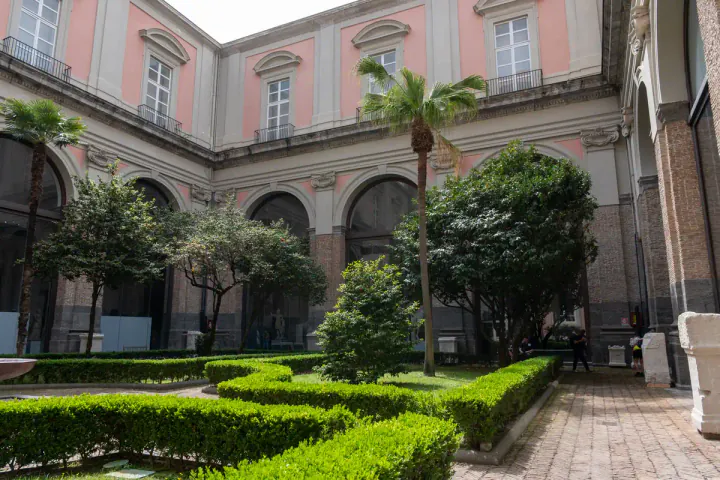
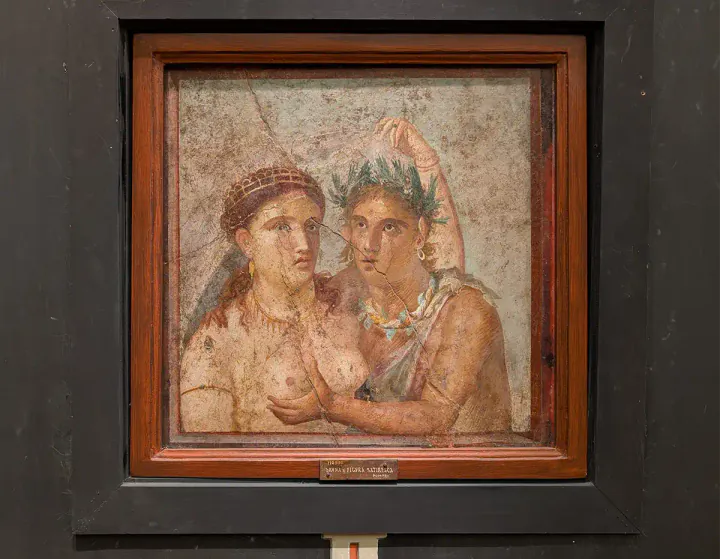
Don’t miss the Secret Room containing erotic art from Pompeii and Herculaneum. It’s only relatively recently that normal members of the public have been able to see inside – they used to operate a kind of peep show for gentlemen with the mosaics at Pompeii all the way into the 1960s!
Address: Piazza Museo, 19, 80135 Napoli NA, Italy
Cost: €20.00, included in all versions of the Naples or Campania Artecard
Need to book in advance? No, but you can reserve a timeslot. It’s closed on Tuesdays.
4. Wonder at the Veiled Christ in Cappella Sansevero
The Cappella Sansevero is a small baroque chapel in the historic centre, and inside it is one of the most remarkable sculptures in the world: the Veiled Christ by Giuseppe Sanmartino, created in 1753.
The sculpture is of Christ lying down, covered by a veil – except the veil is carved entirely from marble. The way the fabric appears to drape over the face and body, every fold rendered in stone, is almost impossible to process. You can see it clearly isn’t fabric and yet still struggle to believe it isn’t.

If you want to see the Veiled Christ, it’s essential to book tickets in advance. They sell out weeks ahead in peak season; if tickets are fully booked, you may have luck getting tickets as part of a guided tour. Photos and video recordings are not allowed.
Address: Via Francesco de Sanctis, 19/21, 80134 Napoli NA, Italy
Cost: €12 for a basic entry ticket, around €30 for a guided tour and ticket bundle
Need to book in advance? Yes. Book your tickets as soon as you can as they sell out weeks in advance. You may be able to book a guided tour slightly closer to your preferred date – I booked a tour around 10 days before my trip and got one of the last slots.
5. See the Piazza del Plebiscito
Piazza del Plebiscito is the grand centrepiece of Naples, a large, sweeping square framed by the neoclassical colonnade of the Basilica of San Francesco di Paola on one side and the Royal Palace on the other. The historic Gran Caffè Gambrinus sits on the corner of the Piazza, while the Teatro di San Carlo and the Galleria Umberto I shopping arcade are a few steps away.

If you’re there in the early morning, you can have it almost to yourself. It gets livelier later in the day, and in the evening it’s a nice starting point for a walk around the seafront.
Address: Piazza del Plebiscito 1, 80132 Napoli
Cost: Free
Need to book in advance? No
6. Visit the Royal Palace of Naples
Right on Piazza del Plebiscito, the Palazzo Reale was built in the 17th century and served as the official residence of various ruling dynasties over the centuries.
The state apartments are open to visitors and give a good sense of the grandeur the place was designed to project, with elaborately decorated rooms, a throne room, and a court theatre. I absolutely loved the jaw-droppingly beautiful grand staircase which is worth the ticket price by itself.


The rooftop garden has views over the bay; an extra €2 gets you up there, and it’s worth it on a clear day.
Address: Piazza del Plebiscito 1, 80132 Napoli
Cost: €15.00, or included in all versions of the Naples and Campania Artecard
Need to book in advance? Probably not
7. Experience Christmas all year round at Via San Gregorio Armeno
Via San Gregorio Armeno is a narrow street in Naples’ historic centre that sells nativity scenes all year round.
The nativity tradition (presepe) is taken very seriously in Naples, and there have been artisans on this street making figurines for centuries. The craft has kept up with the times: alongside traditional shepherds and wise men, you’ll find miniature versions of politicians, footballers and celebrities, available to customise into your scene if you want.
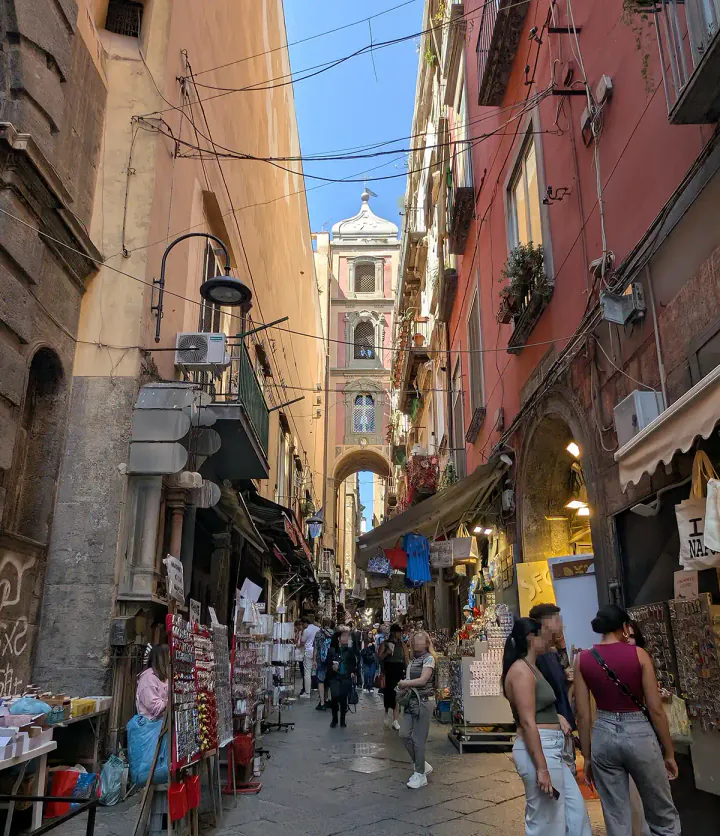

Even if you’re not in the market for a miniature, festive figurine of the current Italian prime minister, it’s a good street to wander through. I didn’t have space in my carry-on for a nativity scene, but I did buy a pizza slice Christmas tree decoration to remind me of my time in Naples.
Address: Via San Gregorio Armeno, 80138 Napoli
Cost: Free. My pizza slice Christmas decoration cost €12
Need to book in advance? No
8. Visit the Spanish Quarter and worship at the Maradona shrine
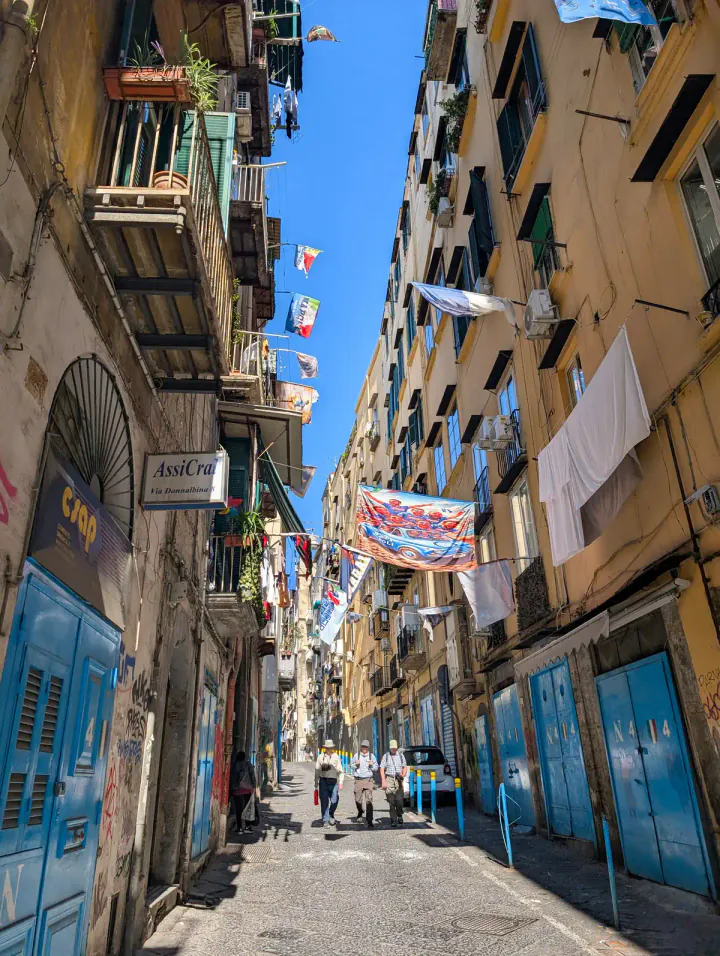
The Quartieri Spagnoli (Spanish Quarter) is a dense grid of steep, narrow streets a short walk uphill from Piazza del Plebiscito. The neighbourhood was originally built to house Spanish troops in the 16th century; the buildings on either side go up high enough that the streets stay dark at ground level even in full sun. As you explore the area you’ll see washing lines overhead, mopeds appearing out of nowhere, street art, pizzerias and tiny shrines.
Well – most of the shrines are tiny. On the corner of Via Emanuele De Deo and Vico Concordia there’s a little square that is completely dedicated to the footballer Maradona, who played for Napoli for seven years in the 1980s and 1990s, and led the team to two Serie A league wins.
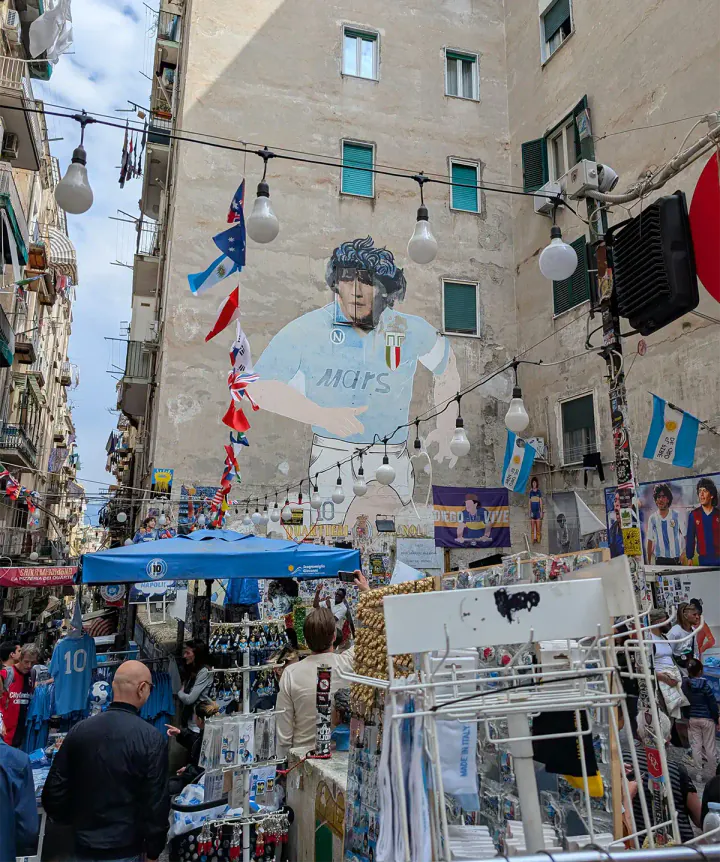

After the second win, a giant mural of Maradona was painted on the wall of a car park. When Maradona died in 2020, the square became a place of pilgrimage, with statues, more murals, banners and stalls selling all kinds of Maradona merch. If you’re looking for the most Naples-like place in the city, Largo Maradona might be it.
Address: Via Emanuele de Deo, 80134 Napoli
Cost: Free
Need to book in advance? No
9. Look up at Galleria Umberto I
Just a short walk from Piazza del Plebiscito, the Galleria Umberto I is a grand 19th-century shopping arcade with a soaring glass and iron roof. It was built during the re-planning of Naples city centre after the unification of Italy; slums were torn down to create a grand area between the Royal Palace and the port.
It was modelled after Milan’s more famous Galleria Vittorio Emanuele II, but it’s quieter and less touristy than its northern Italian cousin.
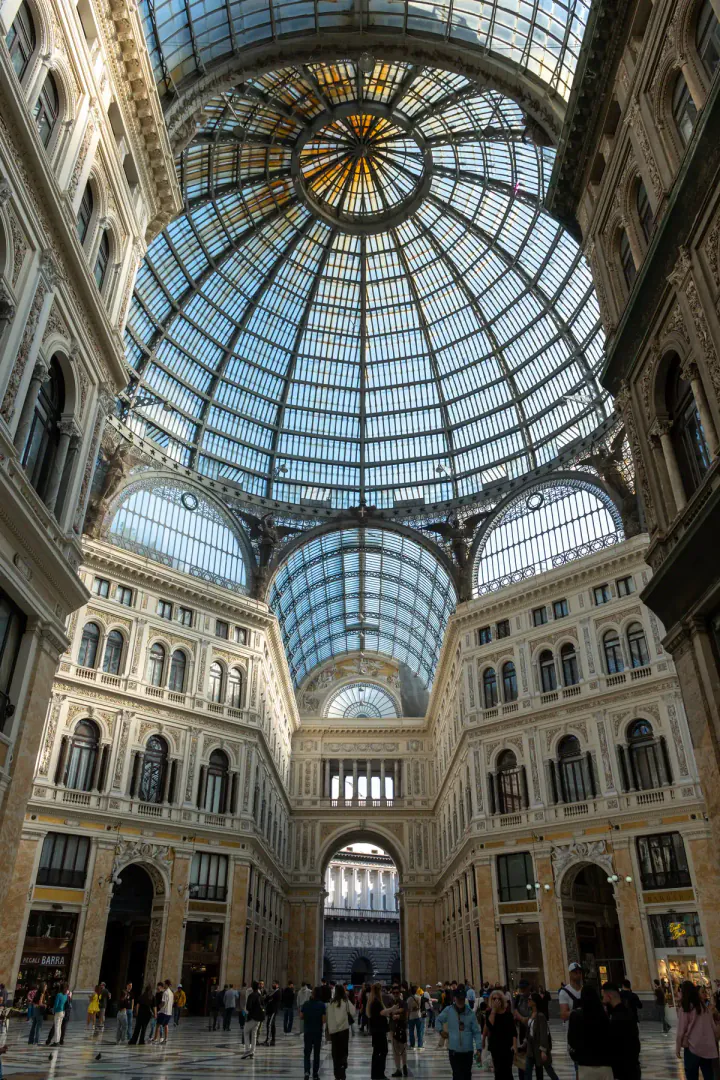
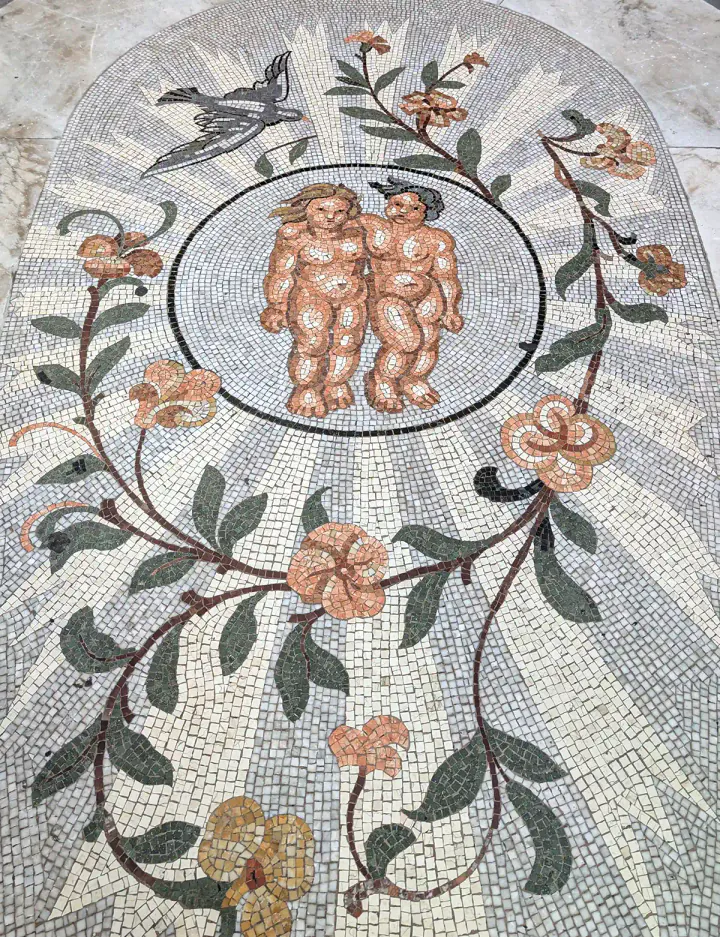
When you visit, make sure you look down as well as up – the centre has a beautiful Roman-style mosaic showing the signs of the zodiac.
Address: Via San Carlo, 80132 Napoli
Cost: Free
Need to book in advance? No
10. Explore Santa Chiara and the Majolica Cloister
The Basilica of Santa Chiara is a large medieval church in the historic centre, but the real reason to visit is the cloister attached to it. The arched walkways are beautifully decorated with frescoes, while the garden at the centre is lined with colourful 18th-century majolica tile decorations covering benches and octagonal columns. With its orange trees and fountains, it feels more like being in Seville than Naples.
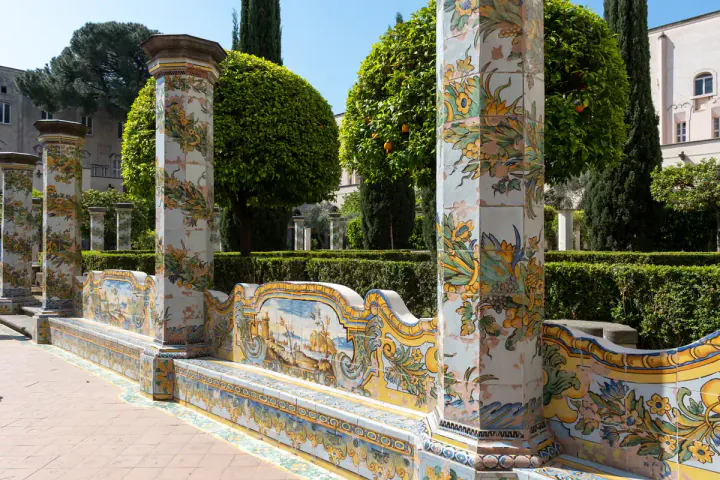
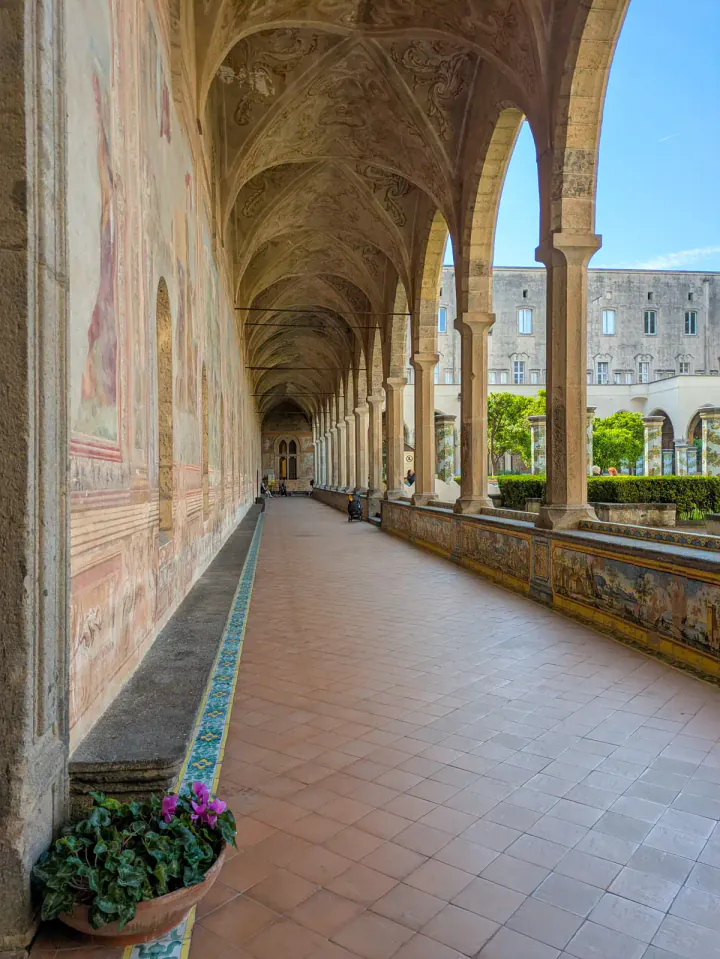
I tried to visit on my first day in Naples but the mid-afternoon queue to get in was just too long. I tried again first thing the next morning and had a much nicer experience.
Don’t miss seeing the archaeological excavations and museum; the church and cloister was built on top of a Roman bath.
Address: Via Santa Chiara, 49/c, 80026 Napoli
Cost: A combined ticket for the cloister, archaeological site and museum costs €7.00. The church is free to enter, but has shorter opening times; it’s a nice bonus to see the church as well if your visit coincides with when it’s open, but it’s not a must-do.
Need to book in advance? No, but try to visit when it opens for shorter queues and a more peaceful visit.
11. Step inside Gesù Nuovo church
Gesù Nuovo sits right on Piazza del Gesù Nuovo, very close to Santa Chiara and at the eastern end of Spaccanapoli. It barely even looks like a church from the outside, with dark grey, diamond-pointed stonework that gives it an almost defensive look. Inside, the interior is extravagantly decorated baroque, packed with coloured marble and elaborate fresco work.
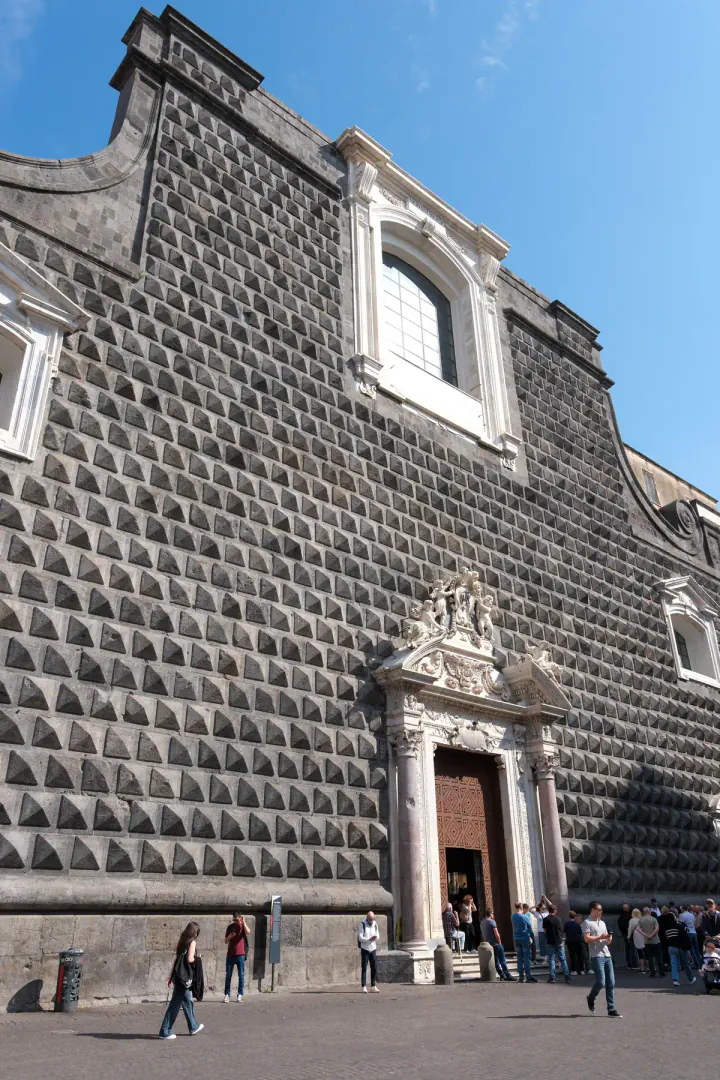
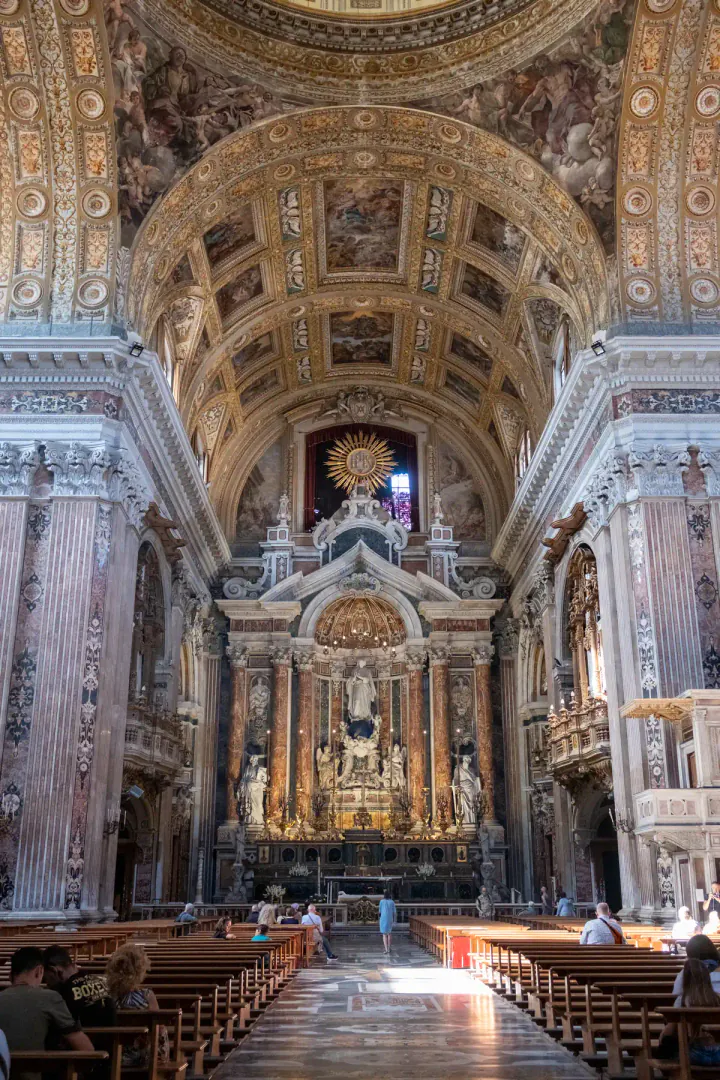
It’s free to enter and usually fairly quiet compared to the other tourist sights nearby.
Address: Piazza del Gesù Nuovo, 2, 80134 Napoli
Cost: Free
Need to book in advance? No
12. Visit the castles of Naples
Naples has an unusual number of castles for a city, which reflects its long history of being fought over, occupied, and fortified.
Castel Sant’Elmo
Castel Sant’Elmo sits high above the city in the Vomero district, and the views from up here over the bay, the city and Vesuvius are exceptional. You can reach Vomero by funicular (I took the F2 funicular from Montesanto Station to Morghen) and combine the castle with a wander around this quieter, residential neighbourhood above the city.

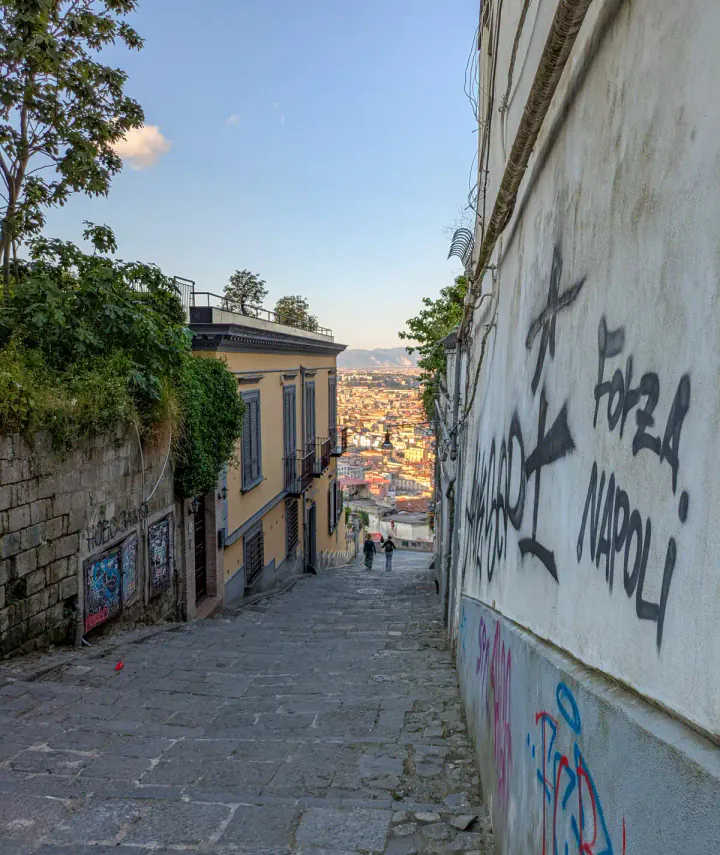
I visited Castel Sant’Elmo in the late afternoon and after exploring the castle, I took the Pedamentina a San Martino staircase back down to the Spanish Quarter. The views were amazing and it was so nice to see a quieter part of the city.
Address: Via Tito Angelini, 33, 80129 Napoli
Cost: Entry tickets cost €5.00. Castel Sant’Elmo is included in all versions of the Naples and Campania Artecard.
Need to book in advance? No
Castel dell’Ovo
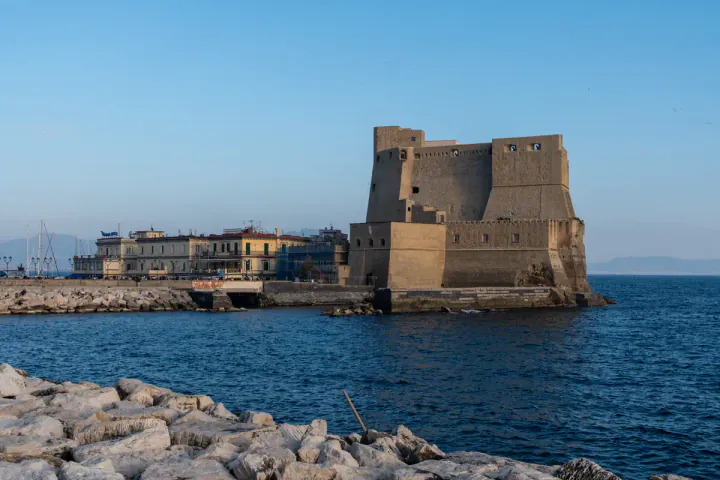
Castel dell’Ovo is the oldest castle in Naples, sitting on a small island connected to the mainland by a causeway from the Lungomare seafront promenade.
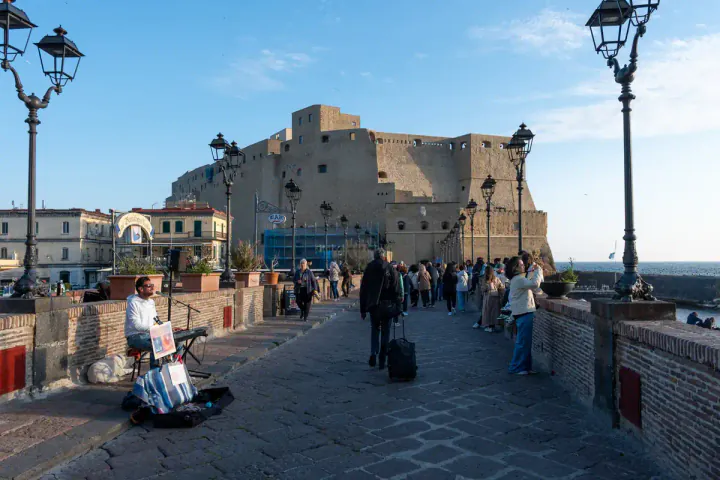
The name means “Castle of the Egg”. Legend has it that the poet Virgil hid a magical egg inside the foundations, and if it breaks, the city will fall. The castle was closed for renovations on my most recent trip to Naples but it’s normally free to visit.
Address: Via Eldorado, 3, 80132 Napoli
Cost: Free
Need to book in advance? No, but the castle is currently closed for repairs
Castel Nuovo
Castel Nuovo is an imposing medieval castle right in the centre of Naples, near Piazza Municipio and the cruise ship port and not far from Galleria Umberto I. If you go inside you’ll be able to visit a chapel and the civic museum, but the main reason most people stop here is for the the dramatic five-towered exterior.

Even if you don’t go inside, make sure you see the ornate Renaissance-era Triumphal Arch, which fills in a space between two of the severe stone towers and was built by Alfonso V of Aragon to mark his conquest of the city. The contrast between the two styles is pretty strange!
Address: Via Vittorio Emanuele III, 80133 Napoli
Cost: Tickets cost €10. Castel Nuovo is included in all versions of the Naples and Campania Artecard.
Need to book in advance? No
13. Explore underground Naples
Beneath the streets of Naples runs a whole other city: a network of ancient Greek tunnels, Roman aqueducts, Royal escape routes, catacombs and World War 2 shelters. There are several underground tours, all showing different parts of the world under the modern day city.
Napoli Sotterranea
Napoli Sotterranea (Naples Underground) on Via dei Tribunali offers guided tours of the tunnels and cisterns beneath the historic centre and is the most popular underground tour in Naples.
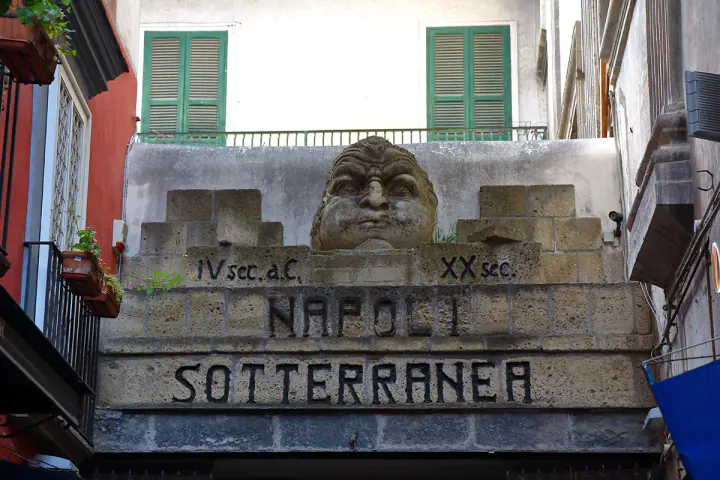
The space was used as a shelter during WWII bombing raids, and the guides do a good job of bringing both the ancient history and the more recent wartime story to life. There are a few narrow passages, so not ideal if you’re claustrophobic.
Address: Piazza San Gaetano, 69, Napoli
Cost: €18
Need to book in advance? It’s best to book in advance but tours run frequently.
Galleria Borbonica
Galleria Borbonica is a different set of tunnels under the Pizzofalcone hill that separates Piazza del Plebiscito from the Chiaia area.
The guided tour takes in sixteenth-century water tanks and aqueducts, and wartime air raid shelters as well as the Bourbon Tunnel itself which was built in the 19th century as a royal escape route and military passage. The tunnels were later used as a police impound yard, and you’ll see old cars from the 1940s and 1950s.
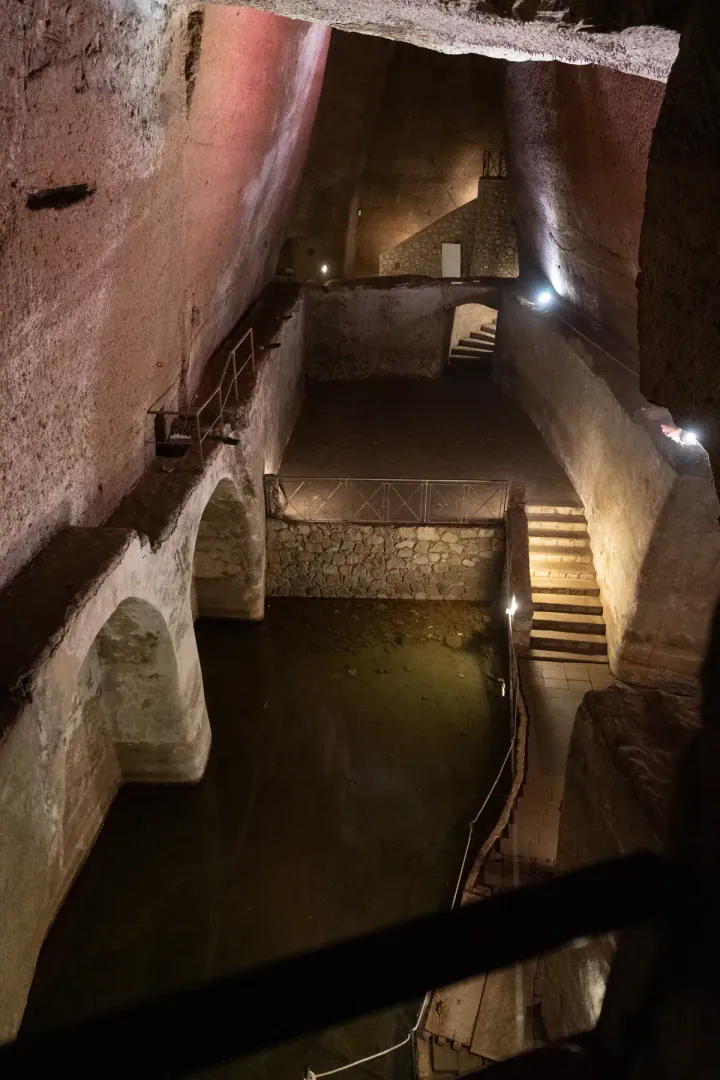

The Galleria Borbonica tour has smaller groups and there are no tight sections on the standard tour, so it’s better for people who experience claustrophobia. It also has a level entrance at the Chiaia end which makes it more accessible.
Address: There are three entrances. The standard tour leads from Vico del Grottone, 4, near Piazza del Plebiscito, or Via D. Morelli, 61, inside the Morelli Parking car park in Chiaia. If you start from one entrance, you’ll exit from the other. The third entrance is on Via Monte di Dio, 14.
Cost: €15
Need to book in advance? Yes. It’s only open on Fridays, Saturdays, Sundays and holidays, and groups are small, so it sells out quickly. Book at least a week or two in advance.
The Catacombs of San Gennaro
The Catacombs of San Gennaro are among the most extensive early Christian catacombs in southern Italy, cut into the volcanic tufa rock in the Rione Sanità district. They date from the second century and were expanded over several centuries.
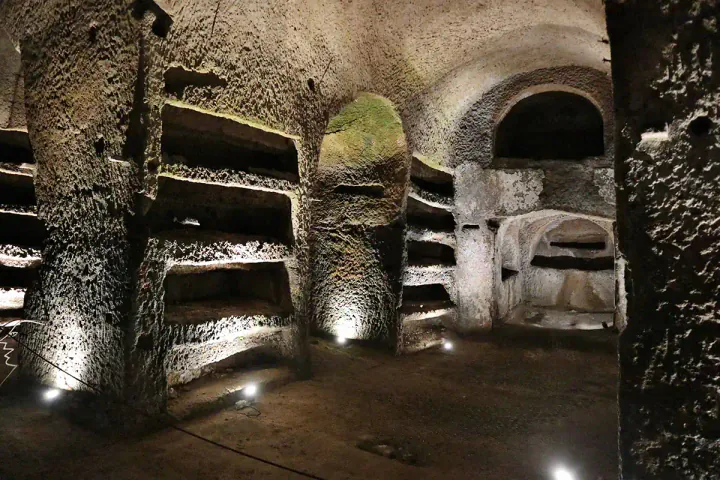
Once inside, you can see an underground church where Mass is still celebrated, early Christian paintings and the tombs of bishops. Naples’ patron saint San Gennaro was buried here for two centuries (he’s now in the Duomo). Like Napoli Sotteranea and the Galleria Borbonica, you have to take a guided tour.
The Rione Sanità neighbourhood you’ll pass through on the way to the catacombs is worth exploring too. It’s one of the less touristy parts of the city, with a strong local character. Rione Sanità used to have a bad reputation, but it’s improved a lot over the last few years.
Address: Via Capodimonte, 13, 80100 Napoli
Cost: €13.00. Artecard holders can buy discounted tickets, bringing the price down to €9.
Need to book in advance? Yes, it’s essential to book in advance, but tickets are usually still available a day or two before.
Fontanelle Cemetery
The Fontanelle Cemetery is a vast cave filled with thousands of skulls and bones – the remains of victims of plague and cholera collected over the centuries. It might sound like a strange place to visit on your trip to Naples, but it’s one of the city’s most affecting attractions.

The bones were adopted and tended by local Neapolitans in a practice called the cult of the anime pezzentelle (souls of the abandoned), where people would “adopt” a skull and pray for its soul in exchange for intercession. You can feel the love and care that has been put into looking after the bones, and the caves themselves are magnificent.
Address: Via Fontanelle, 80, 80136 Napoli
Cost: €6 for a visit with an audio guide. Fully guided tours are available in Italian for €8.
Need to book in advance? Yes, it’s essential to book in advance.
14. Go on a street food tour
Naples has some of Italy’s best street food, and the historic centre is full of it. The classics to try include:
- Pizza fritta – fried pizza, usually filled with ricotta, salami or other fillings, and sold from street-side fryers
- Cuoppo – a paper cone of mixed fried things: fish, vegetables, small pastries
- Frittatina di pasta – fried pasta cake, a Neapolitan speciality
- Sfogliatella – a shell-shaped pastry filled with ricotta. There’s a crunchy frolla version and a flaky riccia, and you’ll form an opinion very quickly about which you prefer (I’m a frolla girl, ideally with a lemony ricotta filling)
- Zeppole – fried dough balls, available in both savoury and sweet varieties
- Babà – a rum soaked cake that’s inexplicably also a breakfast item

A guided street food tour is a good way to try several things in one go, explore the city and get the local backstory. I’m a recent convert to food tours after the tour I took in Porto and it’s a particularly delicious way to explore Naples, with its long street food tradition.
Top-rated Naples food tours
Street food walking tour with local guide
15. Visit the Duomo and see Naples’ 500 domes from the rooftop
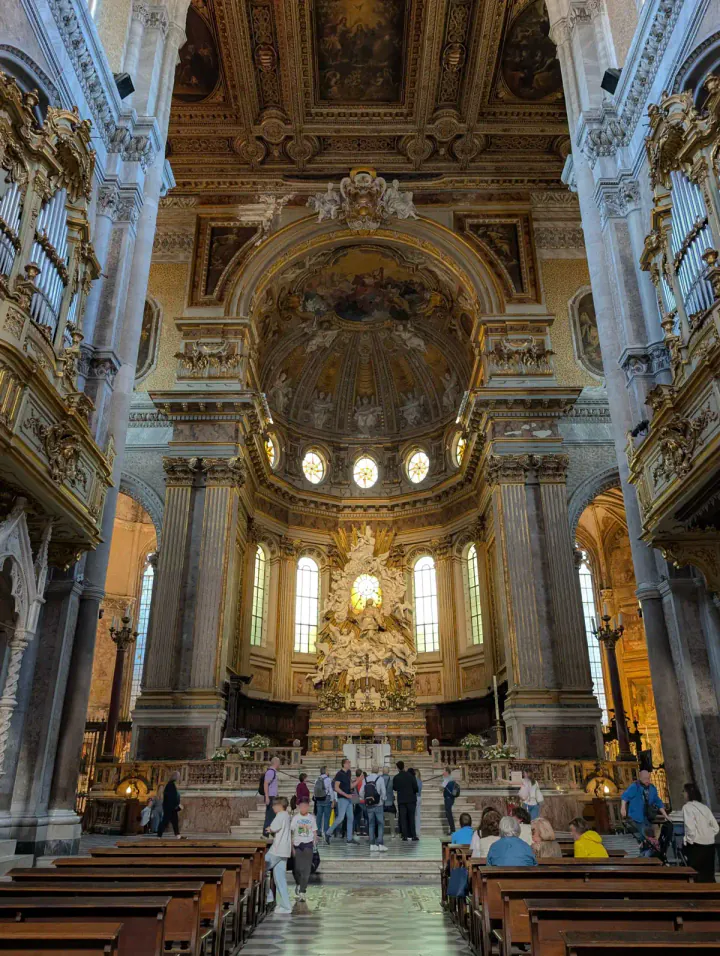
The Duomo di Napoli (Cathedral of Naples) is a 13th-century Gothic cathedral that looks fairly ordinary from the outside but rewards a proper look inside.
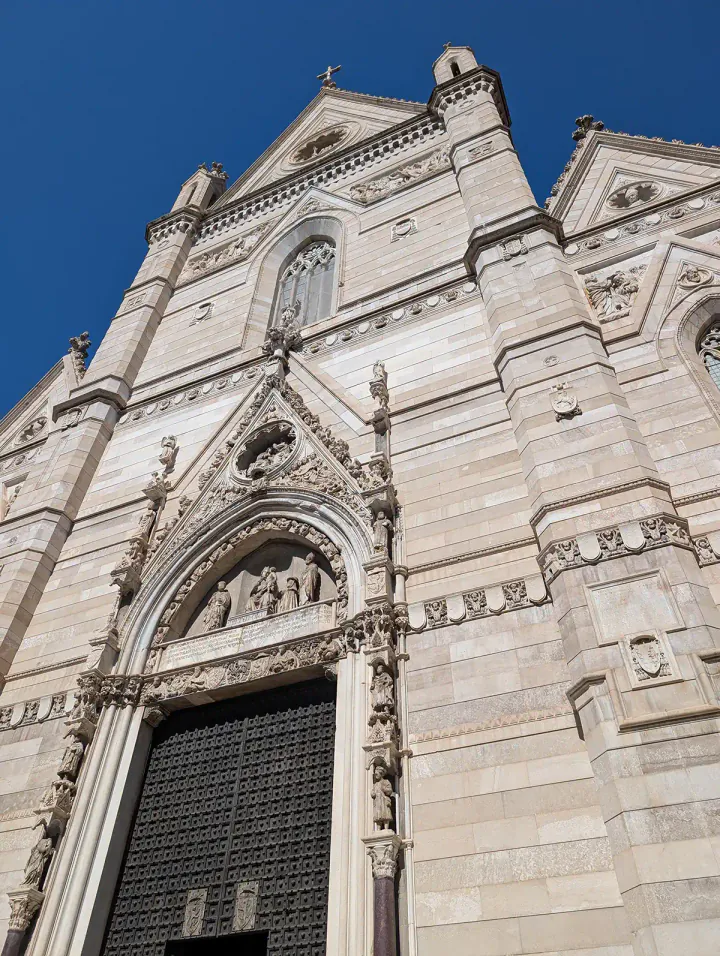
The cathedral is dedicated to the city’s patron saint, San Gennaro, and three times a year (May, September and December) it’s the scene of one of Naples’ most dramatic traditions: the Miracle of San Gennaro, when anxious Neapolitans watch to see if a vial of the saint’s dried blood liquefies. If it does, everything is fine. If it doesn’t, then watch out – it’s a sign of impending disaster. The blood failed to liquefy in 1939 (World War 2), 1980 (massive earthquake) and 2020 (Covid pandemic).
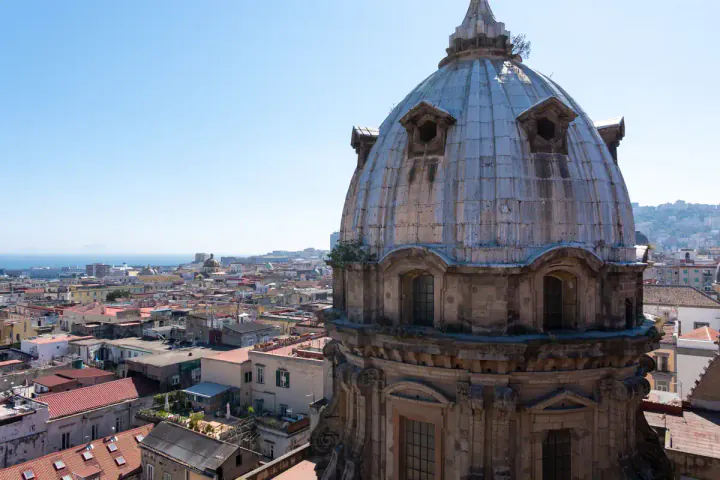
The Duomo has one of Naples’ newest things to do; the chance to see the city from above on a rooftop tour. From the roof of the cathedral it’s said that you can see 500 domes, including the one at the centre of the Galleria Umberto I shopping arcade and the pretty yellow and green tiled dome of Basilica di Santa Maria della Sanità.
I couldn’t quite count 500 domes on my visit, but it was a brilliant experience and one of my favourite things to do in Naples. Read my full Naples Cathedral rooftop tour review.
You’ll also see the Duomo’s own secret double dome and spot frescoes that were hidden for centuries. Having taken a rooftop tour of Seville cathedral I was very grateful for the lift to get us up to the roof!
Address: Via Duomo, 147, 80138 Napoli
Cost: Free to enter the cathedral, the rooftop tour costs €10
Need to book in advance? Yes for the rooftop tour
16. Gawp at the Treasure Museum
In one of the Duomo’s side chapels, you’ll find the Cappella del Tesoro di San Gennaro. The city has been accumulating gold, jewels and reliquaries in honour of its patron saint for around 400 years.
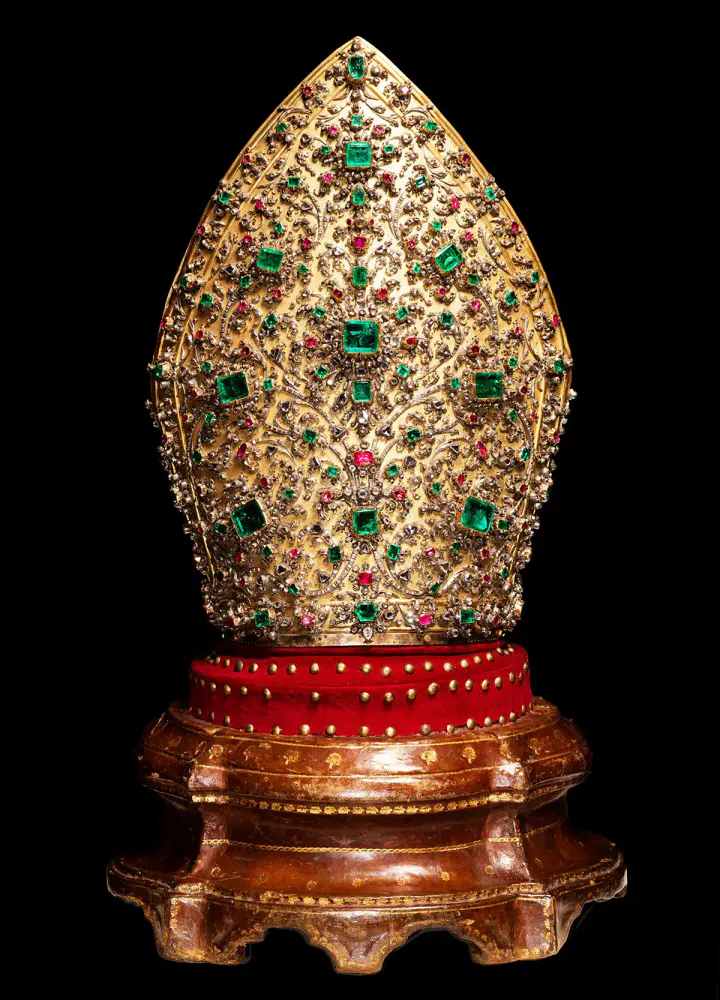
The Treasure Museum, in the rooms next to the chapel, holds the most important pieces: a 1305 silver reliquary bust of the saint (which survived the 1731 earthquake), the famous ampoule said to contain his dried blood, and about 21,610 pieces of gold, silver and gemstones in total.
Address: Via Duomo, 147, 80138 Napoli
Cost: €14. The price includes an audio guide.
Need to book in advance? Yes, it’s recommended, although tickets are usually available on the day.
17. Walk the Lungomare
The Lungomare Caracciolo – Naples’ seafront promenade – runs from Borgo Marinari (the fishing village at the base of Castel dell’Ovo) west towards Mergellina. It’s a broad boulevard with Vesuvius as an ever-present backdrop and the Sorrentine Peninsula and Capri as smudges on the horizon on clear days.
Sections are gradually being pedestrianised, so there was a bit of construction work when I visited, but it’ll all be worth it.
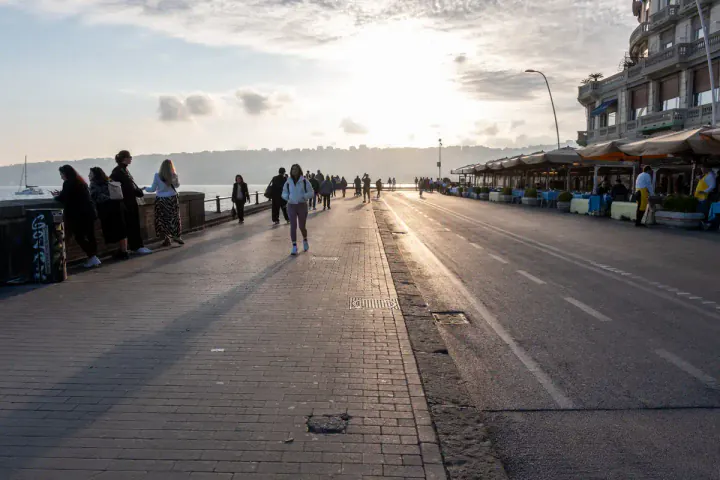
I visited in the early evening and it was full of joggers, dog walkers and people enjoying a spritz in the last of the sunshine. The wide streets and green space here make this area of Naples feel like a completely different city to the hectic historic centre and Spanish Quarter.
Address: Via Partenope and Via Francesco Caracciolo, Napoli
Cost: Free
Need to book in advance? No
18. Go book shopping on Via Port’Alba
Port’Alba is one of Naples’ city gates and leads from Piazza Dante into the historic centre. The Port’Alba gate leads to Via Port’Alba, a narrow pedestrian alley that’s the literary centre of Naples, with bookshops, stationery stores and outdoor book stands. It’s also home to the oldest pizzeria in Naples (and maybe the world), Antica Pizzeria Port’Alba.
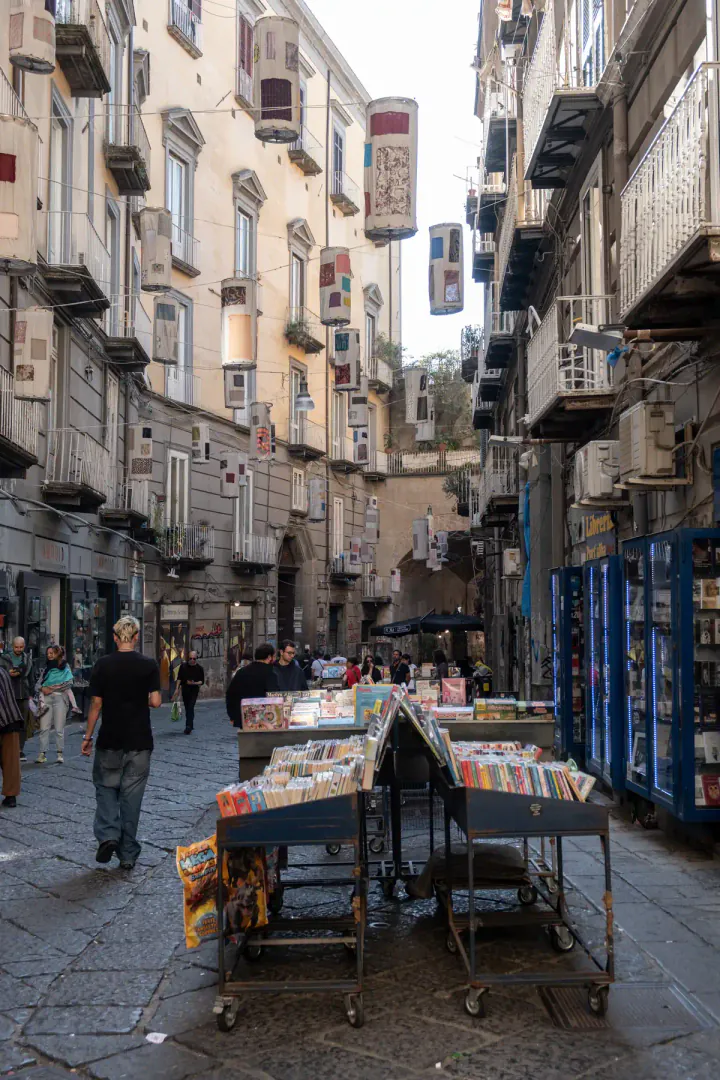
Address: Via Port’Alba, 80134 Napoli
Cost: Free
Need to book in advance? No
19. Relax with a spritz on Piazza Bellini
Piazza Bellini was one of my favourite squares in Naples. It’s fairly small, but full of nice bars and slightly calmer than the surrounding parts of the historic centre. In the centre of the square, you’ll find an exposed portion of the original Greek city walls.
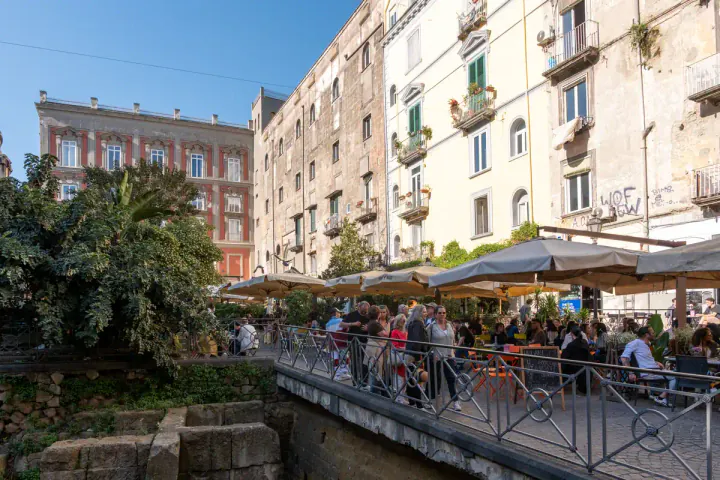

Address: Piazza Bellini, 80138 Napoli
Cost: Free
Need to book in advance? No
20. Rub Pulcinella’s nose for good luck
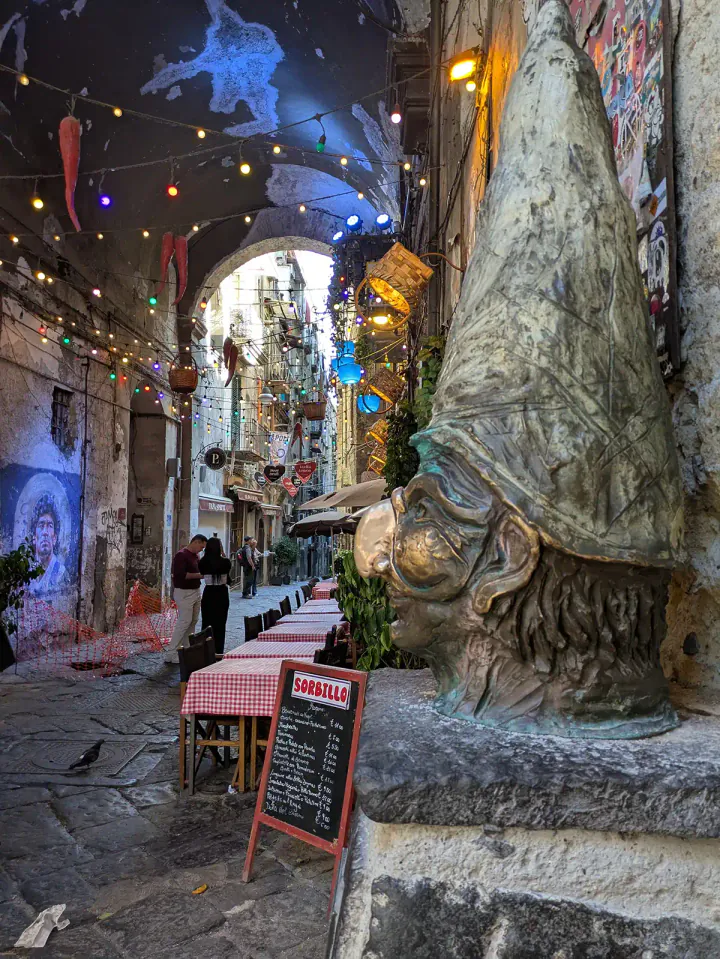
Pulcinella – the mischievous Commedia dell’Arte character known as Punchinello or Punch in English – is one of the most beloved symbols of Naples. You’ll see his face in every souvenir shop in the city, but the best way to pay your respects is to find the statue of him in the historic centre and give his nose a good rub. It’s worn shiny from years of locals and tourists doing exactly the same thing.
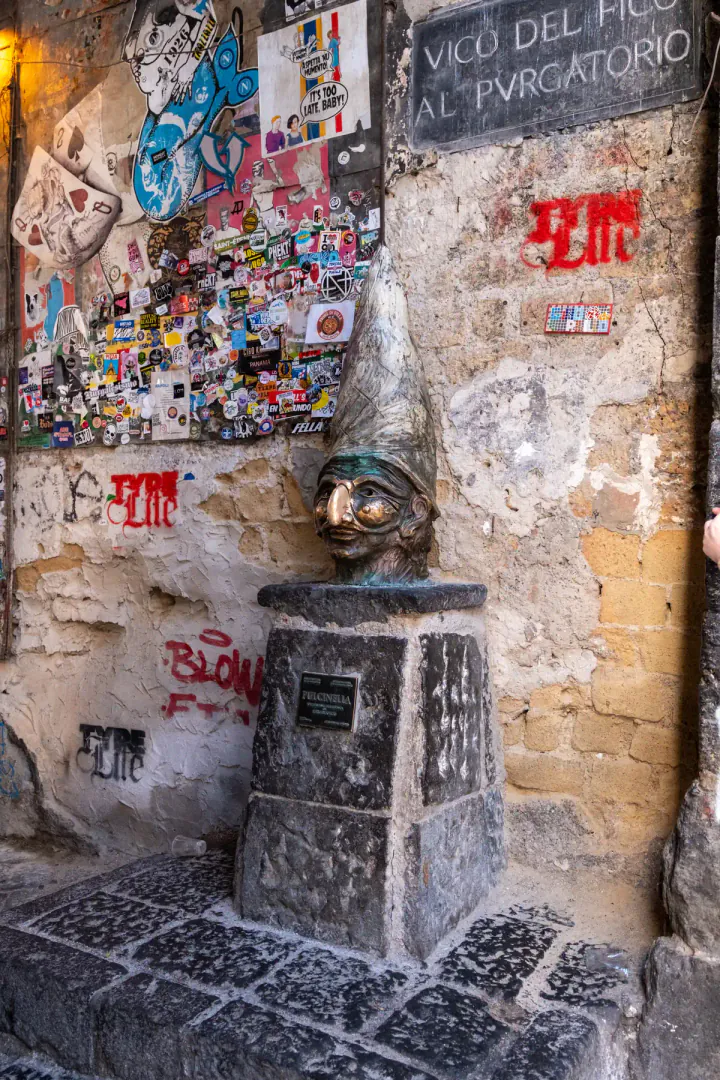
The tradition is that rubbing his nose brings good luck – and given that Pulcinella has been getting Neapolitans out of scrapes with his quick wit for centuries, he seems like the right character to have on your side.
Address: Vico del Fico Al Purgatorio, 80138 Napoli
Cost: Free
Need to book in advance? No, but you may need to queue for the perfect photo
21. Day trips from Naples
One of the reasons why Naples itself doesn’t get the attention it deserves is all the amazing places around it, like Pompeii, Sorrento, Capri and the Amalfi Coast. The good news is that these are all very doable as day trips, so you can see the sights and experience everything that Naples has to offer in one trip.
Pompeii
The most popular day trip from Naples is Pompeii, the Roman city that was buried when the volcano Mount Vesuvius erupted in 79 AD. Pompeii is an easy day trip from Naples by local train, and for many people it’s the highlight of their trip to Naples.

I’ve written a detailed guide to visiting Pompeii, with everything you need to know about Pompeii tickets, getting there on the Circumvesuvia train and why a guided tour is the best way to understand the site. Read my complete guide to visiting Pompeii.
Herculaneum
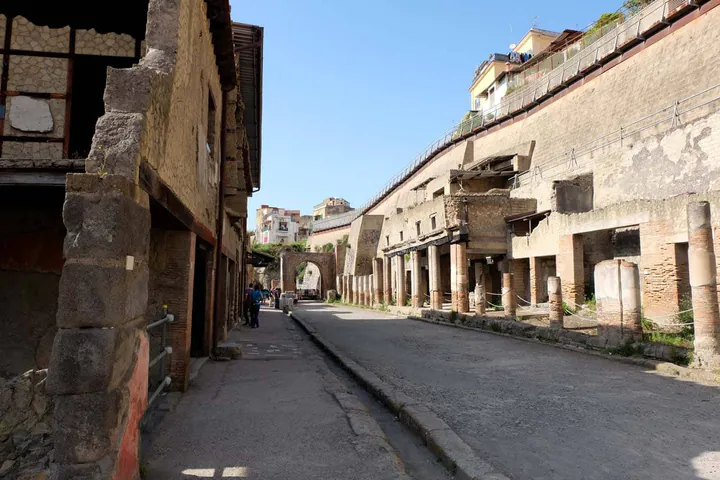
Herculaneum is another Roman town that was buried when Vesuvius erupted, and it’s even better preserved than Pompeii. It’s a fascinating site to visit in its own right, but it’s also much smaller and more accessible, making it a good alternative to Pompeii if you, or someone you’re travelling with will have difficulty with the scale of Pompeii. Read my complete guide to visiting Herculaneum.
Mount Vesuvius
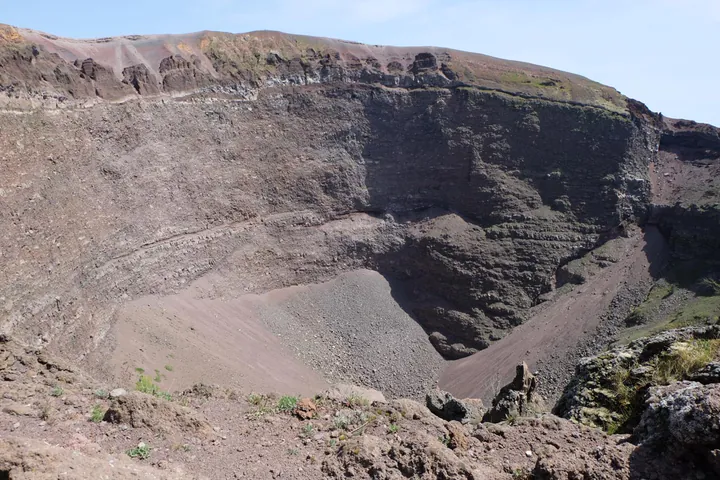
You’ll see Mount Vesuvius looming over Naples, but nothing compares to seeing the still-smoking crater. You can get a bus up to the upper car park from both Pompeii and Ercolano Scavi station close to Herculaneum, or take a guided tour.
The crater walk is steep but relatively short, and the views from the top are spectacular. Read my guide to climbing Mount Vesuvius.
Capri
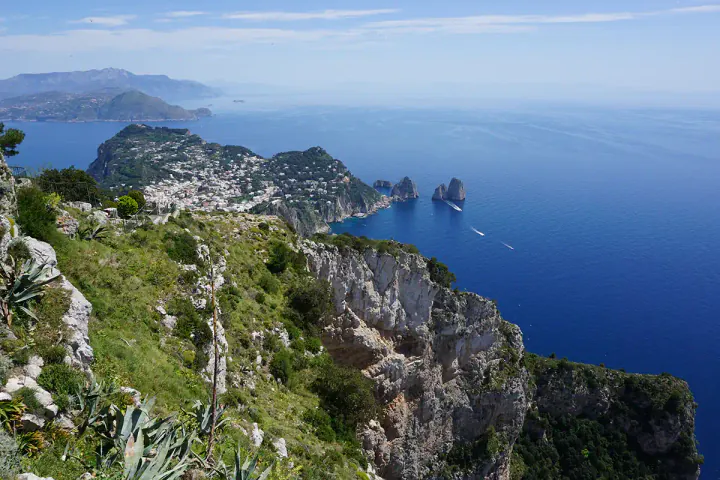
The island of Capri is another easy day trip from Naples and is reachable by ferry from the port at Molo Beverello. The journey takes around 50 minutes by fast ferry.
Capri is beautiful and undeniably worth it, though be warned, it does get very busy with day trippers from Naples, Sorrento and the Amalfi Coast. Book your ferry tickets in advance and try to get to the island as early as you can.
Ischia
Ischia is another island in the Gulf of Naples, and it has even more to offer than Capri. Ischia is famous for its thermal baths; many hotels in Ischia have their own thermal spas, and the two main thermal parks both make a lovely day trip from Naples.
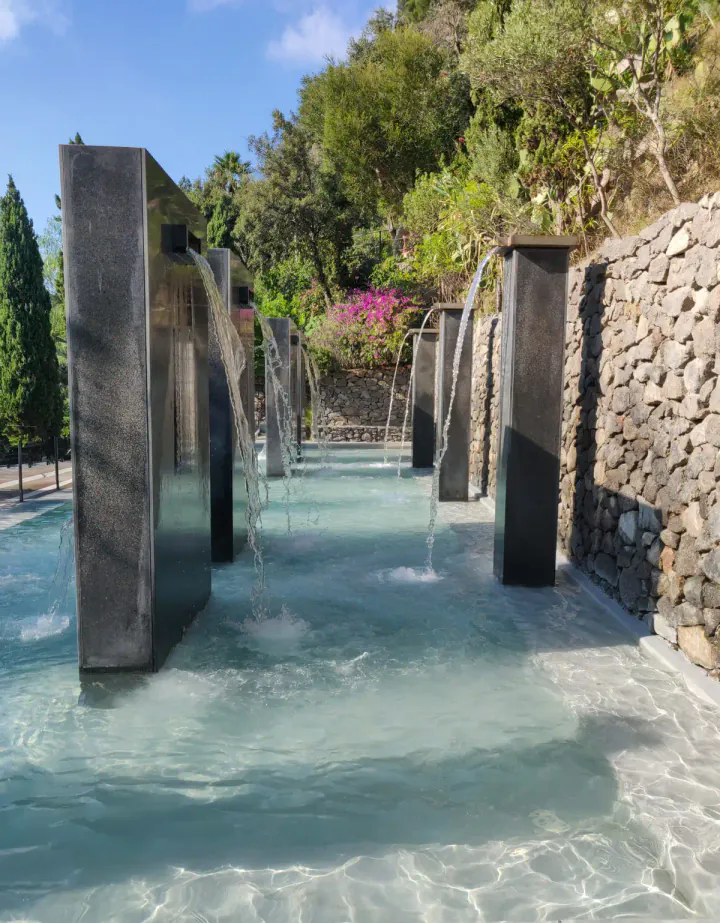
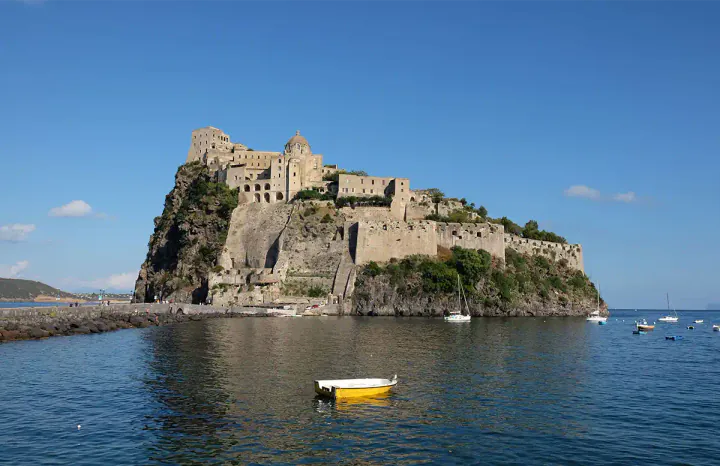
You could take the ferry from Naples to Ischia, spend the morning exploring the towns of Ischia Porto and Ischia Ponte and visiting Castello Aragonese, then relax at the Negombo thermal spa park in the afternoon.
I spent a week on Ischia and absolutely loved it – if castles, thermal baths, gardens, amazing food and beaches sound good to you, read my guide to things to do in Ischia and where to stay in Ischia.
Procida
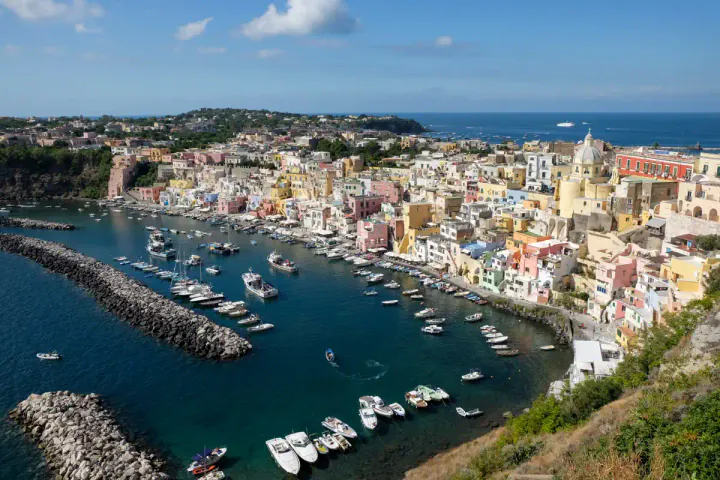
Not far from Ischia, the little island of Procida makes a perfect, scenic and relaxing day trip from Naples. The view over the Marina di Corricella’s brightly-coloured fishermen’s houses is unforgettable, and the island still has a sleepy air. Read my complete guide to visiting Procida.
Sorrento
I stayed in Sorrento on my first trip to the Naples area – at least in part because I was a bit frightened of Naples! While Naples is a bustling city, Sorrento feels much more like a resort, with a relaxed, holiday atmosphere.
Wander through lemon groves, enjoy a spritz on the main square, explore the old fishing port at the foot of the cliffs or go shopping in the historic centre – it’s all a very pleasant change of energy compared to Naples.
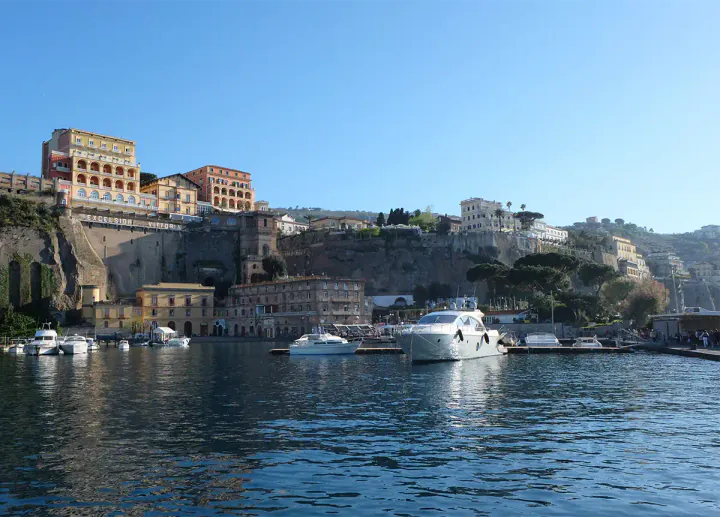
Sorrento sits at the end of the Circumvesuviana railway line, making it a very easy day trip from Naples. You could even tack an evening in Sorrento on to a trip to Pompeii, then get the train back to Naples.
The Amalfi Coast
The Amalfi Coast is a bit further from Naples than the other day trip suggestions on this list, but it’s worth the effort.
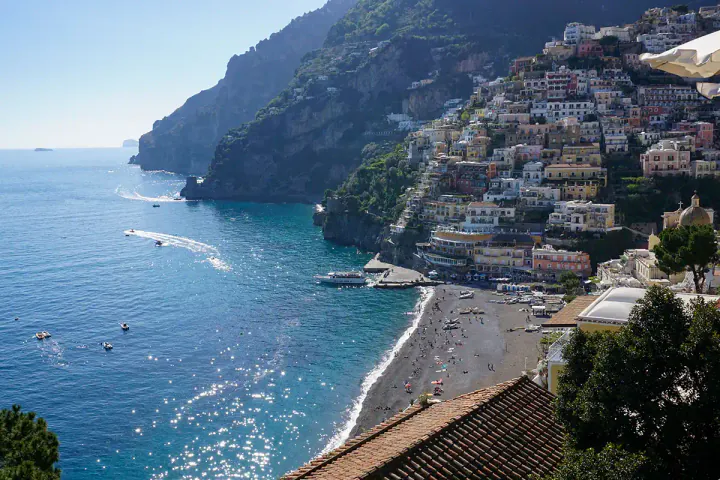
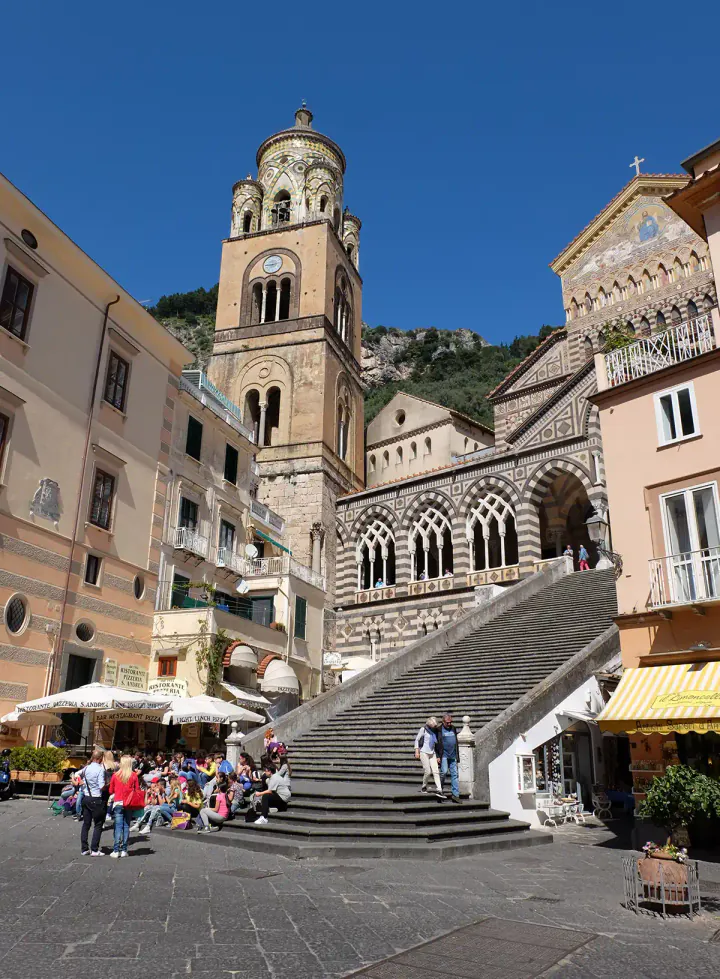
The easiest way to see the Amalfi Coast from Naples is to take an organised tour that can show you the villages without the hassle of getting between them.
If you want to do it DIY, then the quickest (and most scenic) route will probably be a ferry to Positano or Amalfi. Alternatively, you could take a fast train from Naples to Salerno, then a bus to Amalfi.
When to visit Naples
Naples is a city you can visit year-round, but some times are better than others.
Spring (April and May) and autumn (September and October) are the sweet spots: warm but not oppressively hot, the crowds are lighter than July and August, and prices are generally more reasonable.
I’ve visited the Naples area twice in April and once in late September, and can thoroughly recommend these months.

Summer (June–August) is hot – temperatures regularly reach 30°C+. The city gets busy, particularly with visitors en route to the Amalfi Coast and the islands, and Pompeii can be brutally hot. If you’re focussed on beaches rather than archaeological sites, this could be a good time to visit the islands.
Winter (November–March) is quieter and cooler, but Naples is still lively, especially if you visit at Christmas. You’ll get the historic centre much more to yourself, and hotels are significantly cheaper. The main downside is that Pompeii and outdoor sites are less enjoyable in bad weather.
How to get to Naples
By plane
Naples International Airport (Capodichino) is well connected from across Europe. It’s about 4 miles (7 kilometres) from the city centre.
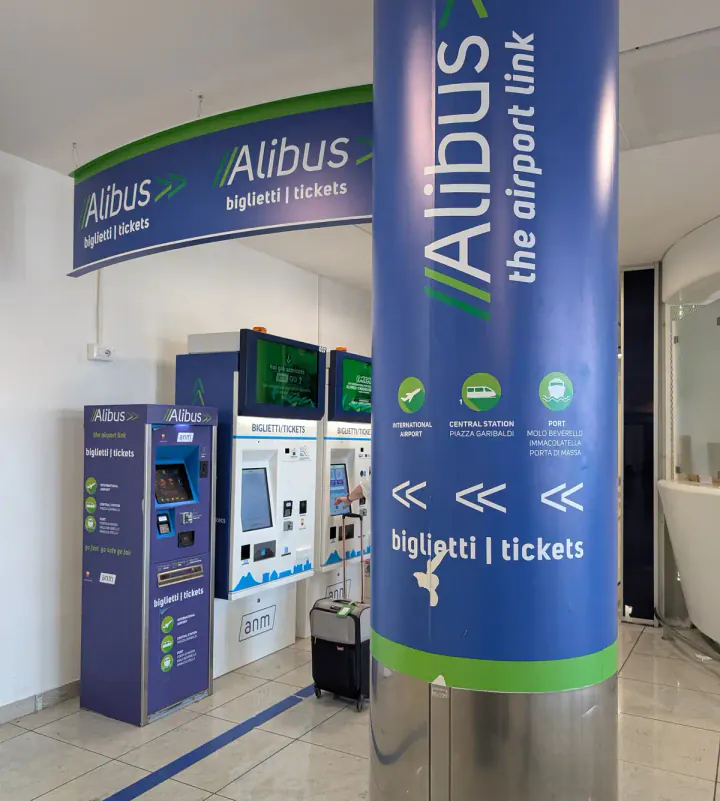
The Alibus shuttle runs regularly to the main bus terminal at Piazza Garibaldi (Naples Centrale train station) and to the port at Molo Beverello.
By train
Naples Centrale is a major hub with fast Frecciarossa and Italo trains from Rome (roughly 70 minutes), Florence (roughly 3 hours) and Milan (roughly 4.5 hours). Booking in advance gets you significantly cheaper prices.
By ferry
If you’re arriving from or continuing to Sicily or Sardinia, there are ferry connections from the Molo Beverello and Calata Porta di Massa ports. I think the boat train to Sicily is much more fun than the ferry though!

Getting around Naples
The historic centre is compact and very walkable, though the streets are narrow and busy and you’ll want comfortable shoes.
Metro
Naples has a slightly confusing metro system which connects the main areas. Linea 1 in particular has some impressively designed stations – Toledo station is worth seeing in its own right.

Tapping in and out with a credit or debit card is gradually rolling out across the whole public transport network, but I preferred the certainty of buying a ticket. Every metro station I used had easy to use ticket machines at the entrance – they all had instructions in English and they all took card payments.
Funiculars
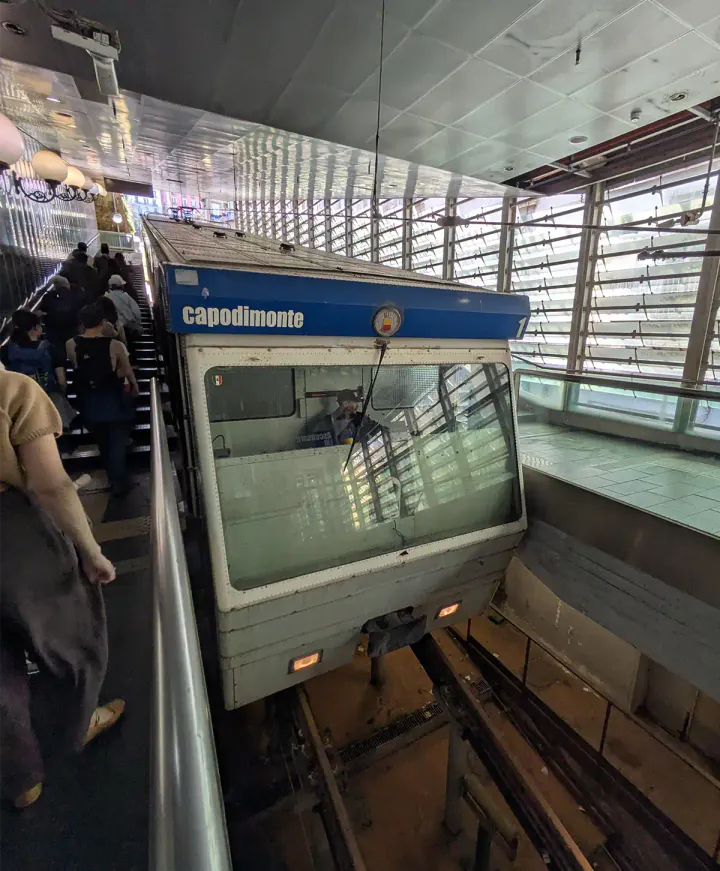
There are four funicular lines, three running up to the Vomero district and a fourth that runs to Posillipo. You can buy tickets from the tobacco shops at the funicular stations.
Buses
The bus network is extensive but can be hard to navigate if you don’t know the city well. For most visitors, metro, funicular, and walking covers the main areas.
Taxis
There are lots of taxis around, but unfortunately tourists do get scammed. Make sure the meter is running when you get in and check in advance if you want to pay by card. Uber and similar ride-sharing apps connect to local taxi services and can be both slower to get a ride and more expensive. The local app is called GOXGO.
Driving
A really terrible idea. Traffic in Naples is notoriously chaotic, parking is extremely difficult, and the city is much better explored on foot and by public transport.
Where to stay in Naples
The historic centre is the most atmospheric area to stay, putting you within walking distance of most of the main sights. It’s lively, and the streets are busy until late so it feels safe. If you want a quieter option, Chiaia or Vomero are residential neighbourhoods with good transport links into the centre.
Here are a few areas to consider, and one to scratch off your list:
Historic centre (centro storico)
For a first-time visit to Naples I’d recommend staying on the western side of the historic centre, in the area between Università, Municipio, Toledo and Dante metro stations. It’s safe, close to everything and Line 1 of the metro will take you to the Circumvesuviana station for day trips to Pompeii and Sorrento. On my last trip to Naples I stayed a few minutes’ walk from Toledo and it made getting around very easy.
Chiaia
Chiaia is an upscale neighbourhood on the seafront with good restaurants and bars. It’s significantly less chaotic than the busiest parts of the historic centre but does have plenty of life, particularly on and around Piazza dei Martiri. There are some large, grand hotels on Via Partenope on the promenade opposite the Castel dell’Ovo.

Vomero
Vomero is a quiet, residential neighbourhood above the city, reached by funicular. It’s where you’ll find It’s nice and calm, but you’ll need to use the funicular to get around.
Near Napoli Centrale and Piazza Garibaldi
I don’t recommend staying in this area, even though it looks very convenient on the map. Like many cities in Europe, the area around the train station is known for higher levels of crime than elsewhere in the city.
How long to spend in Naples
Two full days is a reasonable minimum for the city itself – enough to cover the main historic centre sights, eat a pizza or five, visit the archaeological museum and take an underground tour. Three days gives you breathing room for the visits that need to be booked in advance, like the Veiled Christ, while four gives you time to do a day trip to Pompeii or Herculaneum without rushing the city.
If you only have one day, start with Cappella Sansevero (book it before you travel), then walk Spaccanapoli, then look inside Santa Chiara, before picking a spot for pizza in the evening.
Is Naples safe?
Naples has a reputation for petty crime – particularly bag-snatching and pickpocketing. The city has improved significantly in recent years in terms of safety, and most visitors have no issues at all. Please don’t be put off visiting this wonderful city by some of the horror stories you might see online.
Take the same precautions that you’d take in any large city: keep bags zipped and worn across the body, consider using a lanyard for your phone, avoid carrying loads of cash, don’t flash expensive watches or jewellery, and be aware of your surroundings on busy streets. There is graffiti everywhere; it doesn’t mean you’ve strayed into a bad neighbourhood.

The historic centre is busy with tourists and locals alike, and the main concerns are opportunistic theft rather than anything more serious.
One place to particularly watch out is on the metro and on the Circumvesuviana train line, where pickpockets are known to operate.

The Campania Artecard
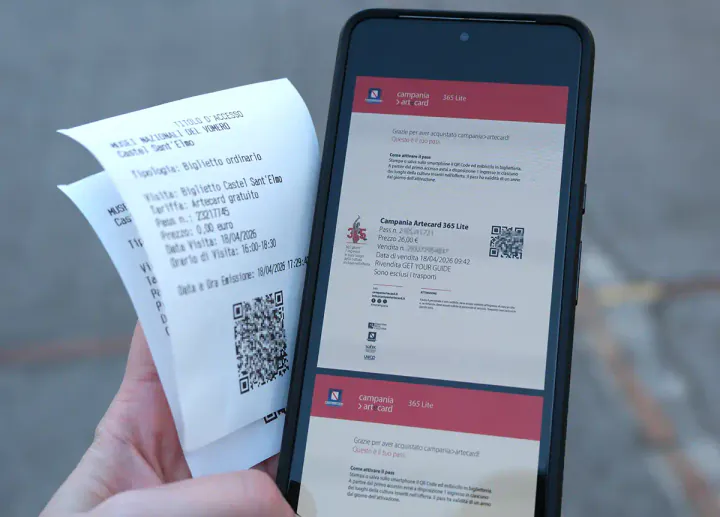
If you’re planning to visit several paid sights in Naples (and you will be), the Campania Artecard is worth looking into. It offers free or discounted entry to a range of museums and archaeological sites in the region, and some versions include public transport in Naples. It can get a bit confusing, so I’ve put together a full guide to the Artecard and other Naples tourist cards.
Final thoughts
Naples is not a city that tries to please you. It’s noisy, a bit scruffy, the traffic is alarming, and you will probably get a little lost and feel a bit overwhelmed at some point. But it’s also incredibly exciting – full of history that’s just lying around on the streets, extraordinary food, and a warmth and intensity that makes it like nowhere else in Italy. I’m obsessed with Naples, and can’t wait for my next trip.
Have you been to Naples? Let me know what you got up to in the comments.

About Helen
Hi! I’m Helen, and Italy is one of my favourite destinations. I’ve been to Italy too many times to count, and I can honestly say I’ve never had a bad trip to this lovely country. I wasn’t sure what to expect from Naples, but it’s a wonderful city, with loads of energy and so much to see.
I live near Manchester, UK and work full time, so I’m all about making the most of my annual leave with day trips, weekend getaways and short breaks.
If you found this article helpful, you can support my site and see more of my travel guides in your Google results by adding Helen on her Holidays as a preferred source on Google.


Leave a comment